Trump DOJ Pick Tests Power
Trump DOJ Pick Tests Power
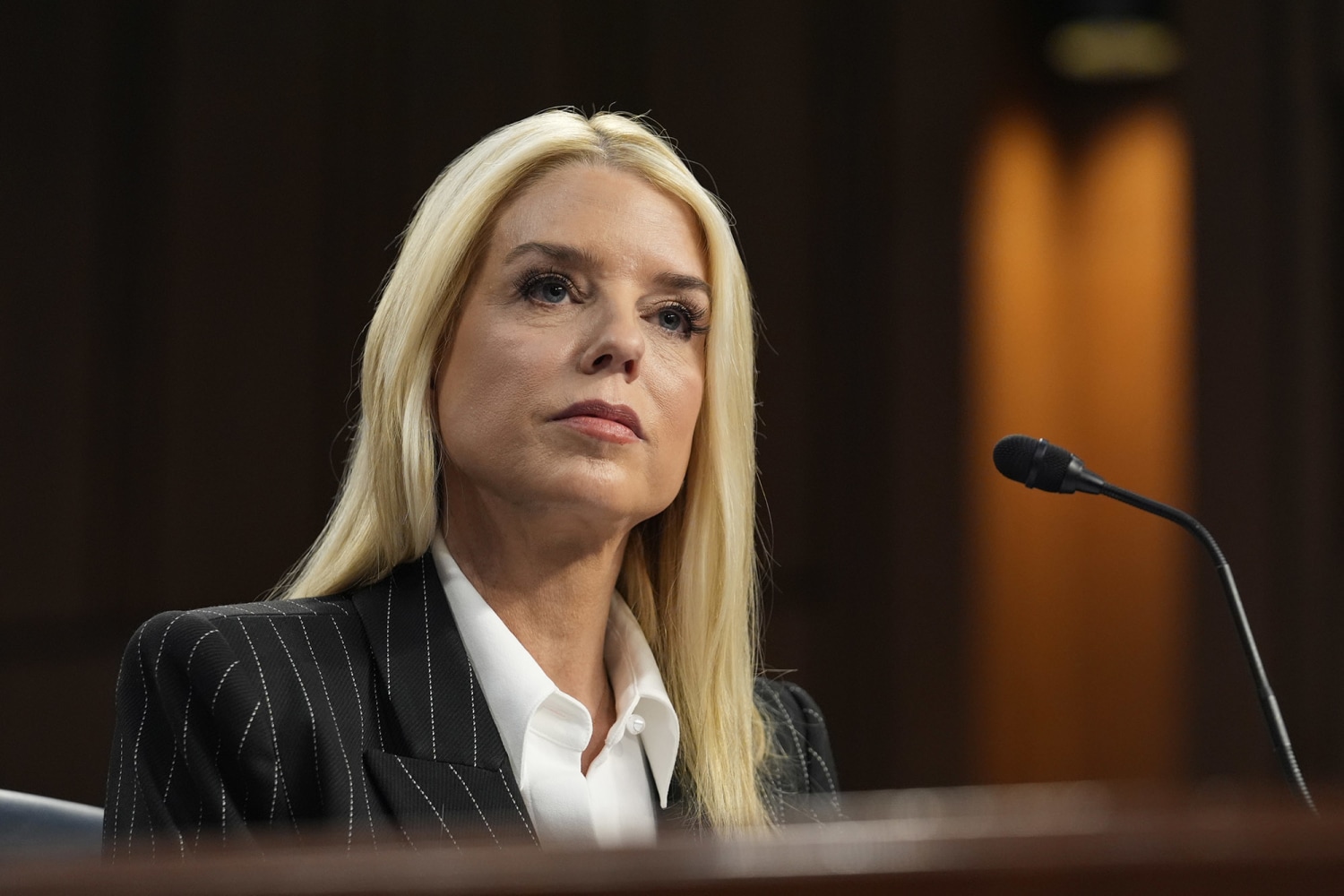
When a president starts reshaping the Justice Department, the fight is never just about one nomination. It is about who gets to define the rules for federal power, how far an attorney general can stretch executive influence, and whether the department still acts like a referee instead of a weapon. The latest choice for attorney general is landing at exactly that pressure point, where law, loyalty, and institutional survival collide. For anyone watching the future of Trump DOJ pick politics, this is not a routine confirmation story. It is a stress test for the rule of law, and for a department that has spent years trying to convince the public it can still stand apart from the White House.
- The attorney general role is one of the most powerful levers in Washington.
- Trump’s selection signals a renewed fight over DOJ independence and executive control.
- Confirmation politics will likely center on loyalty, enforcement priorities, and oversight.
- The outcome could shape criminal justice, investigations, and the limits of presidential power.
Why this Trump DOJ pick matters now
The attorney general is not just another cabinet secretary. This office decides how aggressively the federal government pursues corruption, civil rights violations, antitrust enforcement, national security cases, and politically sensitive investigations. That is why every Trump DOJ pick gets scrutinized far beyond the normal confirmation theater. The stakes rise even higher when the president-elect or president has already signaled a desire to test institutional boundaries. In that environment, the Justice Department stops being a back-office agency and becomes a frontline power center.
The real issue is not whether the nominee is qualified on paper. It is whether the nominee sees the department as an independent institution or as an extension of presidential will. That distinction sounds abstract until it collides with subpoenas, special counsels, election-related cases, immigration enforcement, or pressure on career prosecutors. At that point, the attorney general becomes either a guardrail or a force multiplier.
Key insight: The attorney general confirmation is rarely about personality alone. It is a proxy battle over whether federal law enforcement will remain insulated from raw political command.
The Justice Department is where power gets real
Washington loves to talk about checks and balances in theory. The Justice Department is where those checks become operational. Unlike a policy agency that writes reports and issues grants, DOJ can indict, investigate, negotiate settlements, and shape the legal perimeter of the presidency itself. That means the next attorney general inherits more than a management job. They inherit a constitutional balancing act.
For Trump, this Trump DOJ pick is also a signal to his base and his critics. To supporters, it can look like a promise to reclaim control from what they see as a politicized bureaucracy. To opponents, it can look like a warning that the department may be asked to reward allies, punish adversaries, or soften the blow of legal scrutiny around the administration. Either way, the nomination becomes a marker of intent.
What the Senate will be looking for
Confirmation hearings for an attorney general nominee are usually less about résumé recitation and more about stress testing judgment. Senators will likely probe several pressure points: commitment to prosecutorial independence, willingness to recuse from politically charged matters, respect for career lawyers, and the nominee’s view of presidential authority. They will also want to know whether the nominee can resist directives that clash with department norms.
Expect questions around three recurring themes:
- Independence: Will the nominee follow the law or the president’s preferences when the two diverge?
- Enforcement priorities: What gets emphasized first: immigration, public corruption, or perceived political adversaries?
- Internal culture: Will career prosecutors be protected, sidelined, or pressured?
The nominee’s answers matter less for their polished wording than for the operational signal they send to DOJ staff, federal judges, and the public.
Trump DOJ pick and the politics of loyalty
Loyalty is the most dangerous and the most powerful word in any attorney general conversation. Presidents want trusted officials. That is normal. But when trust hardens into personal allegiance, the department’s mission can warp. The Justice Department is supposed to enforce laws consistently, not selectively. It is supposed to investigate facts, not feelings. And it is supposed to protect the public interest, not the private comfort of the Oval Office.
This is why the phrase Trump DOJ pick carries more baggage than a standard cabinet announcement. It implies a broader argument about governance. Is the administration installing a manager, a lawyer, or a shield? The answer will shape how the department handles subpoenas, internal dissent, and cases that might touch the president’s allies or enemies.
Editorial reality check: A disciplined attorney general can preserve the legitimacy of a controversial administration. A pliant one can burn it down faster than any outside critic.
That tension is not hypothetical. Modern presidents have repeatedly run into friction with DOJ when investigations brush against their political orbit. The difference now is that public trust is thinner, polarization is deeper, and every institutional clash gets amplified instantly. The next attorney general will operate under a microscope with very little margin for ambiguity.
How the nomination could reshape federal enforcement
If the nominee is confirmed, the practical effects could show up quickly. Leadership changes ripple downward through U.S. attorneys, division heads, and special policy units. Priorities shift, resource allocations change, and the message from the top filters into everyday decision-making. Even a subtle change in tone can alter what gets investigated and how aggressively.
Here is where the broader policy consequences become impossible to ignore:
- Criminal enforcement: White-collar and public integrity cases may rise or fall depending on top-level priorities.
- Immigration enforcement: The department may push harder on border-related litigation and prosecution coordination.
- Election-related disputes: The office could become central to future voting and certification fights.
- Civil rights work: Enforcement intensity may change depending on the administration’s ideological goals.
For businesses, state officials, advocacy groups, and universities, that matters immediately. DOJ policy can influence mergers, consent decrees, civil investigations, campus compliance, and local policing oversight. The attorney general is one of those rare officials whose decisions ripple into boardrooms and city halls at the same time.
Pro tip for reading the signals
Do not focus only on the nominee’s headline statements. Watch for personnel choices, early memos, and which cases get elevated or quietly deprioritized in the first 100 days. That is where real intent shows up. A department’s culture is often revealed less by speeches than by who gets promoted, reassigned, or ignored.
Why this fight is bigger than one person
The temptation in any confirmation battle is to reduce everything to character. That is useful, but incomplete. The deeper story is about institutional design. The Justice Department has always lived in a tension zone between independence and accountability. The attorney general works for the president, but the office also serves the Constitution, the courts, and the public. That structure depends heavily on norms, not just statutes.
Once norms weaken, legal architecture starts to matter in ways that are easy to overlook until they are gone. Career prosecutors become more important. Inspectors general become more visible. Congressional oversight becomes more adversarial. Judges get asked to referee disputes that were once settled inside the executive branch. In other words, a Trump DOJ pick is not simply about staffing. It is about whether the executive branch continues to police itself.
For the public, the biggest risk is normalization. If each escalation is treated as just another partisan skirmish, the cumulative effect is a lower baseline for institutional trust. That is expensive in democratic terms. Once citizens assume law enforcement is mainly political, every legitimate case starts to look suspect, and every controversial case looks scripted.
What happens next
The next phase will likely be defined by hearings, leaked readouts, and partisan framing. Supporters will cast the nominee as a necessary corrective to a politicized bureaucracy. Critics will argue the administration is trying to turn the department into a loyalty test. Both claims will probably contain a grain of truth, which is what makes this so combustible.
The most important question is not whether the nominee can win confirmation. It is whether the nominee can govern without turning DOJ into a partisan instrument. That will be measured in small decisions: whether subpoenas are honored, whether prosecutors are protected, whether politically sensitive cases are insulated, and whether the office can say no when the president wants yes.
If the department gets this wrong, the consequences will outlast one administration. Future presidents will inherit a precedent, not just a nominee. And that precedent could make it easier for every White House after this one to treat justice as another branch of political strategy.
The Trump DOJ pick is therefore more than a staffing move. It is a signal flare for the next phase of American power politics, where the line between governing and controlling may become the most contested line in Washington.
The information provided in this article is for general informational purposes only. While we strive for accuracy, we make no guarantees about the completeness or reliability of the content. Always verify important information through official or multiple sources before making decisions.