Trump Escalates Guantanamo Cuba Fight
Trump Escalates Guantanamo Cuba Fight
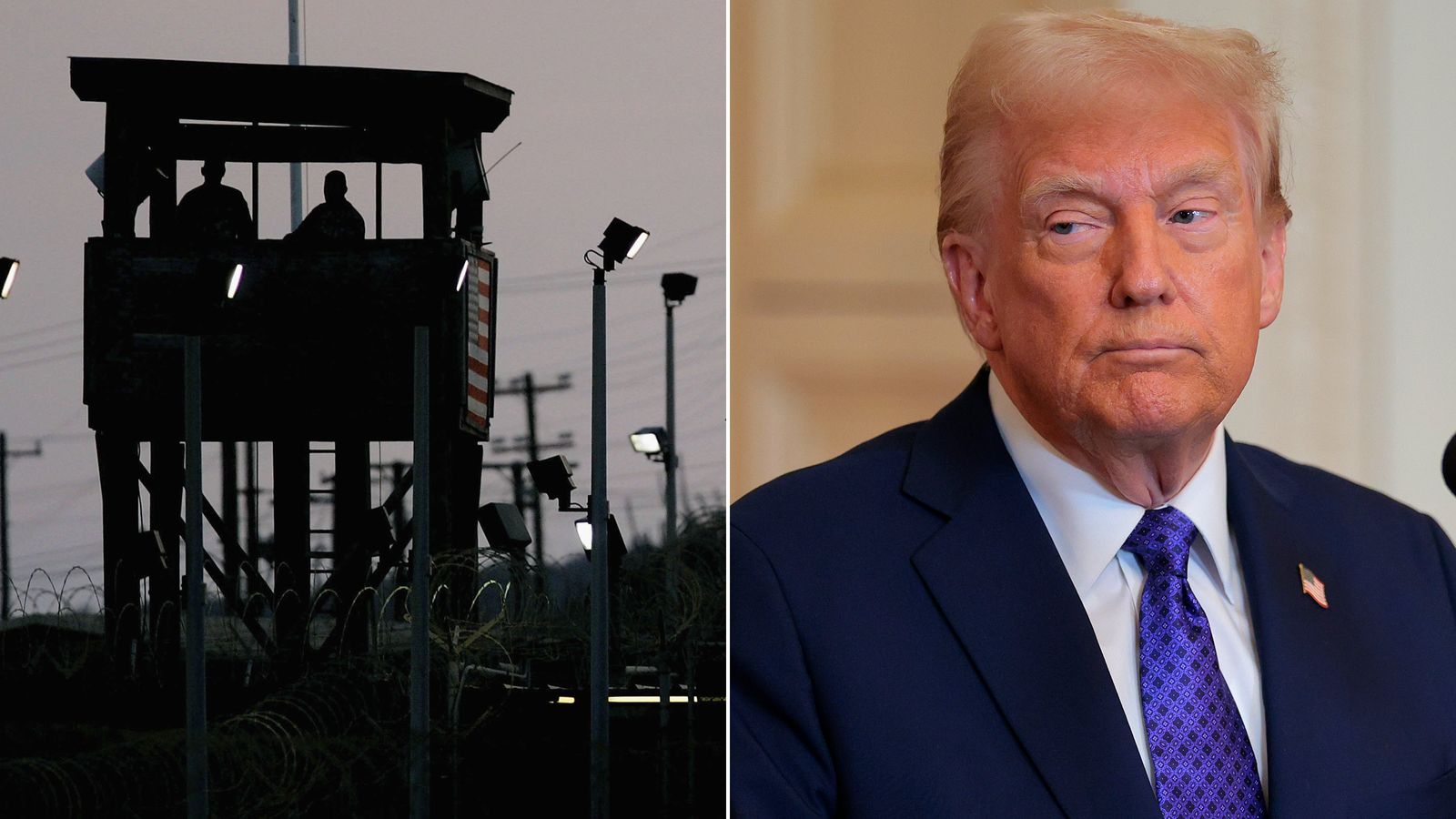
The Trump Guantanamo Cuba fight is not just another burst of campaign-era provocation dressed up as policy. It lands at the intersection of migration, executive power, military symbolism, and a decades-old diplomatic standoff that Washington has never fully resolved. That is why this moment matters. Guantanamo Bay is more than a base. It is a legal gray zone, a geopolitical nerve center, and a recurring instrument in American hard-power messaging. When it is thrust back into the political spotlight, the implications go well beyond Cuba.
For readers trying to make sense of the noise, the real question is simple: is this rhetoric meant to reshape immigration enforcement, pressure Havana, or revive a performative version of national security politics? The answer is likely all three – and that combination is exactly what makes the story worth taking seriously.
- Guantanamo Bay remains a uniquely loaded symbol in US policy, mixing military strategy, immigration enforcement, and legal controversy.
- Trump’s posture toward Cuba and migrants signals a tougher, more theatrical approach to border and foreign policy politics.
- Any attempt to expand Guantanamo’s role could trigger legal, diplomatic, and humanitarian blowback.
- The political value of the issue may be as important as the operational reality.
- This fight matters because it could redefine how migration and offshore detention are debated in the US.
Why the Trump Guantanamo Cuba fight matters now
Timing is everything. Migration remains one of the most combustible issues in American politics, and Cuba sits in a complicated place within that debate. Cuban migration has historically been shaped by a mix of domestic repression, US asylum policy, and abrupt swings in bilateral relations. Add Guantanamo Bay to that equation and the story immediately becomes more volatile.
That is because Guantanamo Bay has never been merely a military installation. It has served as a processing site for migrants, a detention center for terrorism suspects, and a flashpoint in arguments over sovereignty and international law. Any political move that re-centers the base in migration policy reopens old questions the US has often tried to keep compartmentalized.
Key insight: When Guantanamo re-enters the headlines, it is rarely about logistics alone. It is about the kind of state power Washington is willing to normalize.
Trump understands the symbolic force of this. Even without an immediate policy blueprint, invoking Guantanamo in relation to Cuba and migrants sends a clear signal: toughness, territorial resolve, and a willingness to revive controversial tools that many officials once tried to move past.
Guantanamo Bay is not just a place
To understand the stakes, it helps to separate mythology from function. Guantanamo Bay occupies a strange legal and political status. The United States controls the naval base, but Cuba has long contested the legitimacy of that arrangement. Over the years, the base has become a vessel for multiple, often contradictory American priorities.
A military outpost with diplomatic baggage
At its core, Guantanamo Bay is a strategic military foothold in the Caribbean. But unlike a typical base, it carries a permanent sovereignty dispute. That means every discussion of expansion, operational change, or political use is automatically entangled with US-Cuba relations.
For hardliners, that ambiguity can be useful. It creates a venue where Washington can project power without appearing constrained by the same domestic optics that apply on the mainland. For critics, that is exactly the danger.
A migration tool with a long history
Long before Guantanamo became synonymous with post-9/11 detention policy, it was already used in migration crises. Haitian and Cuban migrants were processed there during periods of maritime interdiction and regional instability. That history matters because it shows the base has precedent as an offshore migration node.
But precedent is not the same as legitimacy. Policies that move migrants into offshore systems often raise immediate concerns around due process, transparency, and humane treatment. They also create practical problems: who has access, what legal framework applies, and how quickly can emergency operations become a durable bureaucracy?
A political symbol too powerful to ignore
Guantanamo works politically because it compresses several messages into one image. It suggests control. It signals distance. And it evokes a style of governance that prioritizes forceful action over procedural caution. That makes it irresistible in moments when politicians want to look uncompromising.
The problem is that symbols have consequences. Once a government treats offshore detention or extraterritorial processing as normal, the threshold for using those tools again drops dramatically.
What Trump appears to be doing
The likely strategy here is layered. First, there is the domestic political audience. Trump has always performed best when he can fuse immigration enforcement with a broader narrative of national decline and elite weakness. Guantanamo sharpens that message. It implies the government has extraordinary tools available and only lacks the will to use them.
Second, there is the foreign policy angle. A harder line on Cuba plays well with parts of the US electorate, particularly in Florida, while also reinforcing a familiar anti-communist frame. Tying Cuba to migration stress lets Trump blend international confrontation with domestic border politics.
Third, there is the bureaucratic test. Floating an aggressive idea can function as a pressure tactic. It forces agencies, legal teams, and allies to react. Even if the final policy ends up narrower than the rhetoric, the political center of gravity shifts.
The real play may be this: redefine what counts as politically acceptable before the legal fight even begins.
How a Guantanamo migrant policy could work
If the administration or a future administration tried to operationalize this posture, the mechanics would matter. A migration system involving Guantanamo Bay would likely rely on several components:
- Maritime interdiction or transfer authority
- Temporary holding and screening facilities
- Interagency coordination between military, homeland security, and diplomatic offices
- Legal frameworks for asylum review, repatriation, or third-country processing
- Restricted access protocols for media, advocates, and oversight bodies
That list sounds administrative, but each step contains friction. Interdiction raises legal questions. Screening requires personnel and standards. Repatriation depends on cooperation from receiving governments. And restricted access almost guarantees controversy.
Pro Tip for policy watchers
Watch for small administrative changes rather than just headline announcements. Shifts in processing authority, facility preparation, or interagency guidance often reveal more than speeches do.
The legal and humanitarian fault lines
This is where the Trump Guantanamo Cuba fight becomes much more than campaign theater. Offshore migration processing is legally complex by design. Governments use distance to create procedural ambiguity. Critics argue that ambiguity is often the point.
Key questions would surface immediately:
- What rights would migrants have while held at
Guantanamo Bay? - Would asylum claims be processed under the same standards as on US soil?
- Who could monitor detention conditions?
- How long could individuals be held before transfer or release?
- What courts, if any, would have timely jurisdiction?
These are not abstract concerns. The history of offshore detention shows how quickly temporary emergency powers can harden into opaque systems with weak accountability. Once people are removed from normal public scrutiny, policy mistakes become harder to detect and easier to defend.
Humanitarian groups would almost certainly challenge any expansion of detention or processing at the base, especially if family units, asylum seekers, or medically vulnerable people were involved. The optics would be severe, but so would the operational scrutiny.
Why Cuba is central to the story
It would be a mistake to treat Cuba as a passive backdrop. The island’s government has long opposed US control of Guantanamo and has framed the base as a standing violation of sovereignty. Any Trump escalation that appears to weaponize the base more aggressively could inflame an already brittle relationship.
That matters because migration management often depends on at least minimal diplomatic coordination. Even adversaries need communication channels when dealing with repatriation, maritime incidents, and regional stability. Escalatory rhetoric can win short-term political points while making real-world coordination harder.
The Florida factor
There is also a domestic political geography to this issue. Cuba policy in the US is never just foreign policy. It is electoral politics, identity politics, and regional strategy rolled together. A hawkish posture can resonate strongly with constituencies that see engagement with Havana as appeasement. Trump knows that, and so does every strategist around him.
What happens next
The immediate future likely turns on whether this remains rhetorical escalation or hardens into administrative action. Watch for three signals.
1. Facility preparation
Any signs of infrastructure expansion, staffing changes, or procurement tied to migrant operations at Guantanamo Bay would indicate serious intent.
2. Legal positioning
If officials begin publicly arguing for broader offshore authority or narrower judicial review, that is a sign they are preparing the ground for policy conflict.
3. Diplomatic recalibration
A tougher Cuba posture paired with migration language could signal a broader effort to merge sanctions politics and border enforcement into one package.
Why this fight matters beyond one news cycle
The broader significance of the Trump Guantanamo Cuba fight is that it tests what Americans are willing to accept in the name of migration control. If Guantanamo is normalized again as a flexible holding zone for politically inconvenient populations, that shift will not stay contained to one administration or one migrant flow.
This is how durable security precedents are built: first as exceptions, then as options, then as routine instruments. That is the pattern worth watching.
There is also a larger geopolitical lesson here. The US increasingly faces migration as a structural regional challenge, not a temporary emergency. Climate pressure, economic instability, and political repression will continue to drive displacement across the hemisphere. A strategy built around theatrical deterrence and offshore ambiguity may produce headlines, but it does little to solve root causes.
Bottom line: Guantanamo offers political drama and symbolic force. It does not offer an easy escape from the legal, moral, and strategic complexity of migration policy.
That is why this story deserves more than a partisan reaction. It is a stress test for institutions, for legal norms, and for the boundaries of executive power. Trump may be using Guantanamo because it still shocks, still signals strength, and still carries the aura of extraordinary state action. The more important question is whether the country has learned enough from the base’s history to resist repeating its most corrosive patterns.
The information provided in this article is for general informational purposes only. While we strive for accuracy, we make no guarantees about the completeness or reliability of the content. Always verify important information through official or multiple sources before making decisions.