Trump Reframes the Fair
Trump Reframes the Fair
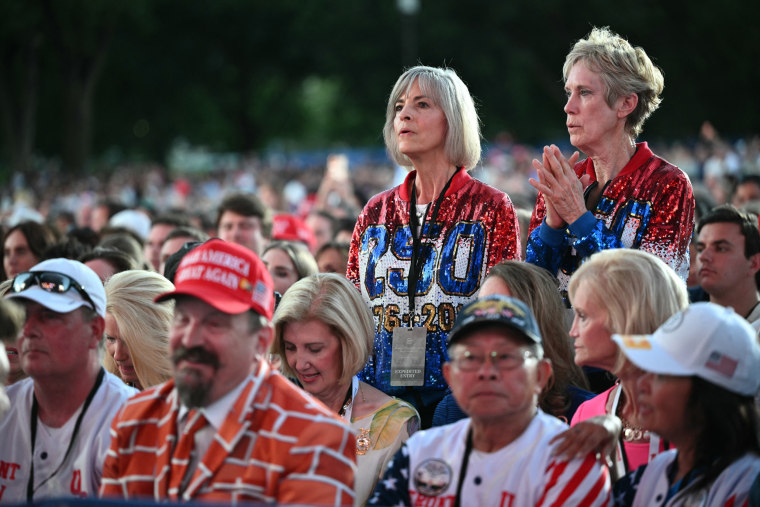
Donald Trump keeps proving a familiar point: modern politics is not just about policy, it is about atmosphere. At a state fair, where the default setting is corn dogs, livestock, and families trying to forget the news cycle for an afternoon, he can still pull attention back to himself. That is not an accident. It is a strategy. And it matters because campaigns are no longer fighting only for votes, but for the right to define what voters feel when they hear a candidate’s name. The strange part is that Trump does this even when the political framing is obvious. The event looks like a normal retail stop, yet the subtext is pure power. For opponents, that is the problem: his presence can flatten the line between entertainment and persuasion, and many attendees simply do not experience it as a partisan moment at all.
- Trump’s state fair appearance shows how spectacle can overpower traditional campaign messaging.
- Public events now double as branding exercises, not just voter outreach.
- Attendees often respond to the moment, not the politics beneath it.
- The bigger lesson: attention itself has become a campaign asset.
Trump and the state fair spectacle
The appeal of a state fair is easy to understand. It is public, informal, and packed with people who are not there to be converted into ideological objects. That makes it a useful stage for any politician trying to seem accessible. But Trump has always used these settings differently. He does not merely show up to blend in. He uses the crowd as proof that he remains central to the national conversation. In that sense, the event is less about persuasion than validation.
That dynamic is especially potent because many attendees do not arrive with a political agenda. They come for a concert, a funnel cake, or a family outing, not a seminar on campaign theory. This is why Trump can generate headlines without necessarily changing minds in the room. The image of him at the fair is the message. He is trying to project normalcy, inevitability, and dominance all at once.
“The point is not always to convert the crowd. Sometimes the point is to make the crowd part of the story.”
Why Trump state fair politics works as a media event
The phrase Trump state fair politics captures something bigger than one appearance. It reflects a communications model where the visual beats the verbal. Trump’s rallies, appearances, and side-stage moments often function like live content generation. Reporters cover the event because the event produces a headline. Supporters share it because it confirms a narrative. Opponents share it because they want to critique it. Either way, the system keeps feeding itself.
That is why his campaigns often feel overrepresented in the news. He understands that attention is not a byproduct of politics anymore. Attention is the currency. The state fair setting helps because it softens the edges of the usual campaign machinery. He is not speaking in a debate hall or issuing a press statement. He is entering a space coded as civic, nostalgic, and almost apolitical. That contrast makes the visual more powerful.
The power of context collapse
Context collapse happens when one environment is read through multiple lenses at once. At a state fair, a politician can look like a community guest, a celebrity, a disruption, or a threat depending on who is watching. Trump thrives in that ambiguity. It lets him occupy several roles simultaneously without resolving the tension between them. To supporters, he can look relaxed and dominant. To critics, he can look like a tactician hijacking a public space. To everyone else, he becomes impossible to ignore.
That ambiguity is not a bug. It is the product.
What attendees notice and what they miss
The NBC framing around attendees not noticing the politics is revealing. It suggests that the emotional experience of the event may matter more than the partisan one. When people are focused on crowds, food, music, and logistics, the political layer can fade into the background. That does not mean the politics are absent. It means they are being absorbed into the experience rather than dissected.
This is one reason Trump remains such a durable figure in American politics. He does not need every person in the venue to engage with his full platform. He needs them to feel the scale of his presence. If the crowd leaves with a memory of the spectacle, the campaign has already won a partial victory.
For undecided voters, this can be unsettling in a subtle way. They may not leave a state fair thinking they changed their view on tariffs, immigration, or federal power. But they may walk away with a stronger emotional impression of Trump as unavoidable, familiar, or still relevant. That kind of residue is hard to measure, but campaigns are built on it.
“Politics at this level is often less about argument than about imprinting a feeling.”
The strategic lesson behind political branding
Political branding has moved far beyond signs, slogans, and TV ads. Today, the candidate is the brand, the setting is the packaging, and every public appearance is a test of narrative control. Trump has always understood this instinctively. He does not separate governance, campaigning, and celebrity into neat categories. He blends them until they feel indistinguishable.
That approach can be powerful because it reduces friction. Supporters know what they are getting. Reporters know what will generate reaction. Critics know the bait when they see it. The result is a feedback loop that rewards boldness and punishes nuance. At a state fair, that loop is even tighter because the contrast between everyday life and national politics is so sharp.
- Brand over policy: The visual identity often matters more than the speech itself.
- Event over message: The setting becomes part of the campaign narrative.
- Reaction over persuasion: Outrage, applause, and coverage all count as momentum.
Why this matters for future campaigns
Future candidates will likely copy this playbook, even if they fail to match Trump’s instincts. Expect more appearances in informal, high-traffic settings where politics can be wrapped in normal life. Expect more performances designed for cameras rather than for a full room. Expect more efforts to make the campaign feel omnipresent without seeming fully planned.
That has consequences. It rewards candidates who can dominate the attention economy, not necessarily those who can govern well. It also makes it harder for voters to distinguish between authentic engagement and carefully managed spectacle. Once that line blurs, democracy becomes a contest of stagecraft as much as ideas.
How to read events like this more clearly
If you want to understand why a state fair appearance matters, do not just watch the candidate. Watch the crowd, the camera angles, the local reporting, and the spin that follows. The real story is often in the framing.
- Look for who controls the visuals, not just the speaking time.
- Notice whether the event is being treated as local color or national theater.
- Pay attention to whether attendees are reacting to politics or simply to presence.
- Track how quickly the appearance becomes a talking point across media platforms.
Pro tip: When a politician enters a space that is not clearly political, ask what emotional job the appearance is doing. Is it calming supporters, baiting critics, or manufacturing inevitability? The answer usually explains more than the speech itself.
The bigger political calculation
Trump’s state fair appearance is not interesting because it is unusual. It is interesting because it is familiar and still effective. He keeps testing the same central theory: that he can dominate public life by making himself impossible to separate from it. In a fragmented media environment, that theory has staying power.
The risk, of course, is that repetition can dull the edge. Voters eventually stop seeing the spectacle as extraordinary and start seeing it as routine. But Trump has a knack for keeping the room uneasy enough to stay engaged. Even when attendees are not explicitly thinking about politics, the event itself becomes political by association.
That is the deeper takeaway. The fair is not just a backdrop. It is a reminder that campaigns now compete in spaces where civic life, entertainment, and identity all overlap. Trump knows how to exploit that overlap better than almost anyone. Whether that makes him more persuasive or simply more visible is the question that keeps haunting American politics.
The information provided in this article is for general informational purposes only. While we strive for accuracy, we make no guarantees about the completeness or reliability of the content. Always verify important information through official or multiple sources before making decisions.