Trump Reopens USMCA Fight
Trump Reopens the USMCA Fight
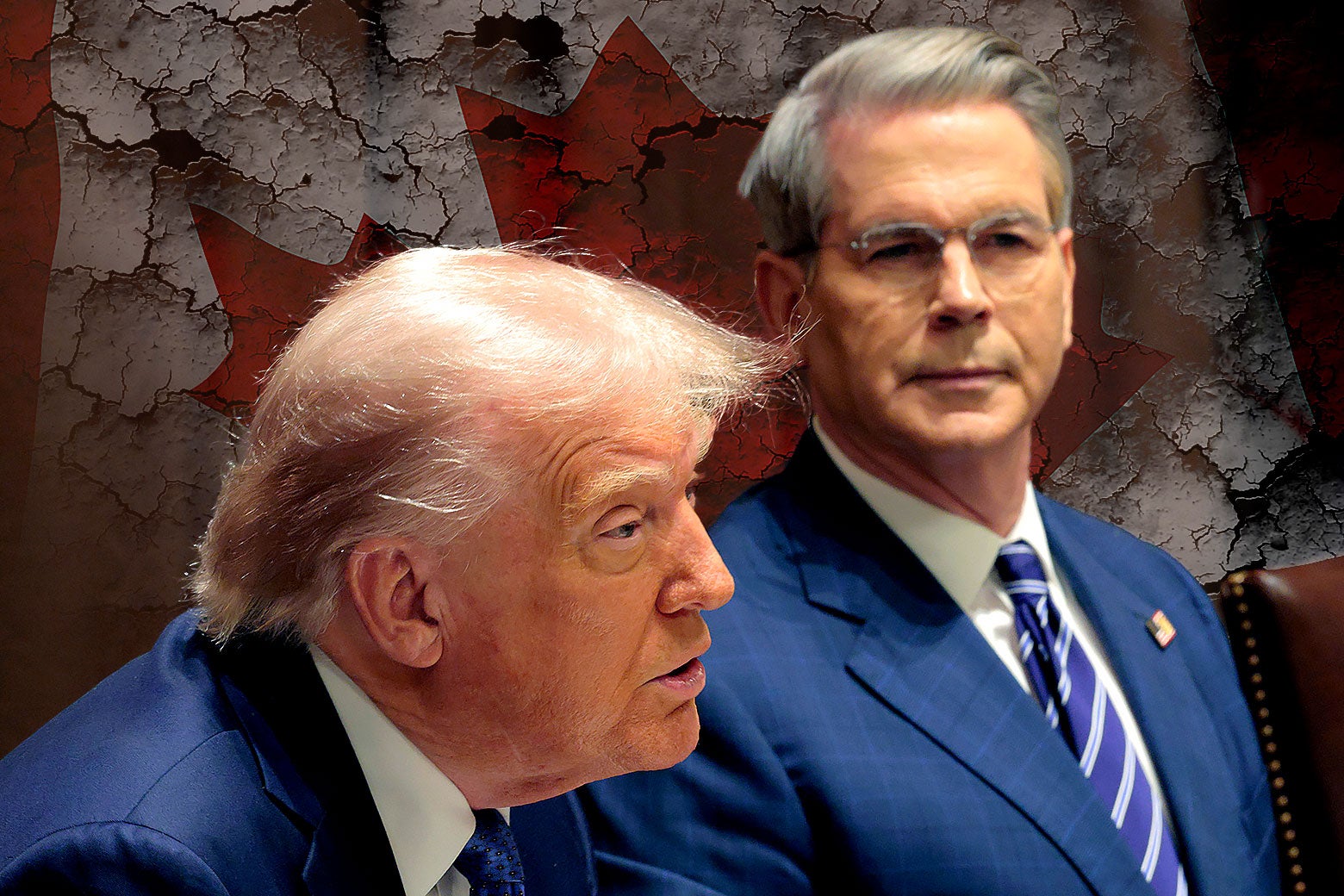
Donald Trump is once again putting North American trade back on the chopping block, and the timing matters. The USMCA was supposed to be the modern, stable successor to NAFTA: a pact that gave manufacturers, farmers, and logistics firms a predictable ruleset for moving goods across the United States, Mexico, and Canada. Instead, Trump’s renewed pressure suggests that trade certainty may be short-lived, and that the next phase of the deal could be less about fine-tuning and more about brute-force leverage. For businesses already wrestling with inflation, reshored supply chains, and political volatility, this is not a policy footnote. It is a warning shot.
- Trump’s renewed focus on
USMCAthreatens to reopen a trade framework built for stability. - Any renegotiation could ripple through autos, agriculture, energy, and cross-border manufacturing.
- Companies with North American supply chains may need to stress-test tariff exposure now.
- The political stakes are high: trade is once again becoming an election-year weapon.
Why This USMCA Moment Matters
The reason this matters goes far beyond one headline or one speech. The USMCA is the operating system for a huge chunk of North American commerce. Auto parts can cross borders multiple times before a vehicle is finished. Produce moves on tight timelines. Industrial inputs often depend on synchronized customs rules and origin requirements. When those rules are stable, companies can plan. When they are uncertain, they pay more, move slower, and hire defensively.
Trump understands that better than most politicians. Trade policy is not just economics in his playbook. It is theater, leverage, and a way to signal toughness to domestic audiences. That makes the latest push particularly consequential, because even the hint of a fight can change market behavior before any formal renegotiation begins.
Trade uncertainty is a cost center long before it becomes a tariff. If executives are forced to hedge against policy shocks, the market has already begun pricing in instability.
The Political Logic Behind the Pressure
Trump’s posture on the USMCA follows a familiar pattern: frame trade as a zero-sum contest, identify a symbolic enemy, and force allies into a defensive crouch. That approach helped define his first term and still resonates because it is easy to explain and even easier to weaponize. The problem is that trade agreements are not campaign slogans. They are dense, interlocking systems that touch labor rules, component sourcing, dispute settlement, and border enforcement.
When a leader threatens to rip up or reopen a treaty, the message reaches well beyond Washington. It tells corporate boards that the next quarter may look very different from the last one. It tells foreign governments that compliance may not guarantee stability. And it tells voters that economic pain can be recast as strategic hardball. That is politically effective, but economically messy.
The real audience is not just voters
Yes, the rhetoric is aimed at domestic supporters. But the real audience also includes CEOs, union leaders, customs brokers, and state governors in border-heavy economies. These actors do not need a speech. They need line-item clarity. If a tariff fight looks likely, they can shift inventory, renegotiate contracts, or delay capital expenditure. That means the policy signal itself can reshape trade flows before any rule changes are finalized.
What a USMCA Shakeup Would Hit First
Not every sector would feel the pressure equally. The first shocks would almost certainly hit industries that rely on highly integrated North American supply chains.
- Automotive: The auto sector is the most exposed because parts and assemblies cross borders repeatedly. Even a modest tariff shift can compound fast.
- Agriculture: Farmers and food exporters depend on predictable market access. Retaliation from Canada or Mexico could hit exports quickly.
- Energy: Oil, gas, and refined products move through a web of cross-border relationships that are difficult to unwind.
- Manufacturing: Industrial firms face cost spikes if sourcing rules or border procedures become more restrictive.
The hidden risk is not just tariff rates. It is paperwork, delays, and compliance overhead. A policy change that looks small on paper can create a massive operational drag when thousands of shipments are involved.
Auto supply chains are the canary
If you want to know how serious any USMCA disruption could become, watch the auto sector first. Few industries are more dependent on just-in-time logistics, cross-border assembly, and careful sourcing documentation. One rule change can force suppliers to reassess plant locations, component origins, and pricing models. That is expensive even in a stable economy. In a volatile one, it becomes a strategic headache.
Why Businesses Should Start Stress-Testing Now
The most dangerous assumption is that political threats are just rhetoric until they are not. That is bad risk management. Companies with exposure to the USMCA should be planning as if the framework could tighten, fragment, or become more weaponized in the near term.
Here is the practical playbook:
- Map every cross-border supplier and identify where tariff exposure is concentrated.
- Review
USMCAorigin documentation for weak points or missing records. - Model price increases under multiple tariff scenarios, not just the worst case.
- Check whether inventory buffers can absorb customs delays without creating excess cost.
- Prepare messaging for customers and investors if input prices rise suddenly.
That is not paranoia. It is operational hygiene. The firms that survived the last trade war best were not the ones that guessed policy correctly. They were the ones that built flexibility into their sourcing, contracts, and fulfillment systems.
Pro tip: If your margins depend on imported inputs, treat policy risk like a supply-chain bug. Find the weak point before it breaks production.
The Bigger Strategic Question for North America
The deepest issue here is that the USMCA was designed to reduce uncertainty, yet it now sits inside a political environment that rewards uncertainty. That is the paradox. The treaty exists to make North American commerce more predictable, but the politics around it are increasingly unstable. If that tension keeps growing, the agreement may become less a framework for integration and more a recurring stage for confrontation.
That would be a serious loss for the region. North America competes globally not just because the U.S. is large, but because the three economies are tightly linked. When that linkage works, it creates scale, speed, and resilience. When it is disrupted, companies face fragmented costs while competitors in Europe and Asia keep moving.
Near-term consequences could outlast the headlines
Even if Trump’s latest push does not immediately trigger a formal overhaul, the signal alone can have long-lasting effects. Firms may delay factory investments. Trade lawyers may get busier. Procurement teams may build in higher contingency costs. In other words, uncertainty itself becomes an economic tax.
That is why policymakers often underestimate trade brinkmanship. They focus on the eventual deal. Businesses focus on the months of limbo before the deal. And those months are where the money is lost.
What Happens Next
The next phase likely depends on how much leverage Trump can extract before any formal negotiations begin. Expect a mix of public threats, industry lobbying, and behind-the-scenes pressure from sectors that cannot afford a trade shock. If history is any guide, the loudest rhetoric will coexist with a more pragmatic scramble to avoid full-scale disruption.
Still, the lesson is clear: the USMCA is no longer just a treaty to be managed. It is a political battleground with direct consequences for prices, jobs, investment, and cross-border trust. For businesses, the smartest move is to assume volatility rather than wait for it. For governments, the challenge is harder: keep the system functioning while politics turns it into a prop.
That is the uneasy reality of modern trade. Stability is no longer the default. It is something leaders have to actively defend.
The information provided in this article is for general informational purposes only. While we strive for accuracy, we make no guarantees about the completeness or reliability of the content. Always verify important information through official or multiple sources before making decisions.