Trump Rewrites Greenland Security
Trump Rewrites Greenland Security
The US Greenland security deal is not just another diplomatic headline. It is a flashing signal that the Arctic is moving from strategic background noise to the center of great-power competition. If Donald Trump’s claim is accurate – that an agreement with Denmark gives Washington security control over Greenland – the United States has just tightened its grip on one of the most important pieces of geography on Earth. For readers watching defense policy, climate change, critical minerals, and alliance politics collide, Greenland is no longer a remote island on a map. It is a military platform, a radar frontier, a mineral vault, and a test of how far American power can stretch inside allied territory.
- The deal could deepen US military influence over Greenland’s airspace, ports, surveillance networks, and Arctic access.
- Denmark and Greenland’s own government remain central because sovereignty, autonomy, and consent cannot be treated as footnotes.
- The Arctic is heating up geopolitically as Russia expands military infrastructure and China seeks economic footholds.
- Security control is a loaded phrase that may mean operational authority, expanded basing rights, or political messaging rather than outright command.
- The long-term prize is strategic positioning across defense, shipping routes, satellites, and critical minerals.
Why the US Greenland security deal changes the Arctic equation
Greenland sits between North America and Europe, close to the GIUK Gap, the strategic maritime corridor linking Greenland, Iceland, and the United Kingdom. During the Cold War, this zone mattered because submarines, bombers, and early-warning systems moved through it. In the 2020s, it matters again because the Arctic is becoming more accessible, more militarized, and more economically tempting.
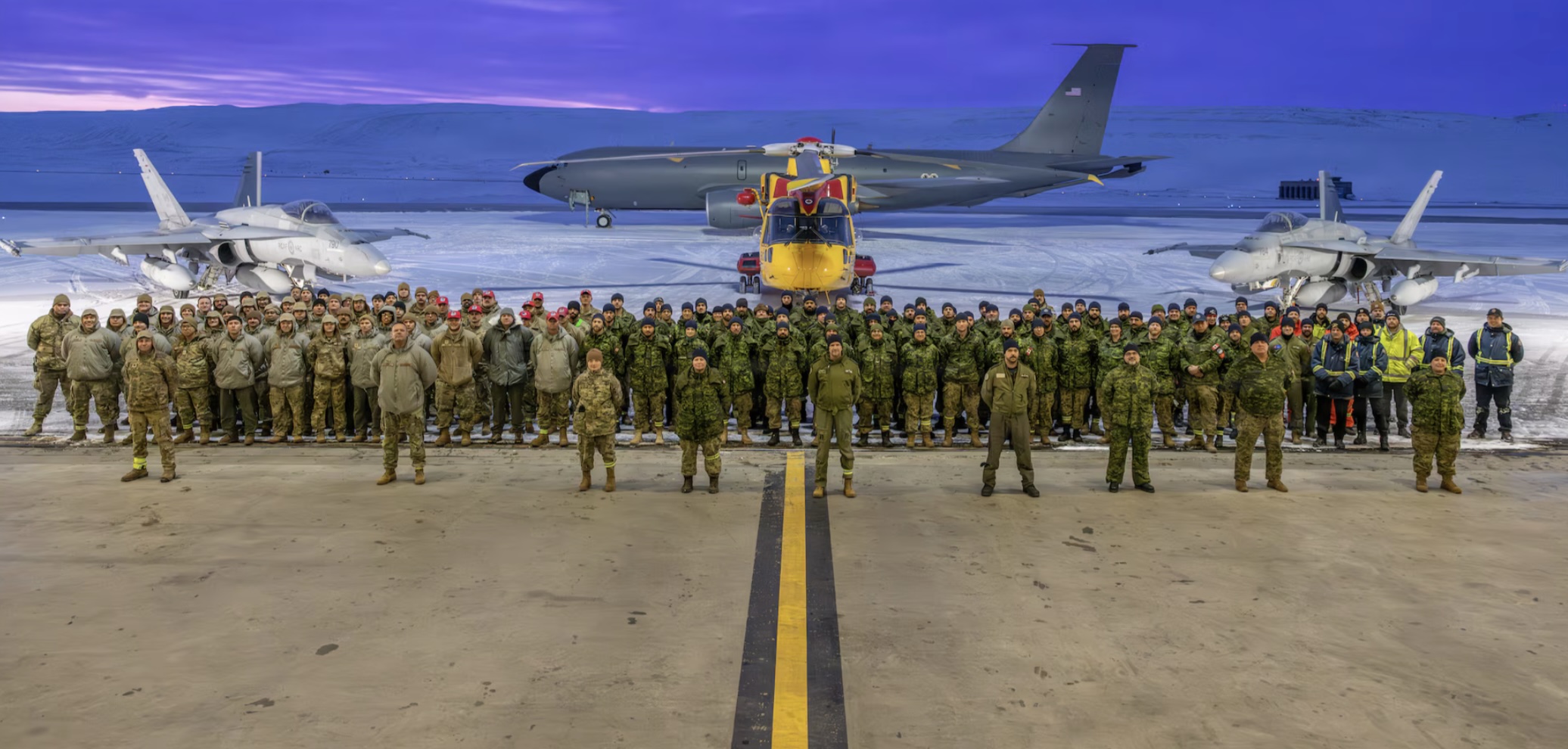
The United States already has a major presence through Pituffik Space Base, formerly known as Thule Air Base. That installation supports missile warning, satellite tracking, and space surveillance. It is not a decorative outpost. It is part of the nervous system of American defense. Any new arrangement that expands Washington’s role could sharpen US monitoring of Russian activity, strengthen NATO coordination, and improve control over northern approaches to the Atlantic.
The Arctic is no longer a frozen buffer. It is becoming a contested operating system for military power, logistics, energy, data, and minerals.
That is why Trump’s wording matters. Security control is not a casual phrase. It suggests a level of authority that goes beyond cooperation. It implies Washington may gain greater say over what happens on Greenlandic territory in defense terms. But the ambiguity is the story. Does this mean expanded basing rights? A joint defense command? US-led surveillance? New coast guard infrastructure? Or is it political branding designed to sound bigger than the legal text?
The answer will define whether this is a practical defense upgrade or a sovereignty controversy waiting to explode.
US Greenland security deal and the sovereignty problem
Greenland is part of the Kingdom of Denmark, but it has extensive self-rule. That makes any security arrangement politically delicate. Denmark handles foreign affairs and defense, yet Greenland’s elected leaders have their own democratic mandate, their own economic ambitions, and their own sensitivity to outside powers treating the island like strategic real estate.
This is the central tension: Washington may see Greenland as a platform. Copenhagen may see it as an alliance responsibility. Greenlanders may see it as home.
That gap matters because Arctic strategy cannot succeed if it looks like extraction dressed up as defense. The United States has learned this lesson repeatedly in the Pacific, the Middle East, and parts of Europe. Basing access is strongest when local legitimacy is durable. If Greenland’s population believes a deal was negotiated over their heads, any short-term military advantage could become a long-term political liability.
The Trump factor
Trump’s political style adds another layer. He tends to frame agreements in maximalist language: control, winning, leverage, dominance. That makes headlines but also complicates diplomacy. Allies may support deeper defense cooperation while rejecting the idea that their territory has been placed under another country’s control.
Denmark, in particular, must walk a fine line. It benefits from US security guarantees and shares concerns about Russia. But it cannot appear to trade away Greenlandic agency. For Copenhagen, the safest public posture is likely to emphasize partnership, mutual defense, and consultation. For Trump, the incentive is to emphasize American command.
The same agreement can look like deterrence in Washington, reassurance in Copenhagen, and overreach in Nuuk.
What security control could actually mean
The phrase security control sounds sweeping, but defense agreements often operate through precise mechanisms. The most likely areas of expanded US authority would be practical rather than symbolic.
- Air and missile surveillance: Upgrades to radar, satellite tracking, and early-warning systems tied to
NORADand US Space Force operations. - Port and runway access: Expanded ability for US aircraft, naval vessels, and logistics teams to operate in Arctic conditions.
- Joint patrols: More coordination among US, Danish, and Greenlandic authorities for maritime security, search and rescue, and domain awareness.
- Cyber and communications infrastructure: Hardened systems for military communications, undersea cables, and space-linked networks.
- Pre-positioned equipment: Supplies, fuel, sensors, and emergency infrastructure placed closer to Arctic operating zones.
None of that requires formal annexation or ownership. Modern power often works through access, interoperability, and command integration. If US forces can operate more freely, process more data, and respond faster from Greenland, Washington gains strategic depth without changing borders.
Pro tip for reading the politics
Watch the verbs used by each government. If US officials say control, Danish officials say cooperation, and Greenlandic officials say consultation, the political meaning is still being contested. The legal text matters, but the public language reveals where pressure is building.
Russia and China are the unspoken audience
Every Arctic security move has at least two external audiences: Moscow and Beijing. Russia has the largest Arctic coastline, significant northern military infrastructure, and a long-standing interest in controlling routes and resources across the region. Its bases, submarines, air defenses, and icebreaker fleet make it the dominant Arctic military actor by geography.
China is different. It is not an Arctic state, but it has branded itself a near-Arctic stakeholder and pursued research, shipping, mining, and infrastructure interests. Beijing’s playbook often begins commercially and becomes strategic over time. Ports, mines, data links, and logistics projects can create influence even without formal military bases.
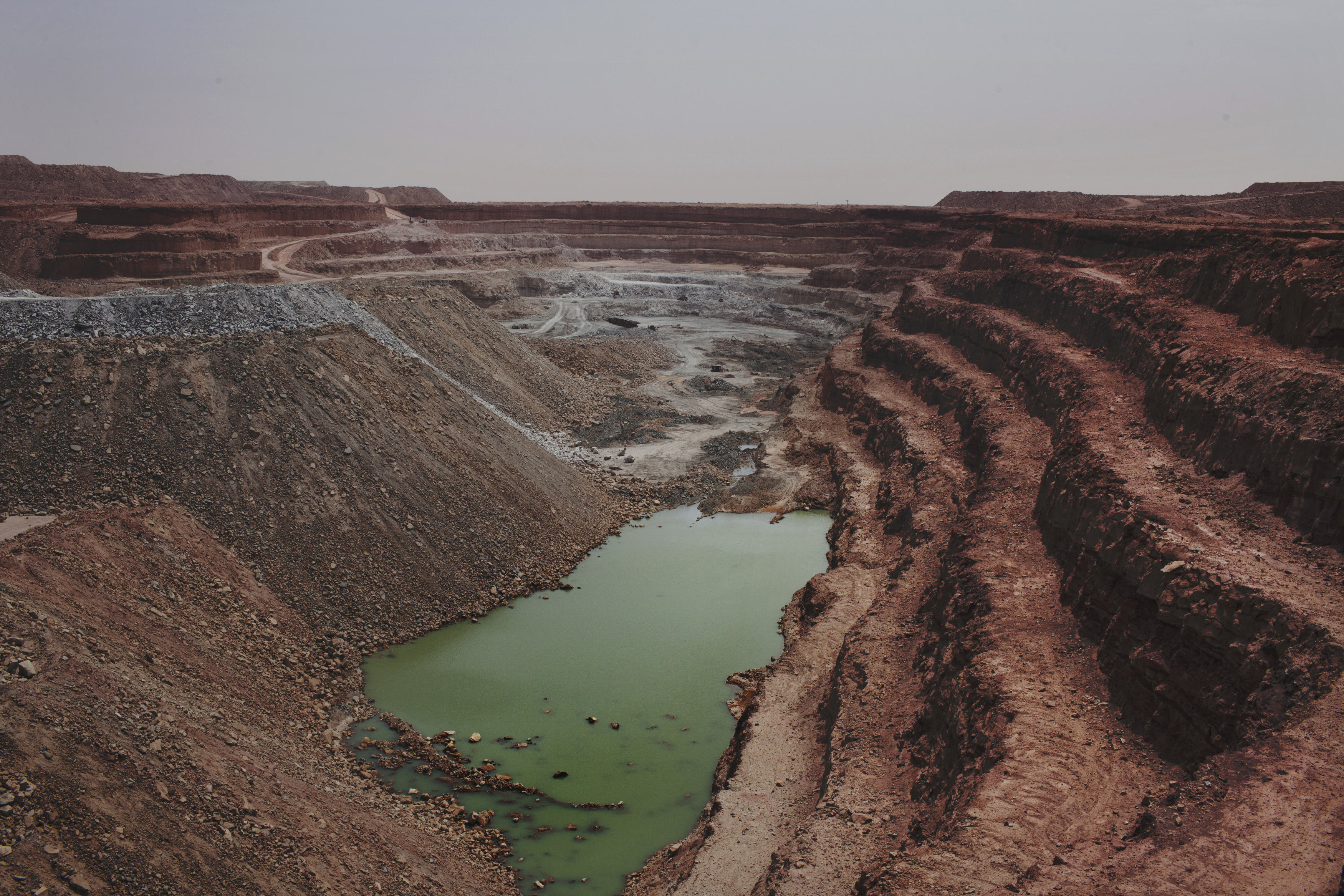
That is where Greenland becomes especially sensitive. The island has deposits of rare earth elements and other minerals essential to batteries, defense systems, wind turbines, and electronics. The phrase critical minerals is not bureaucratic jargon. It is the supply-chain foundation of modern power.
If Washington deepens security control while also encouraging Western investment in mining and infrastructure, the deal could become part of a broader strategy to reduce dependence on China-controlled supply chains. That would align military geography with industrial policy, a combination that now defines much of US strategy.
The climate layer no one can ignore
The Arctic is becoming more accessible because the climate is changing. Melting sea ice opens seasonal shipping possibilities, exposes infrastructure challenges, and increases the need for rescue capacity, environmental monitoring, and maritime governance. That does not mean a frictionless new trade highway is about to appear. Arctic shipping remains dangerous, expensive, and unpredictable. But the trend line is clear enough to attract governments and investors.
For Greenland, this creates opportunity and risk. More activity can mean revenue, jobs, and infrastructure. It can also mean ecological pressure, cultural disruption, and outside dependence. A security-heavy approach could stabilize the region, but it could also militarize decisions that should involve climate science, Indigenous knowledge, and local economic planning.
The Arctic’s future will not be decided by icebreakers alone. It will be decided by who gets to define security in a warming region.
Why this matters beyond Greenland
The deal matters because it reflects a broader shift in US foreign policy: geography is back. For years, tech platforms, financial networks, and global trade seemed to flatten strategic competition. Now physical chokepoints, bases, minerals, cables, and energy routes are again central to power.
Greenland touches all of those categories. It is close to North America, adjacent to Europe, embedded in NATO defense planning, rich in resources, and exposed to climate transformation. Few places combine so many strategic variables in one location.
For allies, the lesson is uncomfortable. The US security umbrella remains valuable, but Washington’s style may become more transactional and more assertive. For small territories with strategic geography, the challenge is to convert attention into investment without losing political agency. For rivals, the message is blunt: the United States is moving to lock down the Arctic before the next phase of competition accelerates.
The risks ahead
The biggest risk is not immediate conflict. It is political misalignment. If Washington oversells control, Denmark softens the language, and Greenland demands more say, the deal could become a diplomatic stress test inside the Western alliance. Russia and China would not need to defeat the arrangement. They would only need to exploit doubts about legitimacy, sovereignty, and local benefit.
The second risk is mission creep. A base upgrade can become a permanent expansion. A surveillance partnership can become a command structure. A mineral security plan can become industrial dependency. Each step may be defensible on its own, but the cumulative effect can change Greenland’s future.
The opportunity, however, is real. Done carefully, deeper US involvement could fund infrastructure, improve emergency response, strengthen Arctic monitoring, and deter hostile activity. The difference between partnership and pressure will come down to transparency, local consent, and whether Greenlanders see tangible benefits.
The bottom line on the US Greenland security deal
The US Greenland security deal, as described by Trump, is a major strategic signal even before the fine print is fully understood. It shows that Washington views Greenland not as a remote Arctic possession of an ally, but as a frontline asset in a more dangerous world.
The smart reading is neither panic nor celebration. This could be a necessary modernization of Arctic defense at a moment when Russia is militarized, China is probing for access, and climate change is reshaping the map. It could also become a sovereignty flashpoint if the language of control outruns the politics of consent.
Greenland’s value has never been just its ice, minerals, or location. Its real power is that it forces the world’s biggest players to reveal what they mean by security. If the United States wants lasting influence there, it will need more than a deal with Denmark. It will need trust in Greenland.
The information provided in this article is for general informational purposes only. While we strive for accuracy, we make no guarantees about the completeness or reliability of the content. Always verify important information through official or multiple sources before making decisions.