Trump Rewrites Midterm Politics With a Convention Play
Trump Rewrites Midterm Politics With a Convention Play
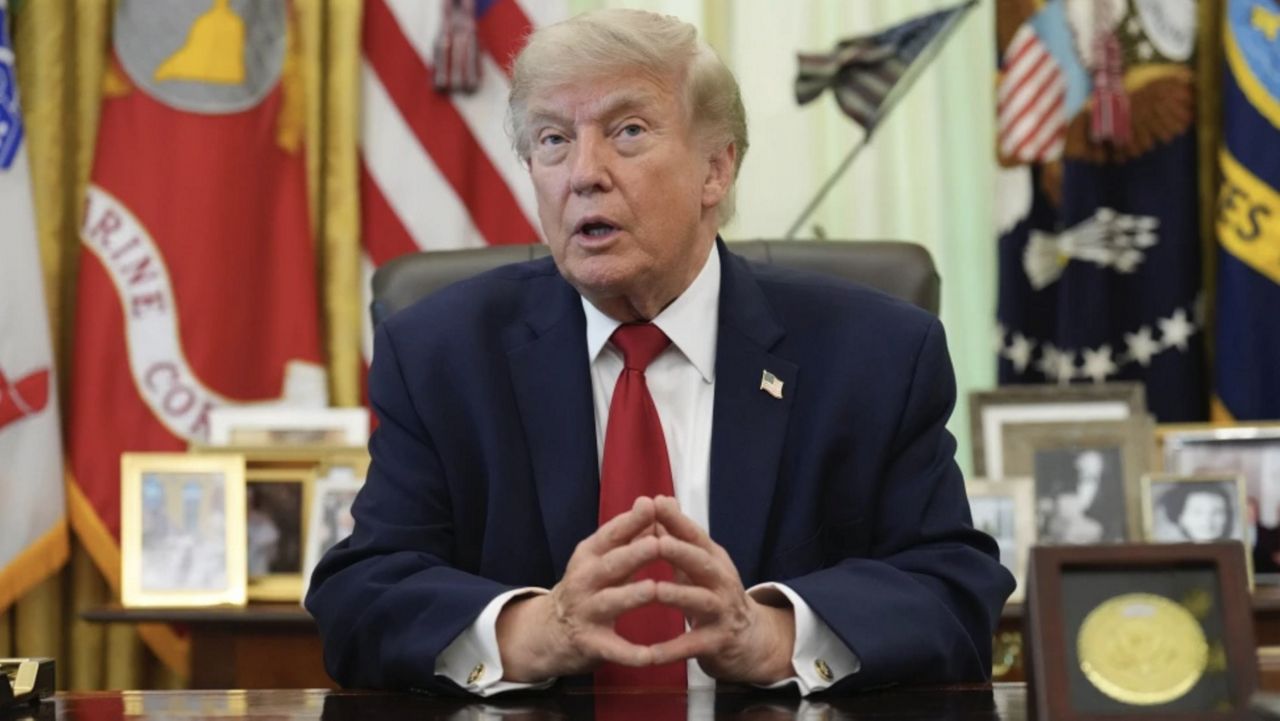
Donald Trump is once again doing what he does best: turning a familiar political ritual into a spectacle with real strategic consequences. The announcement of a 2026 midterm convention is not just another rally stunt. It is a signal that Trump and his allies want to change the tempo of the entire election cycle, force attention onto his brand, and make the Republican Party even more dependent on his personal political machine. For campaigns, donors, and voters, that matters because the midterms are usually won in the margins – turnout, media oxygen, and message discipline. A convention-style event could amplify all three. It could also expose the same old Trump weaknesses: overpromising, drowning out local races, and turning a partywide operation into a loyalty test.
- Trump’s midterm convention idea is as much about message control as it is about celebration.
- The move could boost turnout, unify donors, and dominate headlines if executed well.
- It also risks overshadowing vulnerable candidates and local issues that decide midterm outcomes.
- The real story is not the event itself, but how it could reshape Republican campaign strategy.
- For Democrats, this creates both a target and a distraction to exploit.
What the midterm convention actually means
The phrase midterm convention sounds ceremonial, but in Trump’s hands it is an organizing tool. Conventions are normally reserved for nominating presidents, stamping the party’s message, and delivering a polished, mass-media moment. A midterm version would borrow that same architecture for a different purpose: keep the base energized, centralize the narrative, and force every candidate to orbit the leader at the top of the ticket – even when there is no presidential ticket.
That is the innovation here, and also the risk. Midterms are usually about local politics, inflation, schools, immigration, health care, and the personality of the incumbent president. A national convention compresses all of that into a single megaphone. It can help candidates in red districts who want Trump’s blessing. It can also hurt those in swing seats who need room to look independent.
“The power move is not the event. The power move is making the rest of the party react to it.”
Why Trump is betting on spectacle
Trump has always understood something that many politicians still struggle with: attention is a governing resource. When the news cycle is crowded, he prefers to become the story rather than compete inside it. A convention-like gathering gives him a stage large enough to dominate cable, social platforms, and the fundraising ecosystem at once. It also gives supporters something to rally around that feels bigger than a standard campaign stop.
There is another layer here. Trump’s political operation has often been strongest when it blends entertainment, grievance, and identity. A midterm convention fits that formula neatly. It creates a visual marker of strength, a place where loyalty is rewarded, and a narrative that the movement is not merely defending seats but building momentum. That may be useful if Republicans want to avoid the scattershot messaging that has sometimes hurt them in close contests.
Message discipline over policy detail
One of the biggest advantages of a convention is message discipline. Instead of dozens of candidates improvising their own pitch, a party gets a shared script. Trump’s version would likely center on immigration, cultural conflict, anti-establishment anger, and the claim that he is still the only figure capable of making the Republican coalition function. That is politically efficient, especially in an environment where Republican voters often respond more intensely to national identity than to granular policy talk.
But efficiency cuts both ways. The more the party leans on Trumpian messaging, the harder it becomes for candidates in competitive districts to tailor their campaigns. A nationalized message can energize the base while repelling persuadable voters who want less drama and more stability.
How the midterm convention could reshape turnout
If there is a real strategic case for the event, it starts with turnout. Midterms usually punish the party in power, and turnout can be uneven among sporadic voters. A high-volume convention could function like a giant mobilization machine, reminding supporters that the election is not abstract. It is emotional, immediate, and tied to Trump’s broader political story.
Campaign professionals know that low-information voters often need repeated prompts, a sense of urgency, and a simple reason to care. A convention can deliver all three. It can also create an impression of inevitability and cohesion, which matters when the base is deciding whether the race is worth showing up for.
- Pros: stronger volunteer energy, donor confidence, and earned media.
- Cons: candidate overload, message fatigue, and negative attention from swing voters.
- Wildcard: if the event feels fresh instead of recycled, it could set the tone for the entire cycle.
Still, turnout gains are never automatic. If the event feels too theatrical, it may energize Trump loyalists while doing little to expand the coalition. That is the central gamble.
The media multiplier
Trump has long been a master of the media multiplier effect: make a big claim, force coverage, then use the coverage as proof of relevance. A midterm convention would likely produce the same loop. Even skeptical headlines can help him. The more the event looks unusual, the more it becomes a conversation about Trump’s power rather than about the opposition’s strategy.
For political operations, that is priceless. For a democratic system already struggling with personality-driven politics, it is another sign that the line between campaign and performance is disappearing.
What this means for Republicans
Republicans have a lot to gain if the event works. It could consolidate fundraising, unify messaging, and give candidates a national framework to plug into. It could also remind donors that Trump remains the main draw in the party. That matters because money follows visibility, and visibility is Trump’s strongest asset.
But there is a bigger structural issue: the party’s identity continues to be defined by one man. That can be effective in the short term and brittle over time. A midterm convention centered on Trump may help the GOP dominate a news cycle, but it also reinforces the idea that the party’s future is still being negotiated through his personality rather than through a durable policy agenda.
“A party can build a movement around a leader. It cannot always build a governing coalition that way.”
That tension will matter most in close races. In safe districts, the event will likely be a net positive. In suburban swing seats, candidates may need a little more oxygen than a giant Trump-centered stage allows.
Why Democrats should pay attention
Democrats should not dismiss this as another Trump media stunt. They should treat it as an early warning about how the next cycle may be fought. If Republicans successfully convert a convention into a turnout and branding engine, Democrats will need a counter-strategy that does more than mock the optics.
The smartest Democratic response would be to localize the race. That means hammering kitchen-table issues, highlighting candidate-specific contrasts, and avoiding the trap of making every district feel like a referendum on Trump alone. That approach is harder, slower, and less viral, but it is often how midterms are actually won.
They should also be ready for the fundraising ripple effect. A major Trump event could trigger a burst of small-dollar giving and donor enthusiasm. Democrats will need to decide whether to respond with their own high-profile counter-programming or to let Republicans own the spectacle while they focus on field operations.
The counter-messaging challenge
There is a subtle trap in overreacting. If Democrats spend too much time attacking the convention as a circus, they may end up amplifying it. A better approach is to point out the practical cost: while Trump stages a show, voters are still dealing with rent, health care bills, and local infrastructure. The contrast is powerful if framed correctly.
Pro tips for reading the strategy behind the stunt
To understand a Trump political move, ask three questions: who gets attention, who gets disciplined, and who gets money. The proposed midterm convention touches all three.
- Attention flows upward to Trump, not outward to candidates.
- Discipline increases because the party’s message becomes easier to police.
- Money becomes easier to raise when the base feels part of a larger movement.
- But candidate autonomy shrinks, especially in competitive districts.
This is why the event is more than branding. It is a power architecture. If Trump controls the stage, he controls the frame. And in modern politics, controlling the frame is often close to controlling the outcome.
The bigger implication for the 2026 cycle
If this experiment succeeds, expect imitation. Other parties will look for ways to manufacture mid-cycle spectacle, merge rallies with convention cues, and turn off-year elections into more nationalized showdowns. That would accelerate a trend already reshaping American politics: fewer quiet campaign seasons, more permanent campaigning, and even less space for local issues to breathe.
That may be exactly what Trump wants. He thrives in a system where politics is always on, always performative, and always centered on conflict. A midterm convention is a perfect expression of that worldview. It is bold, expensive, media-friendly, and deeply Trumpian. It may also be a sign that the political class has fully accepted the idea that spectacle is no longer an accessory to strategy. It is the strategy.
Whether that wins races is another question entirely. Conventions can inspire. They can also expose hubris. Trump’s challenge is to make the former outweigh the latter. If he can, Republicans get a high-octane advantage heading into 2026. If not, they may end up with a very loud reminder that attention is not the same thing as votes.
The information provided in this article is for general informational purposes only. While we strive for accuracy, we make no guarantees about the completeness or reliability of the content. Always verify important information through official or multiple sources before making decisions.