Trump Strait of Hormuz Plan Raises Global Stakes
Trump Strait of Hormuz Plan Raises Global Stakes
The Trump Strait of Hormuz plan lands at the exact pressure point the global economy fears most: a narrow waterway where geopolitics, oil flows, naval power, and miscalculation collide. When any U.S. administration signals a new approach to the Strait of Hormuz, traders react, diplomats recalibrate, and military planners start war-gaming the consequences. That is because this is not just another foreign policy headline. It is a live test of deterrence against Iran, of American willingness to project force, and of whether symbolic strategy can survive contact with a volatile region. If the plan behind what is reportedly being framed as Project Freedom moves from rhetoric to operational policy, the ripple effects will hit energy prices, alliance politics, and the broader credibility of U.S. power far beyond the Gulf.
- The Trump Strait of Hormuz plan appears designed to reshape deterrence against Iran at a critical maritime chokepoint.
- Any shift in U.S. posture around the strait has immediate implications for global oil markets and shipping security.
- The proposal carries strategic upside, but also a serious risk of escalation, misreading, or accidental conflict.
- Regional allies may welcome a tougher line publicly while quietly worrying about being dragged into a larger confrontation.
- What matters most is not branding, but whether the plan has legal clarity, military realism, and diplomatic backup.
Why the Strait of Hormuz still controls the global mood
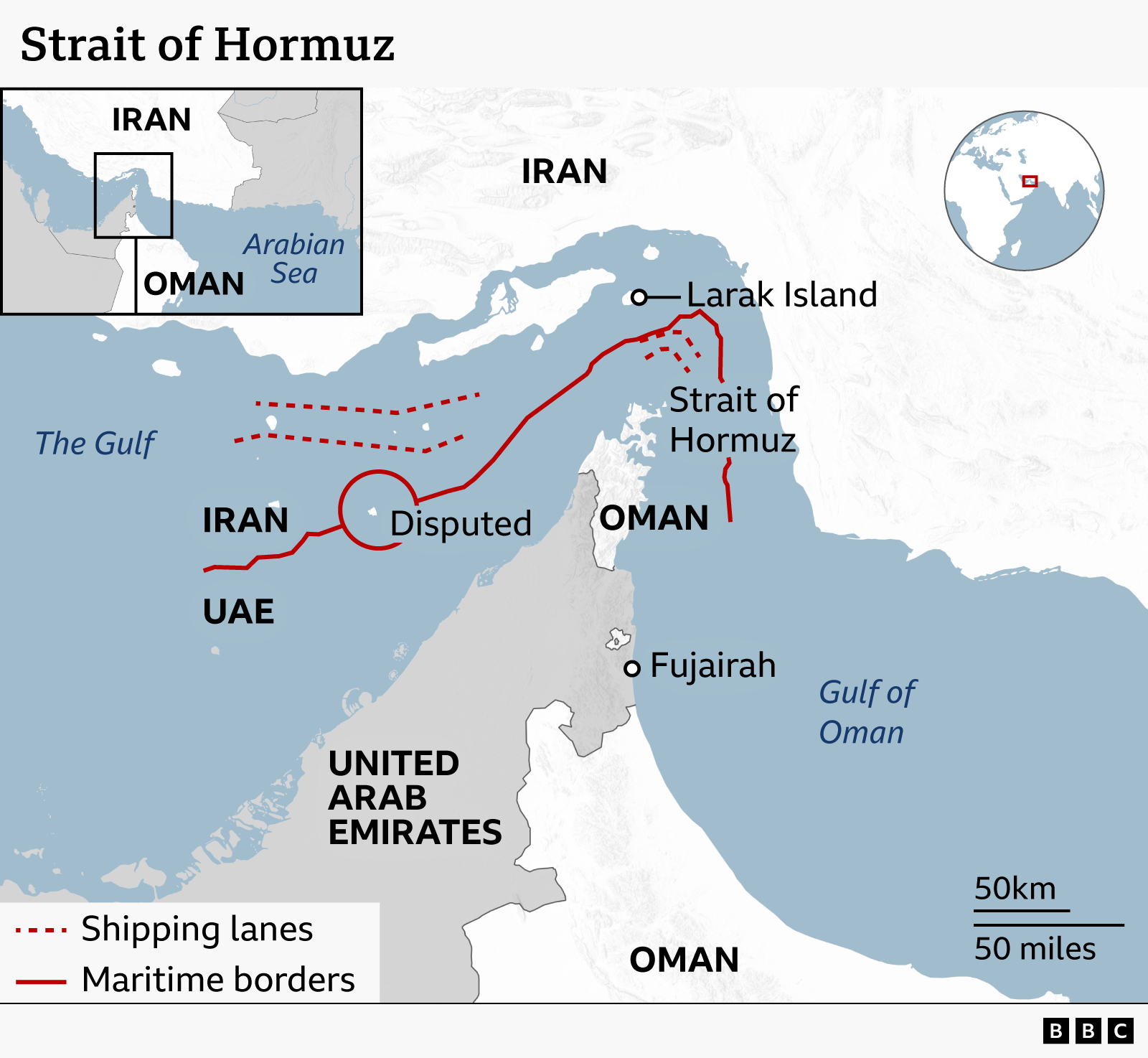
The Strait of Hormuz remains one of the most consequential maritime chokepoints on Earth. A huge share of globally traded oil and liquefied natural gas passes through this narrow corridor linking the Persian Gulf to the Arabian Sea. That means even the perception of instability can jolt prices, raise insurance costs, and trigger cascading anxiety across markets.
This is why a proposal tied to the Trump camp and aimed at Hormuz cannot be read as ordinary campaign theater or ideological signaling. The strait sits at the center of a broader contest involving U.S. naval dominance, Iranian asymmetric power, Gulf state security, and the economic dependence of Asia and Europe on uninterrupted energy flows.
Control is not the issue. Credibility is. The United States already has the military capacity to patrol, escort, deter, and, if necessary, retaliate. The harder question is whether a more aggressive doctrine would strengthen deterrence or simply compress the timeline to crisis.
The logic behind the Trump Strait of Hormuz plan
At its core, the reported posture appears to follow a familiar Trump-era strategic instinct: make U.S. red lines more visible, more dramatic, and harder for adversaries to test without consequence. Applied to Hormuz, that could mean a more explicit pledge to guarantee freedom of navigation, a stronger military footprint, faster response rules, or a public doctrine aimed squarely at Iran’s Revolutionary Guard and its pattern of harassment at sea.
There is a political logic to this. Trump has long favored high-visibility strength as both foreign policy and domestic messaging. A named initiative such as Project Freedom fits that style neatly. It converts a technical maritime security challenge into a narrative of American resolve.
In strategic terms, the pitch is simple: if Iran believes the U.S. response will be swift and unmistakable, it may think twice before threatening shipping lanes.
But deterrence is not branding. It works only if the other side sees the threat as both credible and proportionate. Too little clarity invites testing. Too much theatrical escalation can produce the very confrontation it is meant to prevent.
What a tougher posture could include
Even without operational details, a Hormuz-centered plan would likely revolve around a handful of practical tools:
- Expanded naval escort missions for commercial vessels.
- More aggressive surveillance using drones, patrol aircraft, and maritime intelligence platforms.
- Revised rules of engagement for harassment, seizure attempts, or mining activity.
- Closer coordination with Gulf allies on missile defense, port resilience, and rapid response.
- Economic signaling tied to sanctions enforcement and shipping security.
Each of those measures sounds manageable in isolation. Combined, they create a posture that is unmistakably more confrontational.
Why Iran matters differently in this theater
Iran does not need to dominate the Strait of Hormuz to make it dangerous. That is the enduring strategic asymmetry. Tehran’s leverage comes from disruption, not control. Fast boats, drones, anti-ship missiles, mines, proxy pressure, and calibrated harassment can all raise the cost of navigation without crossing immediately into full-scale war.
This is the trap for any U.S. administration. A freedom-of-navigation strategy is easy to defend in principle because the stakes are global and the legal argument is straightforward. But Iran’s methods are intentionally ambiguous. It can challenge shipping with just enough pressure to create fear while preserving plausible deniability or avoiding a threshold that compels overwhelming retaliation.
That means the Trump Strait of Hormuz plan, if it aims to impose a more muscular deterrent, must answer a hard question: what exact action triggers what exact response? Without that clarity, the initiative risks becoming a slogan wrapped around unresolved military judgment.
The danger of gray-zone escalation
Most maritime crises in the Gulf do not begin with formal declarations. They begin with radar locks, intercepted tankers, warning shots, drone surveillance, electronic interference, or contested boarding operations. These are gray-zone tactics – aggressive enough to provoke, deniable enough to complicate response.
If Washington adopts a bolder doctrine, commanders may face compressed decision windows. Should a U.S. escort vessel fire if an Iranian craft approaches beyond a certain distance? Does the disabling of a drone justify retaliation against a launch site? Does one seized tanker trigger collective naval action?
These are not abstract legal seminar questions. They are the mechanics of escalation.
What this means for oil, shipping, and business confidence
Any serious discussion of the Strait of Hormuz is also a business story. The Gulf is where military strategy collides with logistics, insurance, and commodity pricing. Traders do not wait for missiles to fly. They react to risk perception.
If a future administration formalizes a new Hormuz doctrine, several things could happen quickly:
- Shipping insurers may raise premiums for vessels transiting the region.
- Oil futures could price in disruption risk even before any incident occurs.
- Import-dependent economies in Asia may intensify pressure for de-escalation.
- Energy producers outside the Gulf may gain temporary pricing leverage.
This is why even a plan marketed as protective can produce volatility. The paradox is unavoidable: stronger deterrence can calm markets over the long term, but only after it first shocks them.
Markets do not distinguish neatly between a policy meant to prevent a crisis and a policy that increases the odds of one in the short run.
For business leaders, the practical takeaway is straightforward. Hormuz risk is no longer just a military variable. It is a boardroom variable affecting procurement, fuel costs, shipping routes, and scenario planning.
How allies could react to Project Freedom
Regional allies would likely welcome stronger American commitment in public. Gulf monarchies have long wanted firm U.S. backing against Iranian coercion, especially where maritime commerce and critical infrastructure are concerned. Israel, too, would likely view a more explicit anti-Iran maritime posture as part of a broader pressure architecture.
But ally support is rarely uncomplicated. Behind closed doors, many partners fear being caught between dependence on American protection and exposure to Iranian retaliation. They want deterrence, but not necessarily a spiral they cannot control.
Three quiet concerns allies may have
- Retaliation risk: Iran may target regional energy infrastructure, ports, or proxy arenas if it sees itself cornered.
- Policy volatility: Allies may worry that a highly personalized U.S. strategy could shift quickly with domestic political pressures.
- Endgame ambiguity: They may ask whether Washington seeks deterrence, coercive bargaining, or regime destabilization.
That last point is especially important. A maritime plan works best when allies know the objective. Is the goal simply to keep shipping lanes open? Or is Hormuz being used as a front line in a larger maximum-pressure campaign against Tehran?
The legal and operational questions that cannot be ignored
Any durable strategy in the strait must rest on more than rhetoric. It needs legal legitimacy, military sustainability, and diplomatic coordination. If not, it may generate headlines without generating stability.
Operationally, escort missions and persistent patrols are resource-intensive. They require naval assets, intelligence integration, clear command structures, and robust deconfliction protocols. This is not a one-week demonstration operation. It is a long-haul commitment.
Legally, freedom of navigation missions generally stand on solid ground, but the threshold for preemptive or retaliatory action is more sensitive. Rules of engagement must be precise. The chain of authority must be clear. Any mismatch between public promises and field-level permissions is dangerous.
Pro tip for reading strategic announcements
When evaluating plans like Project Freedom, ignore the branding first and look for four indicators:
- Whether force posture actually changes.
- Whether rules of engagement are clarified.
- Whether allies publicly join the framework.
- Whether markets calm after the announcement or get more nervous.
Those signals reveal whether a doctrine is real or merely performative.
Why the Trump Strait of Hormuz plan matters beyond the Gulf
The significance of the Trump Strait of Hormuz plan extends well beyond U.S.-Iran rivalry. It speaks to a larger question haunting global politics: can the United States still enforce order at critical chokepoints without igniting the very instability it wants to contain?
That question resonates in the South China Sea, the Red Sea, and other contested transit zones where state and non-state actors test the limits of maritime power. Hormuz is not an isolated case. It is a model of how 21st-century deterrence works under constant surveillance, instant market reaction, and weaponized ambiguity.
If a future U.S. administration demonstrates that it can secure shipping while avoiding overreaction, that matters globally. If it overpromises and then stumbles into unmanaged escalation, that also sends a message – one adversaries elsewhere will study closely.
The real audience for any Hormuz doctrine is not just Tehran. It is every state measuring the gap between American rhetoric and American staying power.
The bottom line
The attraction of a harder Hormuz policy is obvious. It promises clarity in a region defined by ambiguity. It offers a direct answer to Iranian harassment. It tells allies that Washington still takes maritime security seriously. And politically, it packages deterrence into a message of strength that is easy to sell.
But chokepoints punish simplistic thinking. The Strait of Hormuz is too central to global energy flows and too exposed to asymmetric disruption for slogan-driven strategy. A successful plan would need discipline, allied buy-in, calibrated military rules, and a credible path to de-escalation if an incident occurs.
That is the test facing any version of Project Freedom. If it is a serious doctrine, it could reshape the balance of risk in one of the world’s most sensitive corridors. If it is mostly political theater, it may simply add another layer of volatility to a region that has never lacked for it.
For now, the key fact is simple: when the Strait of Hormuz becomes the stage for a new American strategy, the consequences are never local, never symbolic, and never small.
The information provided in this article is for general informational purposes only. While we strive for accuracy, we make no guarantees about the completeness or reliability of the content. Always verify important information through official or multiple sources before making decisions.