Trump Xi Meeting Tests Global Power
Trump Xi Meeting Tests Global Power
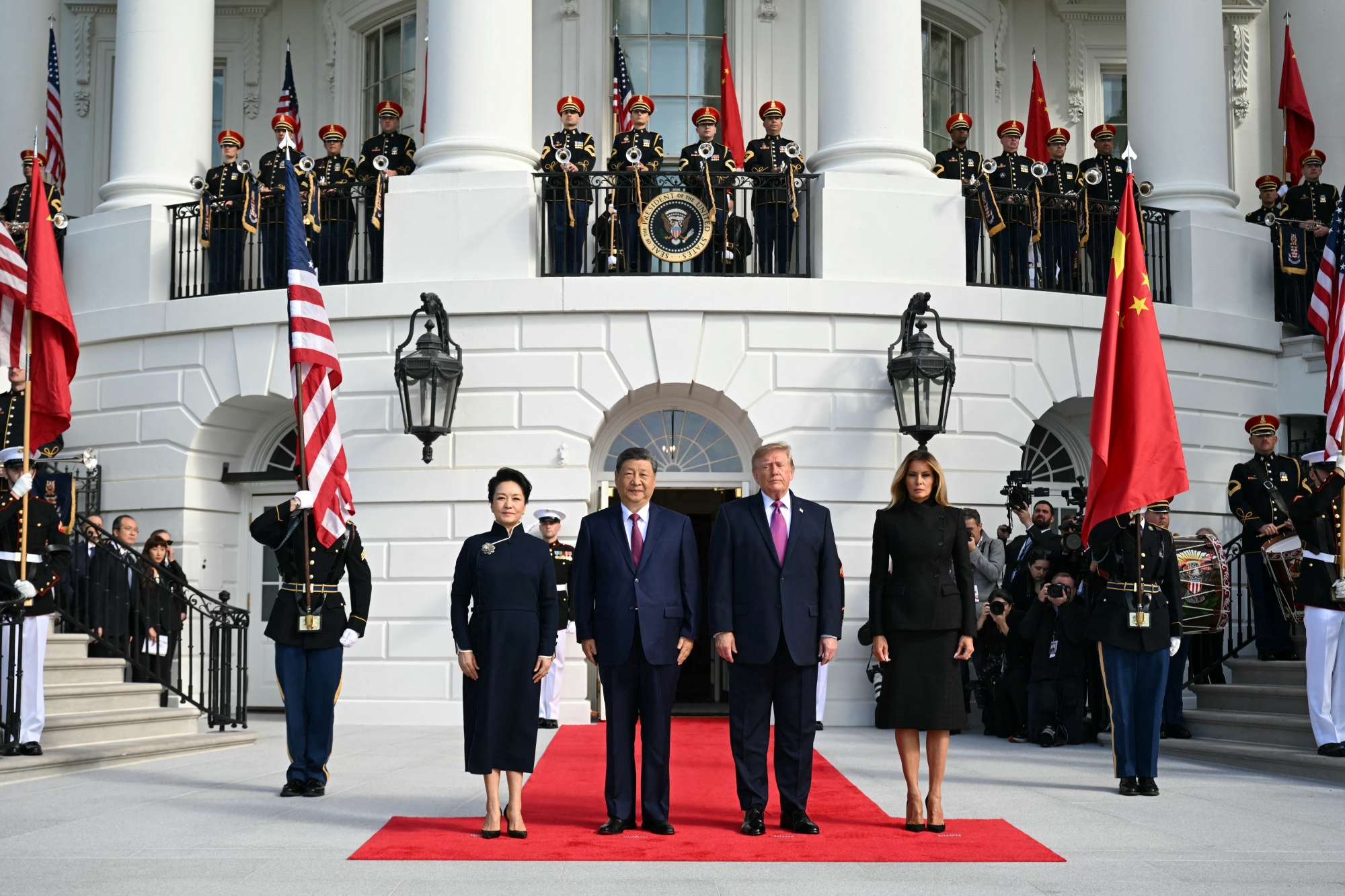
The stakes around a Trump Xi meeting are not just diplomatic theater. They are a live stress test for the global economy, the technology supply chain, and the future of American power. If Donald Trump hosts Xi Jinping at the White House, the encounter would land at a moment when both Washington and Beijing need stability but want leverage. Businesses want clarity on tariffs. Allies want reassurance. Markets want signals. And both leaders want to look strong at home without triggering a crisis abroad.
This is the kind of meeting where the handshake matters less than the choreography around it. The real question is whether the Trump Xi meeting becomes a managed reset or another high-profile performance that leaves the hardest conflicts untouched.
- The meeting could cool tensions, but it will not erase structural rivalry between the US and China.
- Trade,
export controls,semiconductors, fentanyl enforcement, and security flashpoints are likely to dominate. - Trump may frame the summit as dealmaking, while Xi will seek recognition of China as an equal power.
- Markets and allies will watch for process, not just promises.
Why the Trump Xi meeting matters now
A White House meeting between Trump and Xi would be more than a photo opportunity. It would signal that both sides see value in direct leader-to-leader engagement after years of confrontation, mutual suspicion, and fragmented communication. That alone matters. When the two largest economies stop talking, businesses start planning around worst-case scenarios.
The US-China relationship has become the central operating system for global politics. It touches shipping lanes, rare earths, energy markets, artificial intelligence, military deterrence, and the price of consumer goods. A single statement after a summit can shift corporate planning, currency expectations, and diplomatic assumptions across Asia and Europe.
The most important outcome may not be a grand bargain. It may be whether both governments can create enough predictability to prevent competition from becoming collision.
That is why the optics of a Trump Xi meeting are so loaded. Trump prefers visible wins, big announcements, and transactional framing. Xi prefers strategic patience, disciplined messaging, and respect for hierarchy. Their political styles are different, but both understand spectacle. The danger is that spectacle can obscure substance.
The Trump Xi meeting will test the limits of dealmaking
Trump has long treated diplomacy as negotiation under pressure. That can produce movement when the other side wants a fast off-ramp. But China is not a conventional negotiating counterpart. Beijing thinks in systems, dependencies, and long timelines. It can absorb pressure, wait out political cycles, and retaliate through targeted economic channels.
That does not mean a deal is impossible. It means any deal will likely be narrow. Expect potential movement on purchases, enforcement cooperation, visa issues, or communication channels. Do not expect a sweeping settlement over industrial policy, military posture, or technology dominance.
Trade is still the loudest pressure point
Tariffs remain one of the clearest symbols of US-China tension. For Trump, tariffs are political proof that he is confronting Beijing. For companies, they are a tax on complexity. For consumers, they often show up as higher prices or reduced choice. If a summit produces tariff relief, even limited relief, markets may respond quickly.
But tariff politics are sticky. Removing them can look like concession. Expanding them can look tough while raising costs. The most realistic outcome is a managed framework: selective relief, new enforcement language, or sector-specific commitments that allow each side to claim discipline without surrender.
Technology is the real battlefield
The deeper conflict is over advanced technology. Washington has tightened export controls around semiconductors, advanced manufacturing equipment, and AI chips. Beijing sees these restrictions as an attempt to contain its rise. The US sees them as necessary to protect national security and preserve technological advantage.
This is where the summit could get serious fast. If the leaders discuss technology, the question will not be whether the US and China compete. They will. The question is whether they can define guardrails around the most sensitive areas. Without guardrails, every chip restriction, data rule, or investment review becomes another escalation point.
Pro Tip for business leaders: do not plan around a full thaw. Plan around selective openings and sudden restrictions. Companies exposed to China should maintain supplier redundancy, review compliance with export controls, and model tariff changes before they happen.
What Xi wants from the White House stage
For Xi, a White House visit is not just bilateral diplomacy. It is a global signal. Standing beside an American president in Washington reinforces China’s status as a peer power. That matters to Beijing’s domestic audience and to countries trying to navigate between the two superpowers.
Xi will likely want several things: respect for China’s political system, limits on US support for measures Beijing views as hostile, reduced pressure on Chinese technology firms, and recognition that economic decoupling is harmful. He may also seek a calmer business climate as China manages slower growth, property-market strain, and demographic headwinds.
But Xi will not want to look like he came to Washington to receive terms. Any agreement must be framed as mutual, balanced, and respectful. That makes language crucial. A poorly worded joint statement can create diplomatic fallout before any policy is implemented.
What Trump wants from the Trump Xi meeting
Trump will want a win he can describe in simple terms: better trade terms, Chinese purchases, action on fentanyl precursors, or commitments that sound enforceable. He may also use the summit to show that global leaders must come to him, not the other way around.
The White House setting strengthens that message. Hosting Xi gives Trump the advantage of venue and image. It allows him to project command while presenting himself as the only leader capable of managing Beijing through personal negotiation.
The risk for Trump is that a summit designed as proof of strength can become proof of dependency if it produces vague promises and few enforceable commitments.
That risk is not theoretical. US-China agreements have often struggled over verification, timelines, and interpretation. A headline deal can fade quickly if agencies cannot implement it or if one side believes the other is moving the goalposts.
The security agenda could overshadow the economics
Even if trade dominates the public messaging, security will sit underneath everything. The most sensitive issue is Taiwan. Washington’s posture, arms sales, and regional alliances remain central to Beijing’s threat perception. Beijing’s military activity around the island remains central to Washington’s concern.
Neither leader benefits from a crisis, but both face pressure not to appear weak. That makes direct communication essential. Military-to-military channels, crisis hotlines, and rules for encounters at sea and in the air may sound bureaucratic, but they are the plumbing that prevents accidents from becoming confrontations.
The South China Sea, cyber activity, and influence operations are also likely to remain unresolved. These are not problems solved by one meeting. They are arenas where competition is continuous and deniable. The best near-term goal is escalation control.
Why markets will parse every word
Investors will not just look for a smiling handshake. They will watch for verbs. Did the leaders agree, explore, commit, direct, or merely discuss? Diplomatic language is a market signal when supply chains are on the line.
Several sectors are especially exposed. Chipmakers will watch for changes to AI chip restrictions. Automakers will watch battery and mineral policy. Retailers will watch tariffs. Agriculture will watch purchase commitments. Cloud, software, and data firms will watch any language around cybersecurity, data localization, or cross-border compliance.
- Best-case market signal: a structured dialogue with timelines, working groups, and specific areas of relief.
- Neutral signal: warm language with limited policy movement.
- Worst-case signal: public disagreement, new threats, or competing readouts that contradict each other.
The biggest mistake would be treating a summit as a binary event. US-China relations now move through partial thaw and partial freeze at the same time. A meeting can improve tone while leaving policy hard lines intact.
The bigger shift is managed rivalry
The era of assuming that trade would make China more politically aligned with the West is over. So is the fantasy of clean decoupling. The world is moving into managed rivalry: heavy competition with selective cooperation where mutual damage is too expensive.
That model is messy, but it is probably the only realistic one. The US and China still need each other in climate coordination, financial stability, public health surveillance, and nuclear risk management. They also mistrust each other in nearly every strategic domain.
The Trump Xi meeting, if handled seriously, could help define that new model. It could create a framework where competition is explicit but bounded. If handled poorly, it could become another episode of political theater that accelerates mistrust.
The bottom line on the Trump Xi meeting
A Trump Xi meeting at the White House would be consequential because the relationship itself is consequential. But expectations should stay grounded. The US and China are not on the edge of friendship. They are searching for a way to compete without breaking the global system they both rely on.
The smartest read is skeptical optimism. Direct talks are better than silence. Guardrails are better than improvisation. Narrow deals are better than empty confrontation. But no summit can erase the core reality: Washington and Beijing are locked in a long contest over power, technology, and influence.
If the meeting produces durable channels, measurable commitments, and fewer surprises, it will matter. If it produces only flattering images and vague declarations, the world will be right back where it started – waiting for the next shock from the most important rivalry on the planet.
The information provided in this article is for general informational purposes only. While we strive for accuracy, we make no guarantees about the completeness or reliability of the content. Always verify important information through official or multiple sources before making decisions.


