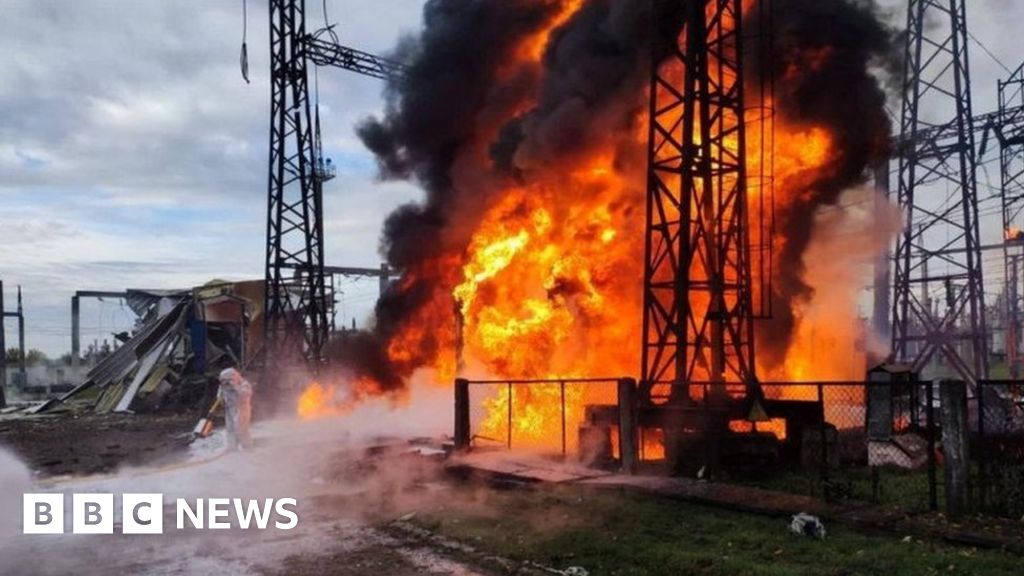
Ukraine Hit by Massive Airstrike

Ukraine Hit by Massive Airstrike
Ukraine’s air war just escalated again, and the stakes are brutally clear: every major strike drains civilian resilience, stresses air defenses, and forces Kyiv’s allies to confront a hard question about how long a country can absorb this level of pressure. A massive airstrike is not just another headline. It is a reminder that Russia still has the ability to overwhelm, probe, and punish, even as Ukraine adapts with better interception tactics, distributed defenses, and rapid repair crews. The real pain point is not only the damage itself, but the constant uncertainty it creates for power grids, logistics, public safety, and morale. For Ukraine, survival now depends on speed, redundancy, and sustained foreign support. For the wider world, this is a live test of whether modern air defenses can keep pace with an industrial-scale assault.
- The latest massive airstrike underscores how Russia still uses saturation tactics to pressure Ukraine.
- Ukraine’s air defenses remain effective, but interception alone cannot fully stop the disruption.
- Civilian infrastructure, especially energy and transport, remains a prime target.
- Long-term resilience now depends on munitions supply, repair capacity, and allied support.
The strike was about more than destruction
Massive attacks in this war are never only about the immediate blast radius. They are designed to exhaust defenders, confuse planners, and force a constant cycle of response. A massive airstrike can hit infrastructure, drain missile stocks, and create a psychological effect that reaches far beyond the targeted city or region. That is the strategic logic behind these attacks: overwhelm the system, then exploit the gaps.
Ukraine has spent much of the war improving its ability to absorb these hits. Mobile air defense units, dispersed critical assets, and rapid emergency repair teams have helped reduce the long-term impact of many strikes. But the core challenge remains unchanged: a defending country must intercept, repair, reroute, and reassure all at once. That is an enormous operational burden, especially when attacks come in waves.
The most dangerous aspect of a massive airstrike is not only the damage it causes, but the tempo it imposes. Defenders are forced to spend scarce resources faster than they can replenish them.
Why a massive airstrike still matters strategically
This latest assault matters because it reveals the continuing shape of the conflict. Russia’s campaign has repeatedly tried to degrade Ukraine’s energy grid, disrupt transport, and create civilian hardship as a pressure point. Even when missile and drone attacks fail to achieve decisive military gains, they can still create cumulative strain. That is the uncomfortable truth of attritional warfare: success does not require a knockout punch when repeated jolts can do the job.
For Ukraine, the strategic goal is not just surviving the next wave. It is preserving enough national capacity to keep fighting, keep cities functioning, and keep the economy from collapsing under the weight of constant disruption. Every repair effort becomes part of the battlefield. Every transformer, rail line, and warehouse becomes a strategic asset.
Air defenses can blunt strikes, but not erase them
Ukraine’s interceptors and radar networks have repeatedly limited the scale of destruction. That is significant, and it should not be understated. But no defense system is perfect, especially against mixed salvos that combine drones, cruise missiles, and ballistic threats. This is where the war’s arithmetic becomes unforgiving: the defender is often using expensive interceptors to stop cheaper incoming weapons.
That imbalance shapes the entire conflict. It is why military aid packages focused on air defense systems, missiles, and radar integration remain so important. They are not symbolic support. They are one of the few ways Ukraine can preserve its operational breathing room.
Ukraine’s resilience is now an infrastructure story
What happens after the blast is often as important as the strike itself. Emergency crews restore power, engineers reroute systems, and local authorities try to keep services running. That resilience has become one of Ukraine’s defining strengths, but it also comes at a cost. Rebuilding the same systems again and again slows development, taxes municipal budgets, and wears down the people responsible for keeping the country moving.
The war has turned infrastructure into a form of frontline defense. Power plants, substations, rail depots, and communication hubs are not background utilities anymore. They are strategic nodes. If they fail, the effects ripple into hospitals, schools, factories, and households.
- Power grids are vulnerable because even partial damage can trigger wider outages.
- Transport networks matter because military supply and civilian mobility rely on them.
- Repair crews are essential because response speed can reduce the long-tail impact of each strike.
- Air defense stocks are critical because depletion creates openings for future attacks.
The military lesson in the massive airstrike
There is a broader military lesson here that reaches beyond Ukraine. Modern warfare is increasingly about systems, not just platforms. A missile defense network is only as good as its sensors, command structure, logistics, and sustainment pipeline. The same is true for offense. Launching a massive airstrike is not merely firing weapons. It is coordinating targeting, timing, deception, and saturation.
That makes the conflict an unusually stark case study in industrial endurance. Countries watching from the sidelines should pay attention. The side that can produce, transport, and replenish faster often gains an edge even when the battlefield is static. This is one reason defense planners are paying close attention to stockpiles, production lines, and alliance coordination.
What to watch next
Several indicators will show whether this strike becomes a one-off shock or part of a broader escalation cycle. First, watch for damage to the energy grid and how quickly utilities restore service. Second, monitor whether air defense intercept rates hold steady or degrade under repeated pressure. Third, pay attention to the political response from Ukraine’s partners, because air defense aid often becomes most urgent after a wave of attacks rather than before it.
If repeated strikes continue, the pressure will not just be military. It will be economic and humanitarian as well. That can shape everything from factory output to winter preparedness to public confidence in the state’s ability to protect its citizens.
When a country can predict that another strike is coming, resilience becomes a race between engineering and exhaustion.
Why allies cannot treat this as routine
It is tempting for outside observers to normalize these headlines because they arrive so often. That would be a mistake. Every major strike is a reminder that aid timing matters as much as aid volume. Air defense systems, interceptor missiles, spare parts, and power equipment are most effective when they arrive before the next saturation attack, not after it.
For Western governments, this is a test of strategic patience. Supporting Ukraine requires more than periodic announcements. It requires matching a persistent threat with persistent logistics. That means keeping production lines hot, coordinating deliveries, and recognizing that deterrence is partly about convincing Moscow that each escalation will fail to produce a decisive result.
The bigger picture
The latest massive airstrike fits a pattern that has defined the war for much of its duration: Russia seeks leverage through destruction, while Ukraine counters with adaptation, dispersion, and persistence. That contest is far from over. If anything, it is becoming more technically demanding and more politically consequential.
Ukraine’s challenge is no longer just holding the line. It is holding the line while maintaining the services, morale, and industrial base needed to keep the country functioning. That is why these strikes matter so much. They are not isolated events. They are pressure tests for a nation at war and for the international system backing it.
And that is the real story behind the damage: not just what was hit, but what Ukraine must keep rebuilding to stay in the fight.
The information provided in this article is for general informational purposes only. While we strive for accuracy, we make no guarantees about the completeness or reliability of the content. Always verify important information through official or multiple sources before making decisions.