Venezuela Honors Rescue Dog Tsunami
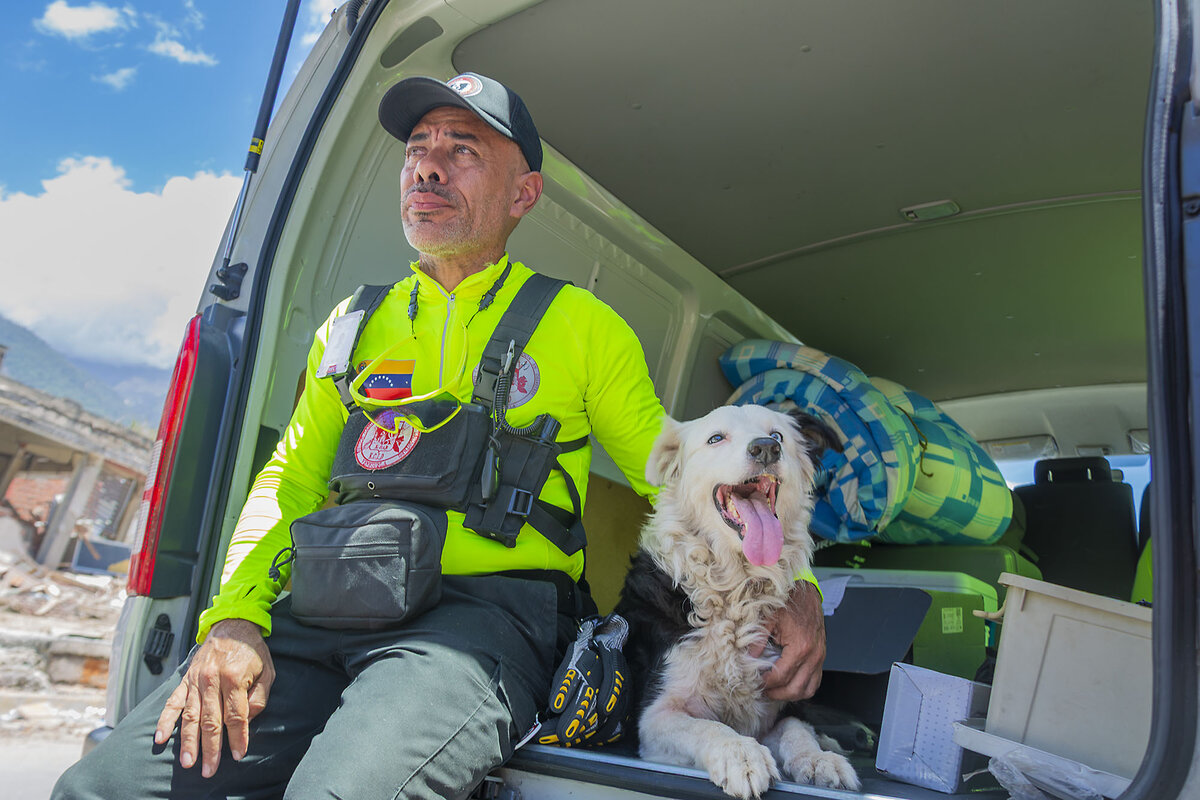
Venezuela Honors Rescue Dog Tsunami
Disasters usually leave behind numbers: magnitude, casualties, collapsed homes, missing people. But the story of Venezuela rescue dog Tsunami cuts through the statistics with something more durable: trust. After earthquakes shook communities and forced rescuers into dangerous, unstable terrain, Tsunami became a symbol of what trained animals can do when minutes matter and human access is limited. Now Venezuela has honored the dog with a statue, turning a working animal’s service into public memory. That matters because monuments do not just celebrate the past. They tell future generations who showed up when systems were strained, fear was everywhere, and survival depended on skill, speed, and courage.
- Venezuela rescue dog Tsunami has been honored with a statue recognizing disaster response service.
- The tribute highlights the critical role of
K9teams in earthquake rescue operations. - Tsunami’s story reflects a broader shift toward valuing preparedness, not just emergency reaction.
- The statue is also a civic message: resilience depends on people, animals, training, and memory.
Why Venezuela Rescue Dog Tsunami Became More Than a Mascot
It would be easy to flatten Tsunami’s story into a feel-good animal tribute. That would miss the point. A rescue dog in a quake zone is not symbolic first. It is operational. Dogs trained for search and rescue can detect scent through rubble, debris, mud, and structural voids where cameras and human teams may struggle. In the chaotic aftermath of an earthquake, that capability is not sentimental. It is tactical.
The name Tsunami carries its own dramatic charge, but the work behind it was disciplined, repetitive, and physically demanding. Disaster dogs are trained to move through unstable environments, ignore noise, follow commands under pressure, and distinguish human scent in complex conditions. Their handlers must read behavior quickly, because a change in posture, breathing, or focus can signal a possible find.
Key insight: The statue is not just about one dog. It is about recognizing that disaster response is a system, and sometimes the most effective sensor in that system has four legs.
That is why this tribute lands differently from a routine public memorial. It acknowledges a form of public service that is often visible only in the most painful moments. When a dog like Tsunami enters a disaster zone, the emotional stakes are enormous. Families are waiting. Rescuers are racing fatigue. Authorities are managing uncertainty. The dog becomes both a tool of survival and a focus of hope.
The Real Work Behind Venezuela Rescue Dog Tsunami
Earthquake response is brutally time-sensitive. The first hours can define outcomes, especially when victims are trapped in collapsed structures. The phrase golden period is often used in emergency medicine and disaster response to describe the narrow window when rescue is most likely to save lives. In practice, that window is messy. Roads may be blocked, communication may fail, hospitals may be overwhelmed, and aftershocks can turn damaged buildings into fresh threats.
In that environment, a trained dog can help prioritize where rescuers dig. That matters because every deployment decision has a cost. Send crews to the wrong pile of rubble, and time vanishes. Miss a faint human scent, and a life may be lost. Dogs are not magic, and they are not replacements for engineers, medics, firefighters, or heavy equipment. But they are force multipliers.
The Discipline Behind a Disaster Dog
A capable K9 rescue unit depends on far more than instinct. Training typically includes scent recognition, agility, obedience, confidence on uneven surfaces, and desensitization to sirens, crowds, smoke, dust, and machinery. The handler-dog relationship is central. The handler must know when the animal is locked onto a scent, when it is stressed, and when conditions are too dangerous to continue.
This is where Tsunami’s recognition becomes especially important. Public monuments tend to honor leaders, soldiers, founders, and martyrs. A statue for a rescue dog expands that civic vocabulary. It says service can be measured not only by rank or office, but by contribution under pressure.
Why Statues Still Matter in a Viral Age
We live in an era where a rescue animal can become globally beloved in a single clip. But virality is fragile. A statue is slower, heavier, and more demanding. It turns an emotional moment into a physical place. People can visit it, photograph it, explain it to children, and fold it into local identity.
That is the deeper editorial tension here: digital attention fades, but public memory requires infrastructure. A statue of Tsunami gives permanence to a story that could otherwise disappear into a news cycle crowded by conflict, climate shocks, elections, and economic anxiety.
Editorial view: Honoring Tsunami is not escapism. It is a reminder that societies need heroes they can understand, especially when institutions feel abstract or distant.
What Tsunami’s Statue Says About Disaster Preparedness
The most useful way to read this tribute is not as nostalgia, but as a prompt. Venezuela, like many countries, faces overlapping vulnerabilities: seismic risk, aging infrastructure, uneven emergency capacity, and communities that may be far from rapid-response resources. A statue does not fix those problems. But it can make preparedness part of the public conversation.
Preparedness is often politically unrewarding because success looks like nothing happened. Buildings do not collapse. Alerts reach people on time. Drills feel routine. Rescue teams arrive with the right equipment. The absence of catastrophe rarely gets applause. Tsunami’s recognition changes the emotional frame. It makes the invisible work visible.
- Invest in training:
K9teams require years of practice, evaluation, and handler expertise. - Fund local readiness: Community-level emergency planning can shorten response times after earthquakes.
- Build public trust: Visible rescue programs can make citizens more likely to follow official guidance.
- Preserve lessons learned: Memorials can keep disaster memory alive long after reconstruction ends.
Pro Tip for Emergency Planners
Do not treat animal rescue units as ceremonial assets. If a city or region includes K9 search and rescue in its emergency strategy, it needs real budgets, transport plans, veterinary support, protective gear, and integration into incident command. A dog team that cannot deploy quickly is a symbol, not a capability.
The Human Side of a Canine Tribute
Part of the reason Tsunami’s story resonates is that rescue dogs help translate disaster into something emotionally graspable. Earthquakes are overwhelming. The ground itself becomes untrustworthy. Buildings turn hostile. Ordinary streets become maps of loss. Against that scale, a dog searching through debris offers a narrative people can hold onto: loyalty, focus, and the possibility that someone may still be found.
There is also something quietly radical about honoring a rescue animal in public space. It challenges the assumption that heroism must be human to be meaningful. Tsunami did not understand geopolitics, budgets, or press coverage. The dog understood training, commands, scent, and the bond with a handler. Yet the outcome of that work belonged to the public.
This is why the statue is likely to endure as more than a local curiosity. It is emotionally accessible without being shallow. Children can understand it immediately. Survivors may see in it a recognition of their own trauma. Responders may see a rare acknowledgment of the risks they take and the companions they rely on.
Why This Matters Beyond Venezuela
Tsunami’s memorial arrives at a time when disasters are becoming more complex. Climate change is intensifying floods, storms, heat waves, and displacement. Urbanization is concentrating more people in dense environments. Aging infrastructure adds another layer of risk. Even when earthquakes are not caused by climate, their impact is shaped by planning, poverty, construction standards, and response capacity.
That makes the lesson broader than one country or one dog. The future of disaster response will involve satellites, drones, AI mapping, resilient communications, and predictive modeling. But it will also involve trained animals, local volunteers, firefighters, medics, and neighbors with basic skills. The smartest emergency systems will not choose between technology and human-centered response. They will combine them.
Bottom line: Tsunami’s statue should not be read as a closing chapter. It should be read as a challenge to build systems worthy of the courage being honored.
There is a risk, of course, that public tributes become substitutes for policy. Governments everywhere are skilled at unveiling symbols while underfunding the systems those symbols represent. The test is whether admiration becomes investment. If Tsunami’s statue helps drive support for rescue training, emergency education, and stronger response networks, then the tribute has practical power. If it remains only a photo opportunity, its meaning is thinner.
Venezuela Rescue Dog Tsunami Leaves a Clear Legacy
The statue honoring Tsunami captures something rare: a disaster story that is painful, hopeful, and instructive at once. It honors an animal that served in moments when people were frightened and time was unforgiving. It also reminds the public that resilience is not improvised at the moment of impact. It is trained, funded, rehearsed, and remembered.
That is the real legacy of Venezuela rescue dog Tsunami. Not just a bronze or stone figure. Not just a viral story. A marker of what societies choose to value after the shaking stops. The best memorials do not only ask us to look back. They ask whether we are better prepared for what comes next.
The information provided in this article is for general informational purposes only. While we strive for accuracy, we make no guarantees about the completeness or reliability of the content. Always verify important information through official or multiple sources before making decisions.


