Zelenskyy Pushes Canada to Act
Zelenskyy Pushes Canada to Act
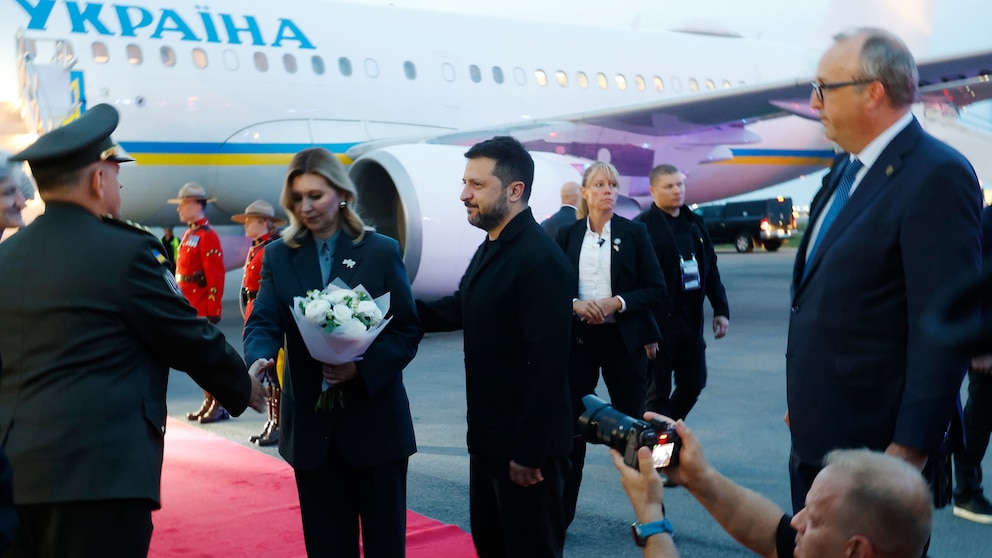
Volodymyr Zelenskyy’s latest Canada visit lands at a moment when Ukraine’s allies are being forced to answer a blunt question: is support for Kyiv still a strategic priority, or has it become a political habit? The Zelenskyy Canada visit is not just another diplomatic stop with handshakes, flags, and carefully scripted remarks. It is a pressure test for Ottawa, for the wider western coalition, and for every government trying to balance domestic fatigue against the reality that Russia’s war is still reshaping global security. For Canada, the stakes are unusually personal. It has one of the world’s largest Ukrainian diasporas, a long record of military training support, and a political class that largely agrees Ukraine must not lose. But agreement is no longer enough. Kyiv needs concrete capacity, and Canada must decide how much it is prepared to deliver.
- Zelenskyy is using Canada to reinforce coalition discipline as Ukraine pushes allies for sustained military and financial support.
- Ottawa faces pressure to move beyond symbolism with clearer commitments on
air defense, ammunition, sanctions, and reconstruction. - The visit highlights the political power of Canada’s Ukrainian community, but also the limits of diaspora-driven diplomacy.
- The bigger story is alliance stamina: Ukraine’s future depends on whether partners can maintain support over years, not news cycles.
Why the Zelenskyy Canada visit matters now
The reason this trip matters is not simply that Zelenskyy is visiting a friendly country. Canada has been one of Ukraine’s most vocal supporters since Russia’s full-scale invasion, and Ottawa has provided military aid, financial assistance, humanitarian support, and training. But the war has entered a more difficult phase for Ukraine’s backers. Budgets are tighter. Elections are more volatile. Voters are more focused on housing, inflation, immigration, and public services. The strategic case for supporting Ukraine remains strong, but the political case now requires constant maintenance.
That is where Zelenskyy remains one of the most effective wartime communicators of the modern era. His foreign visits are designed to convert sympathy into decisions. He does not merely thank allies. He asks for specific things, often in public, and forces leaders to explain whether their support is operational or rhetorical.
Key insight: Zelenskyy’s diplomacy works because it collapses the distance between moral language and logistical reality. A country either sends the systems Ukraine needs, or it does not.
For Canada, that distinction is uncomfortable. Ottawa can credibly say it has stood with Ukraine. It can also be asked whether it is scaling its support to match the war’s current demands.
The Zelenskyy Canada visit is a test of hard power
Canada’s Ukraine policy has often been strongest in areas where values, diplomacy, and diaspora politics overlap. The challenge now is harder: Ukraine needs more high-end military support, more predictable financing, and more industrial coordination among allies. That means moving from statements of solidarity to supply chains.
Weapons are now the language of diplomacy
Ukraine’s most urgent battlefield needs have consistently included air defense, artillery ammunition, drones, armored vehicles, training, electronic warfare support, and long-term maintenance capacity. The specific mix changes as Russia adapts, but the underlying problem is constant: Ukraine is fighting a larger aggressor and needs partners to close the capability gap.
Canada cannot match the United States in scale, nor can it replace Europe’s industrial base. But it can do more than perform allyship. It can fund procurement, help expand ammunition production, deepen training programs, and coordinate niche capabilities where Canadian expertise matters. The most useful aid is not always the most dramatic. Spare parts, sustainment contracts, and predictable deliveries often matter more than headline-grabbing announcements.
Pro Tip for policymakers: Ukraine aid should be judged less by dollar value and more by battlefield usability. A smaller package that arrives on time and integrates with Ukrainian systems can be more valuable than a larger pledge stuck in procurement delays.
Sanctions need enforcement, not just expansion
Sanctions have been a central pillar of western strategy, but sanctions fatigue is real. Announcing new measures is politically easy. Enforcing them across complex financial and trade networks is harder. If Zelenskyy presses Canada on sanctions, the most important issue is likely not whether Ottawa can add more names to a list. It is whether Canada can help close loopholes, target evasion networks, and coordinate with allies so restricted goods do not reach Russia through third countries.
That means more resources for enforcement, better intelligence sharing, and a willingness to penalize companies that treat sanctions as a compliance puzzle rather than a national security obligation. Russia’s war economy depends on adaptation. Allied sanctions policy must adapt faster.
Ottawa’s political calculus is shifting
Canada’s support for Ukraine has benefited from a rare degree of cross-party consensus. That does not mean politics is absent. Governments still make choices about timing, funding, messaging, and priorities. Opposition parties still scrutinize spending. Voters still ask why billions are being sent abroad when domestic systems feel strained.
This is where the Zelenskyy Canada visit has a dual audience. One audience is inside government: ministers, defense officials, budget planners, and party strategists. The other is the public. Zelenskyy’s task is to remind Canadians that Ukraine’s defense is not charity. It is a front-line struggle against a revisionist power using force to rewrite borders.
The uncomfortable truth: If Ukraine’s allies frame support as generosity, they make it optional. If they frame it as deterrence, they make it strategic.
That distinction matters. A public that sees Ukraine aid as a moral donation may eventually ask when enough has been given. A public that sees it as an investment in European security, food stability, deterrence, and the rules-based order is more likely to tolerate long timelines.
The diaspora factor is powerful but not sufficient
Canada’s Ukrainian community gives Kyiv a uniquely receptive platform. Ukrainian Canadians have shaped public opinion, organized relief, pressured politicians, and kept the war visible even as attention has fragmented. For Zelenskyy, speaking in Canada is partly a diplomatic act and partly a conversation with an extended national family.
But diaspora support cannot substitute for state capacity. Emotional solidarity can keep Ukraine on the agenda. It cannot manufacture shells, intercept missiles, or rebuild energy infrastructure. The danger for Ottawa is confusing high public sympathy with adequate policy delivery.
Canada’s Ukrainian community is a force multiplier, but the government still has to do the hard work: procurement reform, defense spending choices, sanctions enforcement, refugee integration, reconstruction planning, and coordination with allies.
Reconstruction is already a geopolitical battlefield
Ukraine’s reconstruction is sometimes discussed as a postwar project, but that framing is misleading. Reconstruction has already started because Russia has targeted civilian infrastructure, energy systems, housing, hospitals, schools, and ports. Every repair decision is part of Ukraine’s economic survival.
Canada can play a meaningful role here, especially in governance support, energy resilience, infrastructure finance, insurance mechanisms, and anti-corruption safeguards. But reconstruction will not be a simple aid program. It will be a contest over Ukraine’s economic future, its integration with western institutions, and the credibility of democratic recovery after mass destruction.
Why businesses should pay attention
For Canadian companies, Ukraine is not just a humanitarian concern. It is a future market with enormous needs in construction, clean energy, agriculture technology, cybersecurity, logistics, finance, and public-sector modernization. But the risks are real: security threats, legal uncertainty, corruption exposure, insurance challenges, and political volatility.
The smartest approach is not opportunistic entry. It is long-term partnership. Firms that understand compliance, local governance, and reconstruction ethics will be better positioned than those chasing quick contracts. Ukraine will need capital, but it will also need trust.
What Canada should do next
The most credible response to the Zelenskyy Canada visit would be a package that combines immediate military utility with long-term strategic planning. Ottawa should avoid the trap of announcing scattered initiatives that sound impressive but lack operational coherence.
- Prioritize usable military support: Focus on
air defense, ammunition, drones, training, maintenance, and sustainment. - Make funding predictable: Multi-year commitments help Ukraine plan and reduce uncertainty across allied supply chains.
- Strengthen sanctions enforcement: Target evasion networks and invest in investigative capacity.
- Link reconstruction to reform: Support Ukraine’s rebuilding while reinforcing transparency, procurement standards, and democratic institutions.
- Communicate the strategic case: Explain to Canadians why Ukraine’s survival affects global security and Canada’s own interests.
This is not about writing Kyiv a blank cheque. It is about understanding that under-supporting Ukraine has costs too. If Russia concludes that western democracies cannot sustain commitments, the lesson will travel far beyond Ukraine.
The bottom line on the Zelenskyy Canada visit
The Zelenskyy Canada visit is a reminder that wartime diplomacy is not ceremony. It is leverage, persuasion, and urgency compressed into a public moment. Zelenskyy is asking Canada to prove that its support for Ukraine is not just historically sincere, but strategically durable.
Ottawa has real constraints. Its military has procurement problems. Its budget is contested. Its public is not immune to fatigue. But Canada also has advantages: political consensus, diaspora engagement, diplomatic credibility, and the ability to coordinate with allies. The question is whether it will use those advantages with enough speed and seriousness.
Ukraine does not need Canada to be the biggest supporter. It needs Canada to be a reliable one. In a war defined by attrition, reliability is power.
The information provided in this article is for general informational purposes only. While we strive for accuracy, we make no guarantees about the completeness or reliability of the content. Always verify important information through official or multiple sources before making decisions.