AI Data Centres Test the Grid

The boom in AI data centres is no longer a back-office infrastructure story. It is becoming a stress test for electricity grids, climate targets, corporate strategy and the price everyone pays for digital services. The latest wave of artificial intelligence does not run on magic. It runs on land, transformers, cooling systems, fibre links and a relentless supply of power. That creates a hard question for governments, utilities and tech companies: can the physical world keep pace with the software gold rush?
- Demand for
AI data centresis rising because advancedAImodels require huge amounts of compute. - Electricity supply, grid connection delays and cooling needs are becoming strategic bottlenecks.
- The winners will be companies that treat energy as core infrastructure, not a procurement detail.
- Expect more scrutiny over climate claims, local planning decisions and who pays for grid upgrades.
AI Data Centres Are Becoming Critical Infrastructure
For years, the internet felt weightless. Photos, messages, payments and streaming all disappeared into the cloud, a phrase that made massive industrial facilities sound soft and frictionless. The cloud was never weightless, but the rise of generative AI has made its physical footprint impossible to ignore.
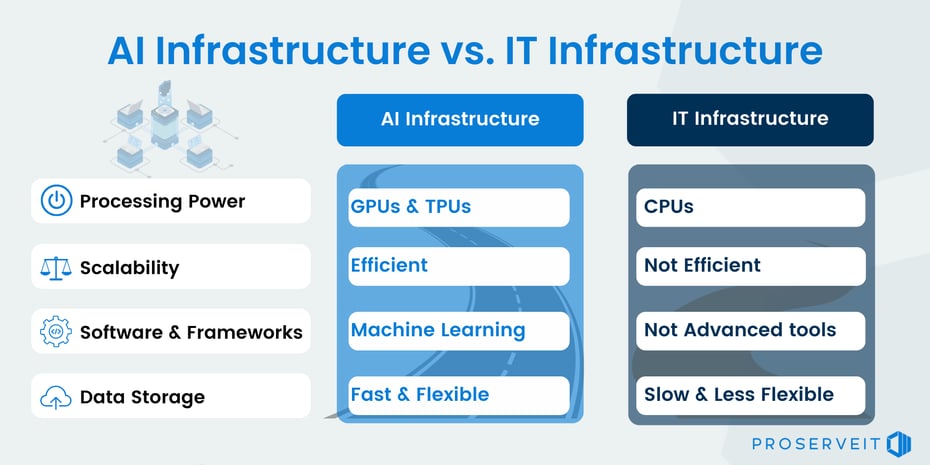
Training and running modern large language models requires dense clusters of specialist chips such as GPU accelerators. Those chips need high-capacity power feeds, advanced cooling, resilient networking and constant maintenance. A standard enterprise data centre is demanding enough. An AI-optimized one pushes the limits further because its workloads are hotter, denser and less forgiving.
The central tension is simple: software companies are scaling at internet speed, while energy systems move at infrastructure speed.
That mismatch is why AI data centres have moved from industry conference panels into mainstream political and economic debate. They promise productivity gains, new services and national competitiveness. They also raise local concerns over energy bills, land use, water consumption and whether communities see enough benefit from hosting them.
Why AI Data Centres Consume So Much Power
The biggest shift is the move from general-purpose computing toward accelerator-heavy systems. Traditional cloud services spread many tasks across conventional servers. AI workloads concentrate demand around chips designed for parallel processing, especially during model training and high-volume inference.
Training Is The Spectacle But Inference Is The Habit
Training a frontier model gets attention because it can require enormous compute runs. But inference – the process of generating responses after a model is deployed – can become the more persistent load. Every chatbot answer, image generation request, coding suggestion or enterprise search query consumes compute. If AI becomes embedded in office software, customer service, phones, cars and industrial tools, the everyday energy burden could rise quickly.
This is why efficiency breakthroughs matter. Better chips, smarter model compression, improved quantization and more efficient cooling can reduce waste. But the industry has a long history of the rebound effect: when technology becomes cheaper and more efficient, people use more of it.
Power Density Changes The Economics
Older server halls could often be planned around relatively predictable power loads. AI clusters can require far higher rack density, meaning more electricity and heat packed into a smaller footprint. That changes the economics of site selection. Cheap land is not enough. Operators need grid access, transmission capacity, backup power, fibre connectivity, cooling options and a political environment willing to approve construction.
A site can look perfect on a map and still fail if it cannot secure a timely grid connection. In some regions, connection queues are now a serious commercial obstacle. That gives utilities, regulators and local planning bodies far more influence over the pace of AI deployment than many software executives expected.
AI Data Centres Put Climate Promises Under Pressure
Big technology companies have spent years marketing ambitious climate commitments. The AI boom complicates that story. If electricity demand rises faster than clean power supply, companies may struggle to keep emissions moving in the right direction.
Renewable energy contracts can help, but they are not a magic eraser. A power purchase agreement may fund clean generation somewhere on the grid, yet local demand can still increase pressure on regional infrastructure. The real test is whether new computing demand is matched with additional clean power, storage, transmission and flexibility.
The Metrics To Watch
Several technical measures will become more important in the public debate. PUE, or power usage effectiveness, tracks how efficiently a facility uses electricity beyond the IT equipment itself. Lower is better. WUE, or water usage effectiveness, measures water use. Carbon-aware scheduling can shift flexible workloads to times and places where cleaner power is available.
Pro tip for business leaders: do not evaluate an AI vendor only on model performance. Ask where the compute runs, what energy mix supports it, how workloads are optimized and whether emissions reporting includes both training and ongoing use.
The Local Backlash Is Rational Not Anti-Tech
Communities asked to host large data centre campuses often hear promises about jobs, investment and digital leadership. Some of those benefits are real. Construction creates work, local tax bases can expand and nearby infrastructure may improve. But residents are also right to ask who pays when roads, substations, water systems or transmission lines need upgrades.
The jobs question is especially sensitive. A hyperscale data centre may involve significant construction employment but fewer long-term roles than a factory of similar scale. If a project consumes substantial electricity while producing limited permanent employment, local skepticism should not surprise anyone.
The industry should stop treating public concern as a messaging problem. It is a distribution problem: who gets the upside, who absorbs the costs and who has a voice before the concrete is poured.
What The Industry Does Next
The next phase of the AI buildout will not be decided by model demos alone. It will be shaped by energy strategy. Expect major cloud providers and AI labs to pursue more direct relationships with utilities, renewable developers and grid operators. Some will invest in on-site generation, long-duration storage, advanced cooling and even small modular nuclear projects where politically and technically viable.
Smarter Models May Become A Competitive Weapon
The brute-force era of bigger models will face economic resistance if power and chips remain constrained. That should accelerate interest in smaller specialized models, efficient inference, better data quality and software that routes tasks to the cheapest adequate model rather than the most powerful one.
For enterprises, this means the smartest AI strategy may not be to use the largest model everywhere. A layered approach can cut cost and energy use: lightweight models for routine tasks, larger systems for complex reasoning and human review for high-risk decisions.
Regulators Will Demand More Transparency
Governments are likely to ask tougher questions about energy usage, grid impact and environmental reporting. Planning approvals may increasingly depend on credible power sourcing plans, water strategies and community benefit commitments. That will create friction, but also discipline. The companies that can prove efficiency and local value will move faster than those relying on vague promises.
Why This Matters For Everyone Else
The AI data centre race may sound remote, but its consequences will show up in everyday life. Cloud costs influence software subscriptions. Grid investment affects energy bills. Planning decisions shape local economies. Climate credibility affects public trust in the technology sector. And if compute becomes scarce or expensive, access to advanced AI could concentrate among the richest companies and countries.
That is the deeper story behind the infrastructure scramble. AI is often sold as a universal productivity layer, but it depends on scarce physical inputs. Electricity, land, water, chips and skilled engineers are not infinite. Treating them as strategic resources is not pessimism. It is realism.
The industry still has room to get this right. Efficient hardware, cleaner grids, better planning and more honest reporting can allow AI to grow without turning every community into collateral damage. But the window for easy answers is closing. The future of AI will be built not just in code repositories and research labs, but at substations, council meetings and construction sites.
The information provided in this article is for general informational purposes only. While we strive for accuracy, we make no guarantees about the completeness or reliability of the content. Always verify important information through official or multiple sources before making decisions.