AI Energy Costs Force a Reality Check
AI Energy Costs Force a Reality Check
AI is no longer just a software story. It is now a power story, a grid story, and increasingly a budgeting nightmare. As companies race to deploy larger models and faster inference systems, the electricity bill is starting to look like a strategic constraint rather than a line item. That shift matters because the winners in AI will not just be the ones with the smartest models. They will be the ones who can afford to run them, at scale, without tripping over energy limits, cooling bottlenecks, or public backlash. For enterprises, cloud providers, and policymakers, the question is no longer whether AI can grow. It is whether the infrastructure around it can keep up.
- AI’s growth is pushing power demand into a new phase of scrutiny.
- Data centers are becoming constrained by electricity, cooling, and location.
- Efficiency, not just model size, is becoming a competitive advantage.
- Regulators and utilities may shape AI expansion as much as engineers do.
- The next AI arms race could be won on watts, not just algorithms.
Why the AI energy costs conversation matters now
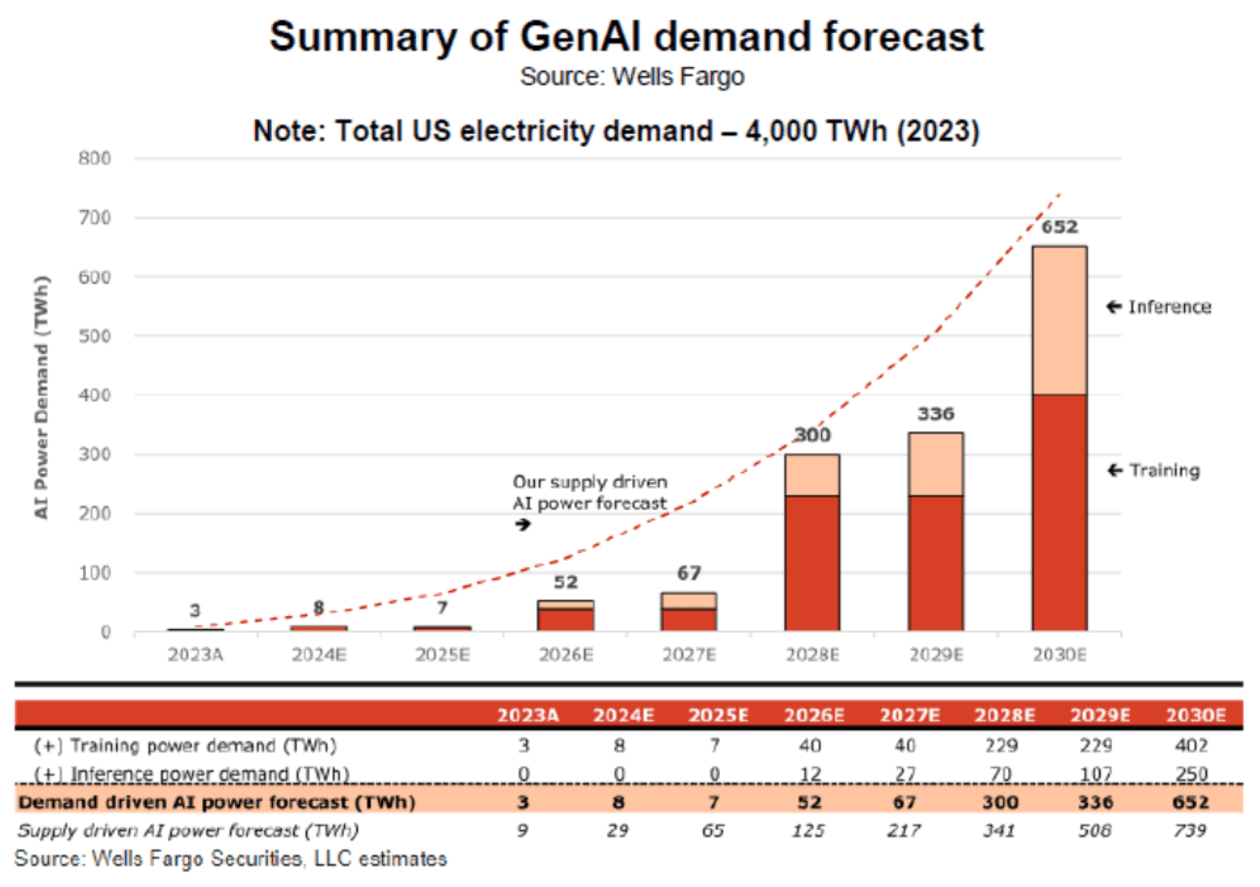
The surge in AI energy costs is not a theoretical concern for a future generation of machines. It is already reshaping procurement, infrastructure planning, and product design. Training frontier models can consume enormous amounts of compute, but the real pressure often comes from inference, the constant running of models inside apps, search engines, copilots, and enterprise workflows. That means energy demand is no longer tied to a single event. It is continuous.
For cloud operators and chip makers, this creates a messy equation: more demand for AI services, more pressure on data centers, and more dependence on power availability. For businesses adopting AI, it means that model choice is becoming inseparable from operating cost. A flashy model that is expensive to run can quickly become a liability once it moves from demo to production.
Energy is becoming the hidden tax on AI adoption. The companies that ignore it will pay later in margins, delays, and constrained growth.
The hidden mechanics behind AI energy costs
To understand the squeeze, you have to look beyond the model itself. A modern AI system depends on a stack of expensive, power-hungry components: accelerators, memory, networking, storage, and cooling. The chips may get the spotlight, but the entire facility has to support them.
Data center density is the new bottleneck
AI servers are denser and hotter than traditional workloads. That changes everything. A standard enterprise data center was not always designed for racks packed with advanced accelerators running near full utilization. When density rises, power delivery and cooling infrastructure have to rise with it. If they do not, performance suffers or expansion stalls.
That is why companies are chasing locations with reliable, affordable electricity and enough physical space to support upgraded cooling systems. The most attractive regions are often the ones that can provide both fast grid access and political support for new builds. In other words, AI expansion is becoming a siting problem as much as a compute problem.
Inference is turning into the main event
Training gets the headlines, but inference is what turns AI into a recurring cost. Every chatbot response, image generation, search summary, and enterprise assistant request consumes power. As adoption grows, inference can outstrip training in aggregate energy use. This is a major shift because it means the cost curve is not one-time or seasonal. It is embedded in product usage.
That also explains why companies are investing heavily in smaller, more efficient models, prompt caching, quantization, and specialized serving infrastructure. The goal is simple: do more with less electricity per request.
How companies can respond to AI energy costs
There is no single fix, but there are clear priorities. The organizations that treat power efficiency as a product requirement will have more room to scale than those that treat it as a facilities issue.
- Measure the actual cost per query: Track compute, latency, and energy usage together, not separately.
- Right-size the model: Use the smallest model that can deliver acceptable quality for the task.
- Optimize inference paths: Apply caching, batching, and routing to reduce unnecessary work.
- Move workloads intelligently: Place AI workloads where power is cheaper and infrastructure is already hardened.
- Design for efficiency early: Build energy constraints into product planning before launch, not after bills arrive.
A practical starting point is to ask a blunt question: does the use case actually need the most advanced model available, or would a smaller tuned system work just as well? For many internal business applications, the answer is the latter. That is where the biggest savings live.
Simple operational checks worth doing
If your team is deploying AI at scale, start with a basic audit. A lightweight internal script can help you compare request volume, latency, and resource usage over time:
monitor_ai_usage --service chatbot --interval 60 --report power,latency,cost
That is not a magic command, but it reflects the right mindset: tie performance metrics to operational cost. The companies that manage AI well are the ones that treat resource tracking as part of the product, not an afterthought.
The business case for efficient AI energy costs
This is where the story gets interesting for executives. Rising energy use does not just threaten sustainability targets. It hits margins. Every increase in infrastructure cost reduces room for experimentation and slows the path to profitability. That matters in a market where many AI products are still searching for durable business models.
Efficient systems can also create a competitive edge. If two companies offer comparable AI features, the one with lower operating cost can price more aggressively, scale faster, or absorb usage spikes without panicking. Over time, efficiency becomes a form of product quality.
In the AI market, the cheapest token is becoming as important as the smartest token.
That is a shift from the early hype phase, when raw capability dominated the conversation. Now, customers are asking harder questions about cost, reliability, and sustainability. Enterprise buyers want predictable pricing. Cloud customers want transparent resource use. Investors want to know whether growth can continue without enormous infrastructure drag.
Policy, utilities, and the next constraint wave
The pressure is not limited to corporate balance sheets. Local grids and utilities are also being pulled into the AI expansion cycle. New data center projects can trigger debates over land use, water consumption, and power allocation. That means regulation, permitting, and public policy may increasingly shape where AI can expand and how quickly.
This introduces a new strategic reality: AI companies may need to think like industrial operators. That includes long-term power contracts, partnerships with utilities, on-site generation, and more aggressive load management. In some regions, renewable power will be part of the pitch. In others, reliability will matter more than optics.
For governments, the challenge is balancing economic growth with grid stability. For communities, the question is whether the local benefits of AI investment outweigh the strain on infrastructure. Those tensions are likely to intensify as more countries try to host the next generation of AI facilities.
What happens next for the AI energy costs race
The next phase of AI will probably reward three types of players. First are the hardware companies that can improve performance per watt. Second are the software teams that make models smaller, smarter, and cheaper to serve. Third are the infrastructure operators that can secure power, cooling, and land faster than the competition.
Expect more attention on model compression, specialized inference chips, and hybrid architectures that mix large foundation models with smaller task-specific systems. Expect enterprise buyers to demand clearer cost controls. And expect public debate to intensify as AI’s electricity footprint becomes impossible to ignore.
The bigger truth is this: the AI race is maturing. Capability still matters, but scale now comes with a bill attached. The companies that understand that early will make better decisions about product design, infrastructure, and long-term growth. The ones that do not will discover that the real ceiling on AI is not intelligence. It is power.
What leaders should do now
If you are running a product, engineering, or infrastructure team, the response should be immediate and practical. Start by mapping where AI is used, how often it runs, and what it costs under real traffic. Then identify which workloads can be simplified, cached, or shifted to cheaper models. Finally, bring facilities, finance, and engineering into the same room. Energy is no longer just an ops issue. It is a product strategy issue.
The most important mindset change is to stop treating AI as infinitely scalable. It is not. It scales through physical systems that have limits, prices, and political consequences. Once companies accept that, they can make smarter decisions about where to invest and where to restrain themselves. That discipline may end up being one of the defining competitive advantages of the next AI era.
The information provided in this article is for general informational purposes only. While we strive for accuracy, we make no guarantees about the completeness or reliability of the content. Always verify important information through official or multiple sources before making decisions.