Bangladesh Measles Outbreak Exposes Vaccine Gaps
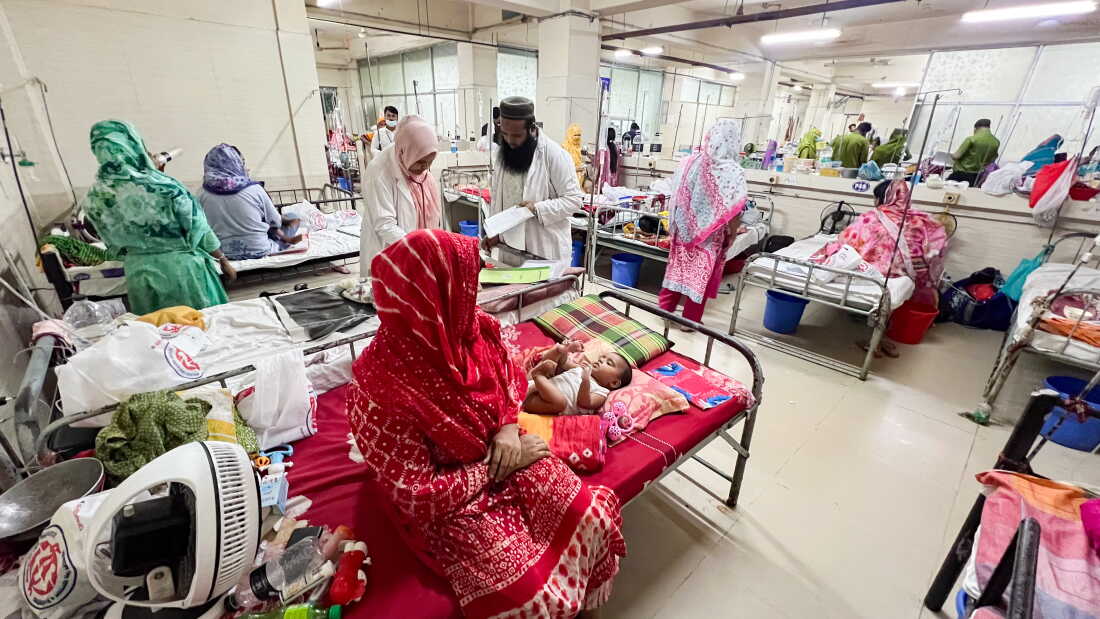
Bangladesh Measles Outbreak Exposes Vaccine Gaps
A Bangladesh measles outbreak is not just a local health emergency. It is a warning flare for every country that has treated childhood vaccination as a solved problem. Measles moves faster than most public health systems can comfortably admit, and when immunization coverage slips, the virus finds the gap almost immediately. For families, the pain point is brutally simple: a preventable disease can still send children to hospitals, close classrooms, and strain clinics that are already stretched. For health leaders, the bigger challenge is operational. Vaccines exist. The science is settled. The hard part is getting enough doses to the right communities, at the right time, with enough trust to make coverage real.
- The outbreak underscores how quickly
measlesspreads when vaccine coverage falls below protective levels. - Bangladesh’s challenge is not only supply, but delivery: outreach, surveillance, staffing, and trust all matter.
- Two-dose vaccination remains the clearest path to stopping transmission and preventing severe disease.
- Global travel and migration make local outbreaks an international concern, not a contained event.
Why the Bangladesh Measles Outbreak Matters Now
Measles is often described as a childhood illness, but that framing undersells its threat. It is one of the most contagious human viruses, with a basic reproduction number, or R0, that can reach levels far above many respiratory infections. In practical terms, one infected person can expose a room full of susceptible people and ignite a chain of transmission before health officials know where the first case began.
That is why the Bangladesh measles outbreak deserves attention beyond the country’s borders. Outbreaks tend to reveal the hidden condition of a health system: which neighborhoods are under-vaccinated, which clinics are understaffed, which families lack access, and where misinformation has become more persuasive than public health messaging. A rise in cases is rarely random. It is usually a map of missed opportunities.
Key insight: A measles outbreak is less a surprise event than a stress test. It shows whether routine immunization is strong enough to protect children before emergency campaigns become necessary.
The Science Is Simple but the Logistics Are Not
The vaccine story is unusually clear. The measles-containing vaccine, commonly delivered through MMR or MR schedules depending on national policy, is highly effective when given on time and in enough doses. A first dose provides strong protection. A second dose closes much of the remaining gap for children who did not respond fully to the first.
The public health target is high because the virus is so contagious. Communities generally need very high coverage to sustain herd immunity. If coverage dips, even by a few percentage points in dense urban areas or hard-to-reach rural districts, outbreaks can accelerate quickly.
What makes measles so unforgiving
Measles spreads through airborne respiratory particles and can linger in indoor spaces after an infected person leaves. Early symptoms can look like fever, cough, runny nose, or red eyes, which means families may not recognize the risk immediately. By the time the rash appears, exposure may already have happened across homes, schools, buses, clinics, and markets.
The complications are also more serious than the old myth suggests. Children can develop pneumonia, severe diarrhea, ear infections, blindness, brain inflammation, and long-term immune suppression. In malnourished children or communities with limited access to care, the risk rises sharply.
Why vaccination gaps appear even when vaccines exist
Bangladesh has experience running large immunization programs, but no country is immune to coverage gaps. Population density, climate events, migration, urban informal settlements, remote riverine communities, and health workforce constraints can all interrupt routine services. If a child misses a scheduled dose, the system has to find that child again. That sounds simple on paper. It is not simple in the field.
There is also a trust layer. Families may delay vaccination because of misinformation, fear of side effects, religious or cultural concerns, or simple confusion about whether a child is due for another dose. Public health systems often treat hesitancy as an information deficit. Sometimes it is. But often it is a service design problem: inconvenient clinic hours, long travel, hidden costs, or a previous bad experience with care.
Bangladesh Measles Outbreak Response Needs Speed and Precision
The immediate response to a Bangladesh measles outbreak has to move on two tracks at once: contain current transmission and rebuild routine coverage. One without the other is not enough. Emergency vaccination campaigns can slow the fire, but if the routine program remains patchy, the next outbreak is already incubating.
Surveillance is the early warning system
Strong outbreak control starts with case surveillance. Health workers need to identify suspected cases, confirm infection where possible, track contacts, and map clusters. Fast reporting matters because measles does not wait for perfect data. Delays of even a week can mean many more exposures.
Pro tip for policymakers: treat surveillance data like operational intelligence, not a retrospective report card. If cases cluster around specific districts, schools, transit corridors, or migrant communities, vaccination teams should follow that map quickly.
Emergency vaccination has to meet people where they are
During an outbreak, fixed clinics alone may not reach enough children fast enough. Mobile teams, school-based sessions, community health workers, and pop-up vaccination sites can close the distance. The most effective campaigns are usually hyperlocal. They work with teachers, religious leaders, local officials, and trusted neighborhood organizers who can explain why vaccination is urgent.
- Prioritize under-vaccinated areas: Use recent case data and coverage records to target the highest-risk communities first.
- Extend clinic hours: Parents who work daily wage jobs may not be able to visit during standard hours.
- Use clear dose messaging: Families need to know whether one dose is enough or whether a second dose is still required.
- Protect health workers: Teams need supplies, training, transport, and protection from burnout during surge campaigns.
The Trust Problem Is a Delivery Problem
Vaccine confidence is often discussed as if it lives online, and misinformation certainly spreads through social platforms and messaging apps. But trust is also built or broken in physical spaces. A mother who waits for hours at a clinic and leaves without service is less likely to return. A father who cannot get a clear answer about side effects may delay. A family that moves between districts may fall out of the registry entirely.
This is where health communication has to become more practical. People do not need slogans. They need direct answers: when to vaccinate, where to go, what to expect afterward, and why a second dose matters. They also need reassurance that mild fever or soreness after vaccination is not the same as danger.
Editorial view: The most effective vaccine campaign is not the loudest one. It is the one that removes friction from the parent’s day and makes the safest choice the easiest choice.
Why This Matters Beyond Bangladesh
Measles outbreaks are increasingly global signals. A case in one country can become an exposure in another through travel, labor migration, pilgrimage routes, or family movement. Countries with pockets of under-vaccinated residents are especially vulnerable to imported cases. That is why international health security depends on boring, everyday work: keeping immunization records current, funding outreach teams, maintaining cold chain systems, and training local staff.
The global lesson is uncomfortable. Vaccine success can create complacency. When a disease disappears from daily life, the perceived risk of vaccination can start to feel larger than the disease itself. Then coverage declines, outbreaks return, and the public relearns the cost of forgetting.
The post-pandemic immunization hangover
Many countries are still dealing with disrupted childhood vaccination schedules after pandemic-era clinic closures, school interruptions, and health workforce strain. Catch-up campaigns are essential, but they require money, logistics, and political attention. If catch-up work is delayed, birth cohorts with lower protection move together through schools and communities, giving measles a larger susceptible population.
What a Stronger Measles Strategy Looks Like
Bangladesh and other countries facing similar risks need a layered approach. No single intervention solves the problem. The durable answer combines routine immunization, rapid outbreak response, trusted communication, and resilient data systems.
- Build better registries: Digital or well-maintained paper systems should identify children who missed doses and trigger follow-up.
- Invest in community health workers: Local workers often know which families are mobile, hesitant, or disconnected from formal care.
- Strengthen
cold chainreliability: Vaccines must remain within proper temperature ranges from storage to administration. - Integrate nutrition and immunization: Children at highest risk from complications often need broader support, not vaccination alone.
- Measure equity, not just national averages: High national coverage can hide low coverage in specific districts or communities.
The future implication is clear: countries that treat vaccination as infrastructure will fare better than those that treat it as a periodic campaign. Roads, power grids, and data systems need maintenance. So does immunity. Once immunity becomes uneven, measles will find the weak points with ruthless efficiency.
The Bottom Line on the Bangladesh Measles Outbreak
The Bangladesh measles outbreak is a reminder that preventable disease is only preventable when systems keep working. Vaccines are the foundation, but delivery is the battleground. The next phase will depend on how quickly health authorities can identify missed children, bring vaccination closer to families, and rebuild confidence in routine immunization.
For readers outside Bangladesh, the takeaway is not distance. It is relevance. Measles does not respect borders, and vaccination gaps anywhere can become exposure risks elsewhere. The world already has the tool to stop this virus. The question is whether public health systems can deploy it with the speed, precision, and trust that the moment demands.
The information provided in this article is for general informational purposes only. While we strive for accuracy, we make no guarantees about the completeness or reliability of the content. Always verify important information through official or multiple sources before making decisions.