Congo Ebola Outbreak Exposes the Gaps

Why the Congo Ebola outbreak still matters
The Congo Ebola outbreak is more than a regional health emergency. It is a stress test for a global system that still struggles to move fast enough when a deadly virus starts spreading. Ebola is not new, but every outbreak reveals the same uncomfortable truth: the difference between containment and catastrophe often comes down to trust, logistics, and whether health workers can reach people before fear does. In the Democratic Republic of Congo, those pressures are magnified by distance, conflict, and a health system that has spent years absorbing one crisis after another. For governments, aid groups, and public health teams, this outbreak is a reminder that the hard part is not identifying the threat. The hard part is building the response before the window closes.
- Fast containment still depends on basic public health basics: tracing, isolation, communication, and protective gear.
- Community trust can make or break response efforts, especially when rumors outrun medicine.
- The Congo Ebola outbreak highlights fragile health infrastructure that leaves little margin for error.
- Preparedness is not just about vaccines: it is also about staffing, transport, labs, and clear messaging.
- What happens in Congo matters globally because outbreak control shapes the risk of cross-border spread.
The Congo Ebola outbreak is a systems failure test
Ebola outbreaks are often framed as a battle against a virus, but that framing is incomplete. The virus exploits weak systems. It moves through gaps in surveillance, delays in diagnosis, limited access to treatment, and the simple fact that many communities do not live near reliable healthcare. In Congo, those gaps are familiar. Some areas are difficult to reach even in normal conditions. Add insecurity, displacement, and constrained medical capacity, and the response becomes a race against geography as much as biology.
The reason the Congo Ebola outbreak draws global attention is not only the mortality risk. It is that Ebola is one of the clearest examples of how modern outbreak response works when everything goes right – and how quickly it breaks when even one link fails. A lab result arrives late. A contact tracer cannot safely enter a neighborhood. A family hides a sick relative because they fear isolation. The chain of transmission keeps moving.
Outbreaks are never only about pathogens. They are about whether public systems can earn enough trust to act before fear takes over.
What makes Ebola so hard to contain
Ebola is brutally efficient once it gets moving, but not in the same way as airborne diseases. It spreads through direct contact with bodily fluids, which means the intervention toolkit is well understood. That is the frustrating part. Public health teams know what works: isolate cases, trace contacts, use proper protective equipment, and vaccinate targeted groups when available. The challenge is execution at speed and scale.
Delayed detection creates the first opening
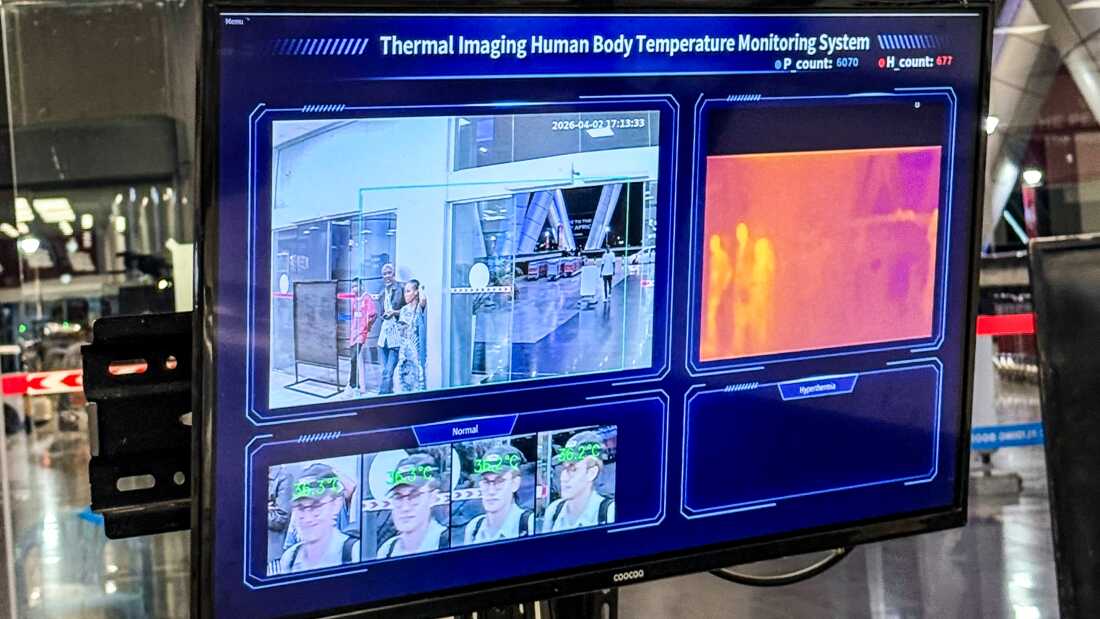
The first obstacle is usually diagnosis. Early Ebola symptoms can look like malaria, typhoid, or other common infections. That overlap creates dangerous delays. By the time a case is confirmed, there may already be a chain of exposures. In a region with limited testing capacity, every hour matters.
Trust is a public health tool
In outbreak zones, rumors can move faster than response teams. If people believe treatment centers are unsafe, or that health workers are outsiders with hidden motives, they may avoid care. That not only hurts patients, it also undermines surveillance. The Congo Ebola outbreak shows again that public health communication is not a side task. It is infrastructure.
Mobility turns local outbreaks into regional threats
People do not stop moving because a virus is circulating. Traders travel, families relocate, and displaced communities cross administrative boundaries. That means a cluster in one area can quickly become a coordination problem for multiple provinces or neighboring countries. Even when the number of confirmed cases is small, the operational burden can be enormous.
Why the Congo Ebola outbreak is different from the last one
Every outbreak has its own political and logistical environment. Congo has lived through repeated Ebola episodes, and that history cuts both ways. On one hand, there is institutional memory: local experts, treatment protocols, and some community familiarity with response measures. On the other hand, repeated outbreaks can create fatigue. People may ask why the same crisis keeps returning and whether promises of preparedness ever become real.
This is where the editorial lens shifts from emergency medicine to governance. The Congo Ebola outbreak is a reminder that outbreak control is not only a technical challenge. It is a financing challenge, a workforce challenge, and a resilience challenge. If clinics lack power, if health workers are underpaid or underprotected, if roads are impassable, and if supply chains are fragile, then every new alert becomes another scramble.
Preparedness is not a press release. It is the boring, expensive work of keeping labs, nurses, transport, and surveillance networks ready before the first case appears.
What health teams need to get right now
Response teams usually have a limited time to build momentum. In that window, the priorities are familiar, but none of them are easy.
- Case detection: identify suspected patients quickly and confirm them with reliable testing.
- Isolation and treatment: move patients into safe care without making families feel cut off or deceived.
- Contact tracing: track every exposure before secondary transmission starts.
- Infection control: make sure clinics, ambulances, and burial teams have proper protective measures.
- Community engagement: use local leaders, not just officials, to explain what is happening and why.
None of these steps is glamorous. All of them are decisive. The public often sees vaccines and headlines, but outbreak control is built on quieter systems: a functioning surveillance network, trained field staff, reliable PPE, and enough transport to reach remote communities. If any of those pieces are missing, the entire strategy weakens.
The vaccine question is important, but not sufficient
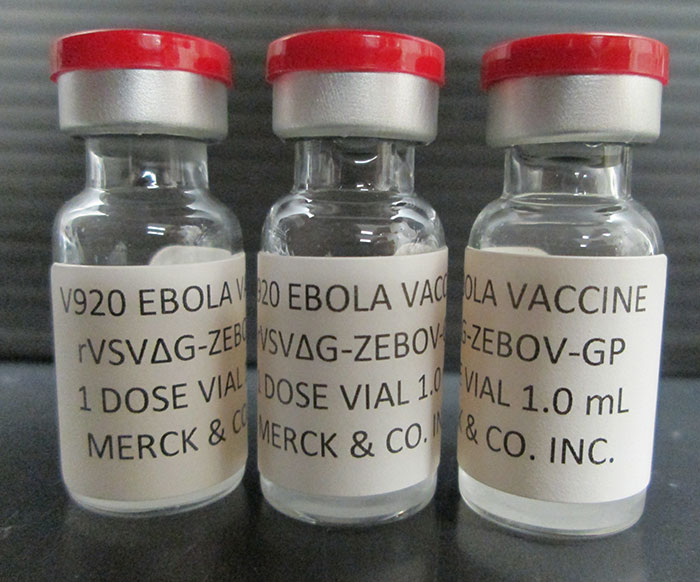
Vaccines are one of the most powerful tools in the Ebola response playbook. Targeted vaccination can protect contacts, frontline workers, and high-risk communities. But it is a mistake to treat vaccination as a standalone fix. A vaccine campaign can slow transmission, yet it still depends on cold-chain logistics, community acceptance, and fast case identification. If people do not trust the system, the best biomedical tool in the world will underperform.
That is why the Congo Ebola outbreak is instructive for public health planners. It reinforces a simple but often ignored point: vaccines work best when they are embedded in a broader response architecture. That means lab confirmation, real-time data sharing, and clear lines of authority. It also means making sure local teams are not waiting on decisions from distant offices while the outbreak evolves on the ground.
The bigger lesson for global health
If the outbreak feels distant, it should not. The global health community has spent years improving outbreak playbooks, but many of the same weak points remain. Funding is often reactive. Preparedness surges after a crisis, then fades when attention moves on. Training programs start strong and then lose momentum. Supply chains are stocked for the last emergency instead of the next one.
That cycle is dangerous because Ebola is a known threat, not an unknown one. The world has had enough experience with it to know what works. The question is whether political will will last long enough to make those systems durable. The Congo Ebola outbreak is a warning that knowledge alone is not resilience.
Why this outbreak matters beyond Congo
Health security is increasingly interconnected. A weak response in one region can create pressure on border health systems, humanitarian agencies, and international surveillance networks. Even when spread is eventually contained, the operational lessons travel. Policymakers watching Congo should be asking whether their own systems could detect, isolate, and communicate faster if a similar event hit closer to home.
That question is especially relevant as governments face overlapping risks: climate-driven displacement, underfunded hospitals, and public skepticism toward institutions. Ebola is one disease among many, but it is a useful mirror. It shows what happens when a highly dangerous pathogen meets a strained public system.
What to watch next
The next phase of the Congo Ebola outbreak will likely turn on a few indicators. Are new cases clustered or spreading? Are health teams able to trace contacts quickly? Is community resistance easing or hardening? Are treatment centers functioning with enough staff and supplies? Those are the questions that determine whether the outbreak remains containable or becomes much harder to manage.
For policymakers, the message is blunt: outbreak response is cheaper before the crisis peaks. For health systems, the lesson is sharper still: the time to build trust, strengthen clinics, and stock supplies is not after a case is confirmed. It is now.
The Congo Ebola outbreak is not just another headline from a familiar hotspot. It is a live demonstration of how fragile global health still is when a virus meets weak infrastructure and uncertain trust. The outcome will depend less on rhetoric than on the unglamorous mechanics of public health: speed, discipline, coordination, and respect for the communities most at risk.
The information provided in this article is for general informational purposes only. While we strive for accuracy, we make no guarantees about the completeness or reliability of the content. Always verify important information through official or multiple sources before making decisions.