Ebola Monitoring Exposes Gaps in Hospital Readiness
Ebola Monitoring Exposes Gaps in Hospital Readiness
A single monitoring case in a London hospital is enough to snap public health attention back to a hard truth: outbreak preparedness is only as strong as the weakest handoff. A health worker returning from the Democratic Republic of the Congo is being monitored for Ebola, and while that does not mean infection has been confirmed, it does show how quickly a localized exposure can become a systems test. The Ebola monitoring process is designed to catch risk early, protect staff, and keep hospitals from becoming amplification points. But it also reveals the pressure points that still exist in modern health systems: triage speed, isolation capacity, staff training, and the ability to communicate clearly without triggering panic.
- Ebola monitoring is a containment tool, not a diagnosis.
- Hospitals must act fast on exposure history, symptoms, and travel context.
- Preparedness depends on logistics as much as clinical skill.
- Clear communication is essential to avoid rumor-driven panic.
- Every monitoring case is a stress test for public health infrastructure.
What this Ebola monitoring case really signals
At first glance, this looks like a narrow clinical precaution. A health worker with recent exposure risk is being watched, and the hospital is doing exactly what it should: observe symptoms, limit unnecessary contact, and follow established infection-control protocols. But the broader story is bigger than one person. Ebola monitoring is one of those moments where the public learns whether the system can move from uncertainty to action without delay.
That matters because Ebola is not a virus that rewards hesitation. The disease has a grim reputation because it tests every layer of response at once: surveillance, case detection, transport, isolation, laboratory confirmation, and cross-border coordination. If any one of those layers slips, the consequences can spread faster than the pathogen itself. In that sense, the monitoring of one worker in London is less a headline about an individual and more a snapshot of global health interdependence.
Public health success is often invisible. When the system works, the story is not the outbreak itself – it is the speed and discipline of the response.
Why London hospitals stay on alert
Major urban hospitals are built for complexity, but they are also vulnerable to ambiguity. A patient or staff member with recent travel to an outbreak region forces clinicians to make quick judgment calls. Is this a routine fever? A malaria concern? A viral hemorrhagic fever exposure? The answer determines whether the person stays in general care or moves into a highly controlled pathway.
That is why Ebola monitoring is so operationally demanding. Hospitals must have staff who know what questions to ask, where to isolate someone, how to notify infection control teams, and when to escalate to specialist services. The clinical challenge is matched by an administrative one: every minute spent clarifying risk is a minute in which the hospital must keep normal care moving for everyone else.
For health systems already stretched by staffing shortages and bed pressure, that balancing act is not trivial. Preparedness sounds straightforward on paper. In practice, it depends on training, repetition, and the quiet muscle memory of routines that are only tested when something rare happens.
How Ebola monitoring works in practice
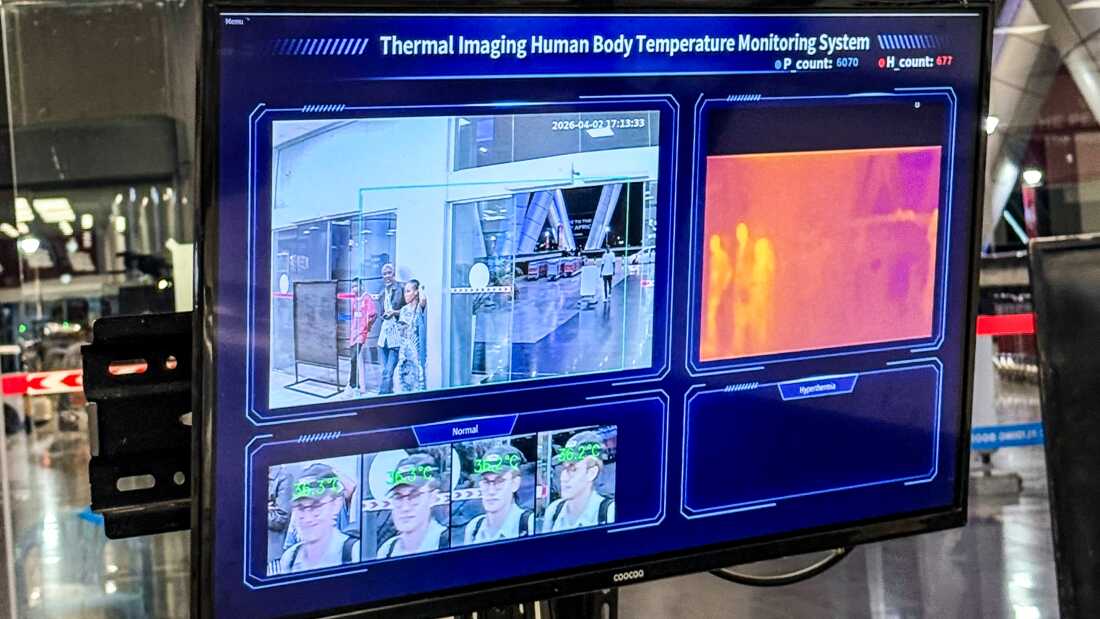
The term can sound dramatic, but the process is usually methodical. Health authorities and hospital teams assess exposure history, travel location, symptom onset, and any direct contact with known cases or contaminated materials. Monitoring may include regular temperature checks, symptom reviews, movement restrictions, and instructions to report immediately if signs develop.
At the center of the workflow is one priority: reduce the chance of missing the first signal. Early Ebola symptoms can resemble more common illnesses, which is why context matters so much. Travel to an outbreak zone, contact with clinical environments, or participation in care work can raise the risk profile dramatically. That is where careful screening becomes essential.
Key operational steps
- Exposure review to identify whether the person had meaningful risk.
- Symptom surveillance to catch fever, fatigue, vomiting, or other early signs.
- Isolation readiness in case the person becomes symptomatic.
- Staff notification so infection control teams can coordinate a response.
- Escalation pathways for testing, transport, and specialist management.
When these steps work, they look boring. That is a compliment. In outbreak response, boring means controlled, predictable, and safe.
Why this matters beyond one hospital
It is tempting to treat a monitored case as a local event. It is not. The modern outbreak ecosystem is global by default. A health worker can care for patients in the Democratic Republic of the Congo, travel to Europe, and immediately become part of a multinational surveillance chain. That is not an edge case. That is the new normal.
Ebola monitoring matters because it reflects how tightly connected clinical systems have become. The same mobility that allows expertise, aid, and supplies to move quickly also moves risk. Public health agencies have spent years building response models around exactly this reality. The goal is not to stop travel or freeze care work. The goal is to make sure travel does not outpace detection.
This is also where public trust enters the frame. When people see isolation measures, they may assume the worst. If officials communicate poorly, speculation fills the gap. A disciplined response therefore needs two tracks: one clinical, one public-facing. The first protects bodies. The second protects confidence.
Lessons from outbreak readiness that hospitals should not ignore
Every monitoring event is a reminder that readiness is not a policy memo. It is a live capability. Hospitals that respond well tend to share a few habits: they drill, they document, and they reduce friction between front door screening and specialist escalation. They also avoid the trap of assuming rare events do not need regular practice.
There is a hard lesson here for health systems chasing efficiency. Lean operations are useful until a high-consequence infection shows up. Then redundancy looks wise, not wasteful. Spare isolation capacity, refreshers on PPE use, and clear escalation charts are not luxuries. They are the difference between a contained alert and a chaotic scramble.
Preparedness is expensive because complacency is even more expensive.
Pro tips for stronger hospital readiness
- Run short, frequent drills instead of relying on annual training alone.
- Make exposure screening a routine part of intake for relevant cases.
- Keep escalation contacts updated and easy to access.
- Use plain language when briefing staff and the public.
- Separate clinical risk management from rumor management.
These are not glamorous fixes. They are the unsexy infrastructure of competent crisis response. And that is exactly why they matter.
The public health stakes if monitoring fails
The worst-case scenario is not just a missed diagnosis. It is a delayed diagnosis inside a hospital, where high patient density and close contact can multiply exposure concerns. That is why monitoring protocols exist long before an illness becomes severe. In diseases like Ebola, waiting for dramatic symptoms can be a costly mistake.
At the same time, overreaction can also cause harm. Unnecessary panic can overwhelm emergency services, stigmatize health workers, and make people less likely to report symptoms honestly. The challenge is precision: respond strongly, but only where the evidence supports it. That is the real art of Ebola monitoring.
There is also a geopolitical layer. Outbreaks in the Democratic Republic of the Congo and other regions do not stay local because health security is unevenly distributed. Where surveillance systems are under-resourced, international monitoring becomes even more important. The burden then falls not only on the affected region, but on receiving hospitals, transport services, labs, and public health agencies that must be ready to connect the dots fast.
What could happen next
If the worker remains asymptomatic, the monitoring period will likely end without incident, and the story will fade from headlines. That would be a success. If symptoms appear, the response will intensify quickly, with isolation, testing, and contact tracing moving to the front of the queue. Either outcome will reveal something useful about the system’s ability to perform under pressure.
The bigger future implication is that outbreak readiness will keep becoming more digital, more coordinated, and more visible. Expect better surveillance tools, faster communication between agencies, and more structured protocols for hospitals that regularly receive travelers, aid workers, and emergency staff from outbreak regions. But technology alone will not solve the problem. Human judgment, training, and trust remain the core defenses.
If there is a lesson here, it is that Ebola monitoring is not a sign of failure. It is evidence that surveillance is doing its job. The real failure would be missing the signal, hesitating at the wrong moment, or treating preparedness as optional. Public health does not get points for rhetoric. It gets judged when the rare case shows up and the system either absorbs the shock or lets it spread.
For hospitals, the standard is clear: prepare before the alert, not after it. For the public, the message is equally blunt: cautious monitoring is not cause for panic. It is what competent systems do when the stakes are high and the margin for error is tiny.
The information provided in this article is for general informational purposes only. While we strive for accuracy, we make no guarantees about the completeness or reliability of the content. Always verify important information through official or multiple sources before making decisions.