ICE Shooting in Maine Exposes Volatile Immigration Enforcement
ICE Shooting in Maine Exposes Volatile Immigration Enforcement
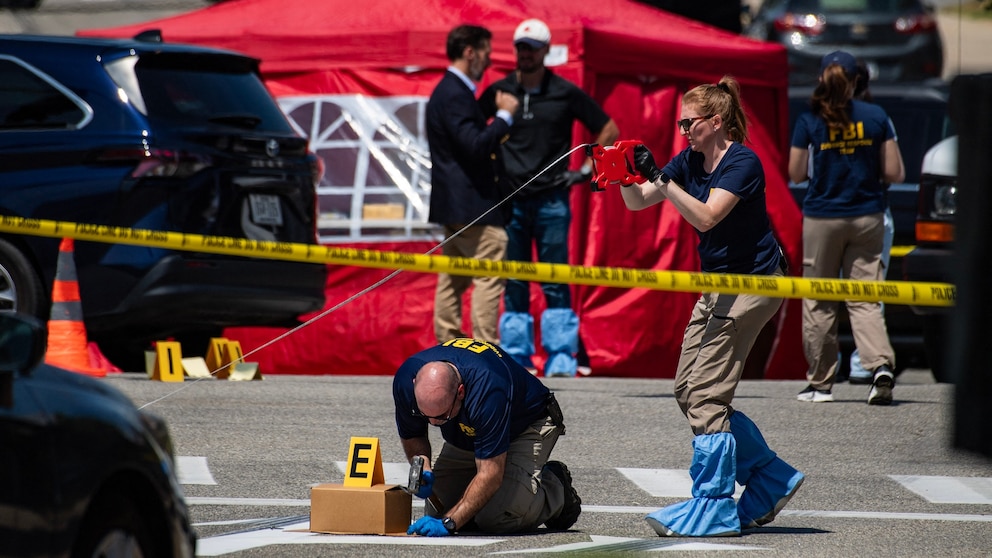
The fatal shooting in Maine tied to an ICE operation lands at a moment when immigration enforcement is already under intense scrutiny. For communities, these incidents do more than trigger a criminal investigation. They reopen a deeper, more uncomfortable question: what happens when federal immigration action collides with local fear, split-second decisions, and an increasingly polarized political climate? The headline is tragic enough on its own. The larger story is about trust, tactics, and the risk that enforcement intended to project control instead hardens anxiety on the ground. If immigration policy is judged by its impact in neighborhoods, not just by arrest counts, this incident may become a defining example of why transparency and restraint matter.
- A person was reportedly killed during an
ICE-involved shooting in Maine. - The incident highlights the risks of enforcement actions unfolding in tense, fast-moving environments.
- It raises broader questions about federal tactics, community trust, and local safety.
- The political fallout could be significant as immigration enforcement remains highly charged.
- This case may influence how agencies communicate and coordinate during future operations.
What the Maine shooting reveals about ICE enforcement
The immediate facts are grim, but the implications stretch well beyond one incident. When an ICE-involved shooting turns deadly, it forces a hard look at how enforcement is planned, executed, and perceived. Immigration enforcement is not carried out in a vacuum. It unfolds in neighborhoods, near homes, and often in environments where people are already wary of uniforms, warrants, and rapid escalation.
That tension is precisely what makes this case so consequential. Even when agencies argue that officers are responding to threats or pursuing lawful objectives, the public sees the outcome first: someone is dead, and a community is left to fill in the blanks. In a politically charged setting, those blanks are quickly occupied by distrust, rumor, and outrage.
When enforcement becomes inseparable from fear, the agency loses more than a press cycle. It loses credibility in the places where cooperation matters most.
Why this matters beyond one incident
Immigration enforcement depends on more than legal authority. It depends on whether communities believe the rules are being applied fairly and predictably. The Maine shooting is a reminder that the cost of a single operation can reverberate far beyond the scene itself. Neighbors may become less willing to call police. Witnesses may be less likely to talk. Local officials may find themselves caught between federal priorities and community backlash.
That matters because enforcement is already under pressure from multiple directions. Advocates argue that aggressive tactics can intimidate families and destabilize communities. Supporters counter that federal agencies need latitude to enforce the law and respond to dangerous situations. Both positions can be true in the abstract. What changes after a fatal shooting is the burden of proof. Agencies must now explain not just what happened, but why their methods were the safest available option.
How ICE incidents reshape public trust
The trust deficit around immigration enforcement is not new, but incidents like this widen it. In practice, people do not separate a single operation from the agency behind it. A local family hears about a shooting involving ICE and immediately recalibrates how safe they feel engaging with schools, hospitals, landlords, or local law enforcement. That fear may be rational or exaggerated, but it is politically powerful either way.
Community ripple effects
These are the first-order effects that often get overlooked:
- Families may avoid public spaces or official institutions out of fear of enforcement contact.
- Local businesses can see reduced foot traffic if residents feel unsafe.
- Police departments may face harder outreach efforts in immigrant communities.
- Public health and social service providers may see lower participation in programs.
Once that cycle starts, it is difficult to reverse. The enforcement action may be over in minutes, but the perception problem can last for months or years. That is why agency communication after a shooting is not a side issue. It is part of the operational response.
The politics around the Maine ICE shooting
This story almost guarantees a political fight. Immigration has long been one of the most emotionally charged issues in American life, and a fatal shooting tied to ICE gives both sides immediate talking points. Critics are likely to point to excessive force, lack of oversight, and the broader harms of aggressive immigration policing. Supporters will stress the dangers officers face and the need to preserve law enforcement authority in volatile situations.
What gets lost in that exchange is the operational reality. Federal agencies are expected to act quickly, yet they are also expected to avoid tragic mistakes, maintain public confidence, and coordinate cleanly with local partners. That is a high bar. When something goes fatally wrong, scrutiny should be severe. The question is not whether agencies should be held accountable. They should. The question is whether the current structure of immigration enforcement is built to prevent these outcomes consistently.
Accountability is not a partisan slogan here. It is the minimum requirement for any agency that operates with force in public spaces.
What investigators and officials need to answer
As the case develops, several questions will matter more than the headline count of arrests or statements from officials. The public needs a clear account of the sequence of events, the level of threat officers believed they faced, and whether de-escalation was possible. That is especially important in any incident involving a firearm and a federal immigration operation.
- What prompted the
ICE-involved contact in the first place? - Were local agencies involved in planning or present at the scene?
- What threat assessment did officers make before force was used?
- Were body cameras, witness statements, or other evidence collected immediately?
- How will officials communicate findings to the public?
The answers should not be buried in a technical report released weeks later. If federal agencies want to preserve legitimacy, they need to communicate early, carefully, and with enough detail to show they are not treating a fatal shooting as a routine paperwork problem.
Why enforcement tactics keep colliding with public safety
Immigration enforcement often sits at the intersection of two competing imperatives: act decisively, but avoid chaos. That tension grows sharper when operations are highly visible or involve rapid movement, confusion over identification, or uncertain suspect behavior. In those moments, policy debates become operational realities.
There is a temptation in Washington to treat every enforcement failure as an isolated mistake. But repeated incidents suggest something deeper: the system may be asking too much of agents operating in highly charged situations with imperfect information. If so, the issue is not just training. It is design. Are operations structured to minimize surprise? Are officers given enough time to verify targets? Are communities given enough information to reduce panic? These are not abstract concerns. They directly affect whether a raid ends in compliance or tragedy.
Pro tip for policymakers
When agencies use force in sensitive operations, they should prioritize the following:
- Clear pre-operation planning with local partners where appropriate.
- Strict verification protocols before any confrontation.
- Rapid, factual public statements after critical incidents.
- Independent review mechanisms that are visible, not just internal.
The bigger future of ICE and federal immigration enforcement
One fatal shooting will not rewrite immigration policy overnight. But it may accelerate pressure for more oversight, better transparency, and tighter limits on how enforcement operations are conducted. That could mean more aggressive internal review, stronger local coordination requirements, or renewed debate over whether ICE should be focused more narrowly on high-risk cases rather than broad interior enforcement.
It could also sharpen the political divide over immigration itself. If the public sees this as evidence of dangerous overreach, calls for reform will intensify. If supporters frame it as a tragic but unavoidable consequence of enforcing the law, the appetite for change may shrink. Either way, the Maine shooting is unlikely to fade quietly. It sits at the intersection of law enforcement, immigration, and public confidence, which means it will echo far beyond the immediate facts.
That is the uncomfortable truth here: enforcement agencies do not just act on policy. They shape how policy is felt. In this case, the cost was fatal, and the fallout may be measured in something harder to restore than law and order – trust.
The information provided in this article is for general informational purposes only. While we strive for accuracy, we make no guarantees about the completeness or reliability of the content. Always verify important information through official or multiple sources before making decisions.