Iran’s Billboard Provocation Escalates Trump Tensions
Iran’s Billboard Provocation Escalates Trump Tensions
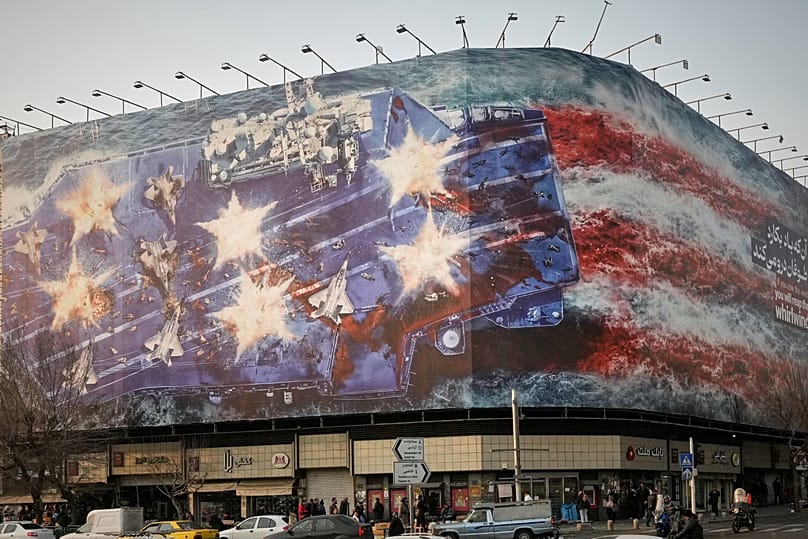
Iran has turned a piece of urban space into a geopolitical weapon. A giant billboard showing Donald Trump in a coffin is not just shock imagery – it is a signal, calibrated for maximum attention and minimum ambiguity. In an era when state messaging travels at the speed of a share button, this kind of visual provocation lands harder than a speech and louder than a press release. It also exposes a deeper reality: the fight between Iran and the U.S. is no longer contained to diplomacy, sanctions, and proxy conflict. It is now a contest over perception, symbolism, and who gets to define the narrative first. For policymakers, journalists, and security watchers, that matters because public messaging like this often tracks the temperature of real-world escalation.
- The billboard is a deliberate act of political theater, not random vandalism.
- Trump-focused imagery signals that Iran is targeting U.S. political attention as much as U.S. policy.
- The stunt reflects a broader shift toward visual propaganda and media warfare.
- Such messaging can intensify regional tensions even when no immediate military action follows.
- Understanding the symbolism helps explain how modern conflict is increasingly fought in public view.
Why the Iran Trump billboard matters now
The Iran Trump billboard arrives at a moment when geopolitical messaging is getting sharper, faster, and far more performative. This is not an isolated stunt designed for local consumption. It is a public provocation aimed at multiple audiences at once: domestic hardliners, regional rivals, and the U.S. political class. By using the image of Trump in a coffin, Iran is doing three things at the same time. First, it signals defiance. Second, it attempts to frame Trump as an enemy figure rather than a former president. Third, it keeps Iran visible in a global media cycle that can otherwise be dominated by wars, elections, and economic shocks.
The key point is that these billboards are not just about insult. They are about strategic messaging. For regimes facing pressure, symbolism is cheap, fast, and highly contagious. It can be deployed without a missile launch, yet still shape expectations and anxieties. That makes it a serious communications event, not a sideshow.
The message behind the spectacle
Domestic politics and external theater
Iran has long used high-visibility messaging to reinforce its political identity at home. Public displays like this can project strength to internal audiences, especially when leadership wants to show that it will not bend to Washington. They also help hardline factions define the terms of national pride. In that sense, the Iran Trump billboard is as much about internal discipline as external provocation.
This is a familiar pattern in authoritarian and semi-authoritarian systems: the state turns spectacle into evidence. If the billboard is bold enough, the thinking goes, then the state must be bold enough. The image becomes a proxy for toughness. That is why these stunts are rarely random. They are carefully selected to trigger emotional response and reinforce political identity.
Provocative imagery is not a footnote to geopolitics anymore. It is often the opening move in a broader battle for narrative control.
Trump as symbol, not just person
Donald Trump is uniquely potent in this kind of messaging because he is both a former U.S. president and a durable political symbol. For Iran, he represents the maximum concentration of past pressure: sanctions, assassination rhetoric, and the collapse of trust around the nuclear deal. That makes him useful shorthand for a larger anti-U.S. message. The billboard is not only aimed at one man. It is aimed at the policy era he represents.
This matters because geopolitical symbols outlive administrations. Even if the personnel change, the emotional memory remains. A billboard like this keeps that memory alive and forces the issue back into public conversation. That can influence everything from election rhetoric in the U.S. to risk perception among allies and adversaries in the region.
How media warfare amplifies the Iran Trump billboard
The modern information environment rewards images that can be understood instantly and debated endlessly. A coffin graphic does exactly that. It compresses a political message into a single frame, making it ideal for television clips, social media reposts, and outrage-driven commentary. The result is a feedback loop: the more inflammatory the image, the more coverage it earns, and the more value it generates for the actor who placed it there.
That is why the Iran Trump billboard should be understood as an information operation with local roots and global reach. It is engineered for circulation. The goal is not subtle persuasion. The goal is to dominate attention, force reactions, and make every response part of the story.
What this tells us about modern propaganda
- Visual shorthand wins because it travels faster than nuanced diplomacy.
- State messaging increasingly borrows from social media logic: provoke first, explain later.
- International audiences often see the spectacle before they understand the context.
- Once an image is viral, it becomes difficult to control the political meaning attached to it.
For media organizations, this creates a difficult editorial problem. Covering the image amplifies it. Ignoring it can miss a real geopolitical signal. The best approach is to treat such stunts as indicators of strategic mood, not just viral content.
Why this matters for U.S. policy and regional stability
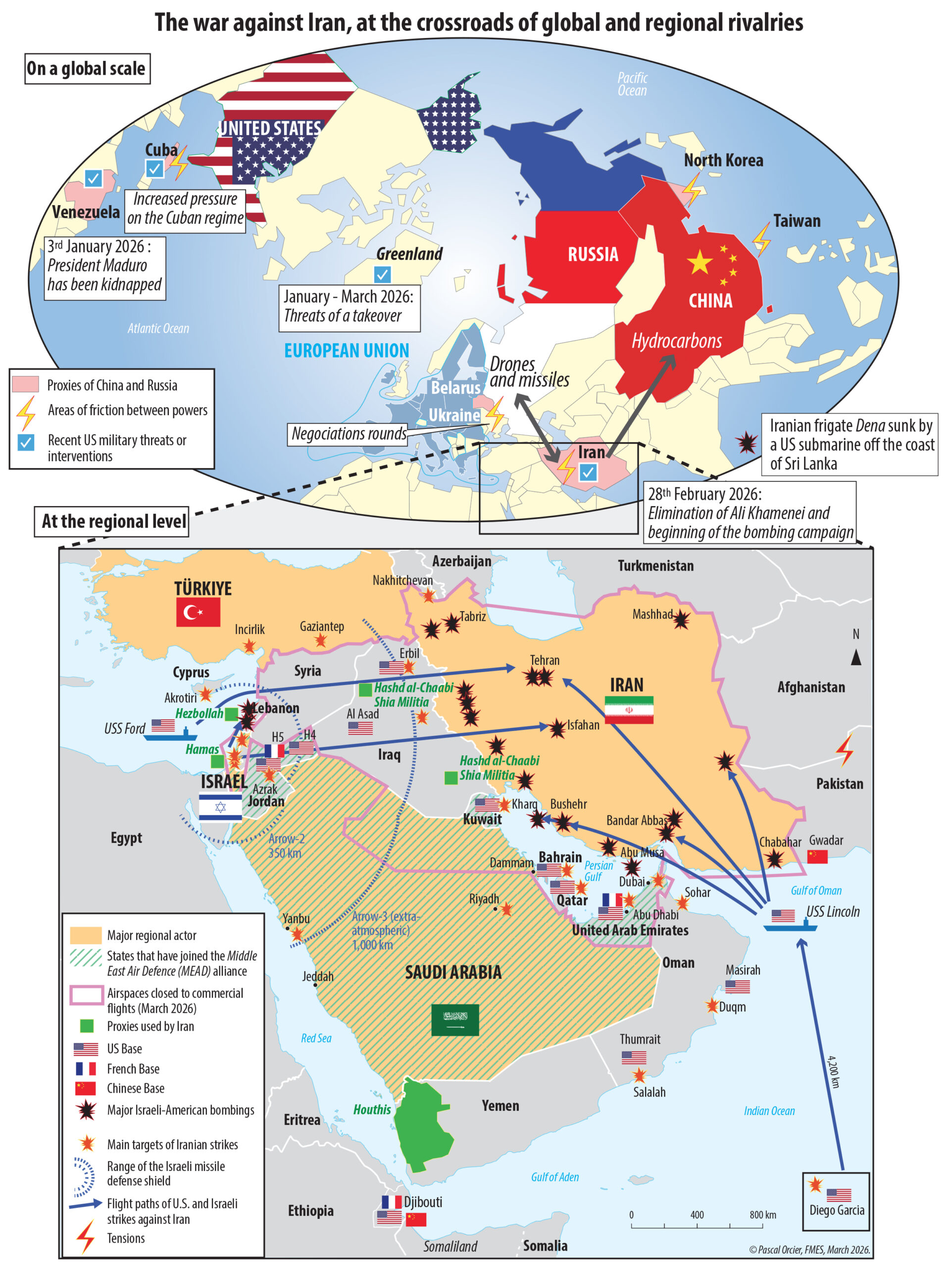
Provocations like this can seem theatrical, but they operate in a real strategic environment. The U.S. and Iran remain locked in a long, unstable contest involving nuclear concerns, sanctions, proxy groups, maritime security, and battlefield shadow wars. Against that backdrop, symbolism can become an accelerant. It can harden positions, complicate back-channel diplomacy, and create pressure on leaders to respond publicly.
If Washington ignores the message, Tehran may read that as weakness. If Washington overreacts, it hands Iran exactly the attention it wants. That is the trap of spectacle politics. The billboard is designed to narrow the set of good responses.
When symbolism is weaponized, every official response becomes part of the campaign. Silence can look like weakness, and outrage can look like validation.
This dynamic also affects allies in the Gulf, where leaders are constantly calibrating between deterrence, de-escalation, and domestic expectations. A public insult toward Trump may not change military balances overnight, but it contributes to a broader atmosphere of mistrust that can make crisis management harder when a real incident occurs.
Reading the signal without overreading it
It is tempting to treat any dramatic billboard as proof that conflict is imminent. That would be a mistake. Political theater is not the same as operational preparation. The smarter read is more disciplined: this is evidence of heightened rhetorical hostility, not necessarily immediate military escalation. But rhetoric matters because it shapes the space in which decisions are made.
A useful framework is to ask three questions:
- Who is the primary audience: domestic supporters, foreign governments, or online spectators?
- What reaction is the image trying to trigger: fear, outrage, ridicule, or resolve?
- Does the act stand alone, or does it fit into a larger pattern of escalating messaging?
In the case of the Iran Trump billboard, the answer appears to be all of the above. That is what makes it notable. It is not just one billboard. It is a compact example of how modern states use imagery to manage power, project defiance, and test the limits of attention.
What comes next
The likely next phase is not necessarily a military move but a communications cascade. Political allies, commentators, and officials will interpret the image through their own frameworks. U.S. politicians may use it to sharpen campaign rhetoric. Iranian officials may cite it as proof of resistance. Regional actors may quietly factor it into their risk calculations. The image itself will fade. The signal may linger.
That is the deeper lesson here. A billboard can be temporary, but the politics it reveals are not. Iran is showing that it understands the attention economy of geopolitics. It knows that in a crowded media landscape, a single shocking frame can punch far above its weight. For everyone watching, the challenge is to see through the spectacle without missing the warning embedded inside it.
The bottom line
The Iran Trump billboard is not just an insult. It is a test of how the U.S. and the wider world respond to increasingly theatrical forms of statecraft. The image is designed to provoke, to travel, and to harden narratives on both sides. That makes it more than a local stunt. It is a reminder that modern conflict is fought not only with weapons and sanctions, but with symbols that can inflame, distract, and destabilize in equal measure.
The information provided in this article is for general informational purposes only. While we strive for accuracy, we make no guarantees about the completeness or reliability of the content. Always verify important information through official or multiple sources before making decisions.