Starmer Tightens UK Migration Rules
Starmer Tightens UK Migration Rules
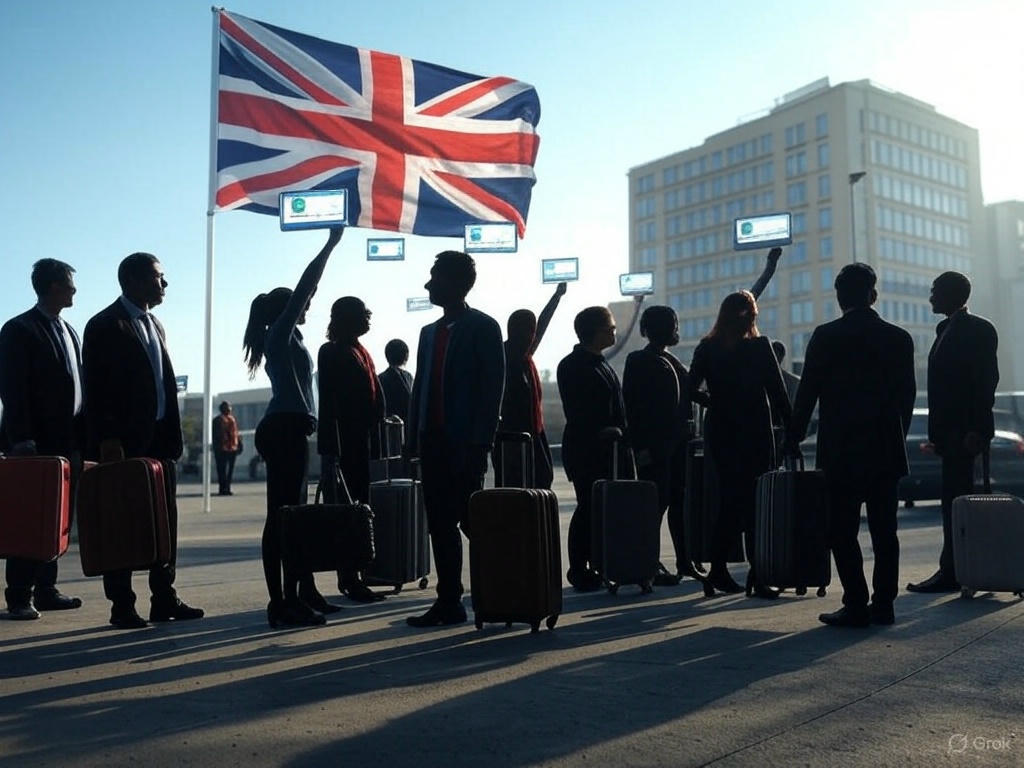
UK migration policy is back at the center of British politics, and the stakes are unusually high. Prime Minister Keir Starmer is trying to prove that Labour can be both economically pragmatic and visibly tougher on borders – a balance that has broken plenty of governments before. For businesses, universities, care providers, and millions of voters, this is not an abstract Westminster argument. It is a live test of whether the UK can cut net migration without deepening labor shortages, slowing growth, or reigniting the culture-war politics that have dominated the debate for years. Starmer’s move signals something bigger than a policy refresh. It is a strategic attempt to reclaim political credibility on an issue that has repeatedly punished leaders who promised control and delivered complexity instead.
- Keir Starmer is repositioning Labour on UK migration policy with a tougher public stance.
- The strategy is political as much as practical: reassure voters while avoiding damage to key sectors.
- Employers, universities, and care services could feel immediate pressure if restrictions tighten.
- The real test is whether lower migration can be achieved without worsening the UK’s workforce gaps.
Why UK migration policy is suddenly the defining test for Starmer
Every prime minister inherits hard problems. Few inherit one as politically radioactive as UK migration policy. Public trust has been eroded by years of promises to reduce numbers, followed by statistics that moved in the opposite direction. That has created a brutal credibility trap: any new government that talks about control is judged not by intention, but by whether voters can actually see the system changing.
Starmer appears to understand that reality. His message is not simply that migration should be lower. It is that the state must look functional again. That matters because migration has become a proxy for broader anxieties: pressure on public services, housing strain, stagnant wages in some sectors, and a sense that governments no longer steer outcomes.
When leaders talk about migration now, they are also talking about competence. The numbers matter, but the perception of control may matter even more politically.
That is why this moment matters beyond headline policy changes. If Labour can make UK migration policy feel stricter and more coherent, Starmer could neutralize one of the party’s historic vulnerabilities. If he fails, opponents will frame it as proof that nothing has really changed.
What Starmer is trying to solve
The challenge is not just reducing arrivals. It is managing conflicting national priorities at the same time.
Voter frustration
A large bloc of the electorate believes migration has been too high for too long. That sentiment cuts across party lines, though the intensity varies. Starmer’s tougher tone is aimed at voters who may not identify as ideologically anti-immigration but do believe the system lacks discipline.
Employer dependence
At the same time, many industries have grown dependent on international recruitment. Health and social care, hospitality, logistics, construction, and higher education all rely to varying degrees on overseas workers or students. Tightening UK migration policy too abruptly risks creating immediate operational gaps.
Economic credibility
Labour also wants to project seriousness on growth. That creates tension. A government cannot celebrate investment, infrastructure, and public service renewal while ignoring the labor force needed to deliver them.
This is the political puzzle at the heart of Starmer’s migration reset: he must look tougher without looking reckless.
How the new UK migration policy message differs from the past
What stands out is not only the substance, but the framing. Older migration debates often split into two simplistic camps: open versus closed, compassion versus control, business needs versus border integrity. Starmer is trying to collapse that binary and argue that a disciplined migration system is itself a progressive goal.
That is a notable rhetorical shift. Instead of ceding the language of enforcement to the right, Labour is increasingly presenting tighter UK migration policy as part of a functioning state. The implication is clear: a rules-based system protects public confidence, and public confidence is necessary for any humane migration framework to survive politically.
It is a more strategic message than it may initially appear. By reframing control as a prerequisite for legitimacy, Starmer hopes to avoid being cornered between activist criticism on one side and populist attacks on the other.
The politics of signaling
Modern migration policy is as much about signaling as administration. Governments know voters rarely read the fine print of visa categories or salary thresholds. What they notice are simple cues: stricter language, fewer exceptions, sharper accountability, and visible consequences for abuse.
That means even modest policy shifts can have outsized political value if they communicate resolve. But it also means governments can overinvest in symbolism and underdeliver in execution.
A tougher migration speech is easy. Rebuilding the labor market, training pipelines, and border systems that make it credible is the hard part.
Who could feel the impact first
If UK migration policy becomes materially stricter, the first effects are likely to show up in sectors already operating with thin margins and chronic vacancies.
Social care
Social care is perhaps the clearest pressure point. The sector has relied heavily on overseas recruitment to fill vacancies that domestic labor markets have not supplied at the necessary scale. If access tightens before wages and conditions improve, providers may face sharper staffing shortages.
Why this matters: care shortages do not stay contained within one sector. They spill into hospitals, families, local government budgets, and wider health system performance.
Universities
International students are often folded into broader migration debates, but for universities they are also a financial lifeline. Restrictions that affect student routes or dependants can alter enrollment decisions quickly. Institutions already under financial stress will be watching closely.
Small and mid-sized employers
Larger firms may have the resources to adapt through automation, wage increases, or longer recruitment cycles. Smaller businesses are less insulated. For them, changes to sponsorship rules, visa costs, or hiring thresholds can hit immediately.
Public services
The NHS and adjacent public services remain politically sensitive areas. Any government promising both better services and lower migration will need to explain where replacement workers will come from, how quickly they can be trained, and what the transition costs will be.
The economic contradiction at the center of the debate
There is a reason UK migration policy keeps producing political heat and policy whiplash: the economy keeps demanding one thing while politics demands another.
The UK has persistent productivity problems, regional inequalities, and workforce shortages. Immigration has often functioned as the pressure-release valve. It helps employers hire faster, supports tax revenues, and in many cases fills roles that are difficult to recruit domestically.
But relying on migration can also allow deeper structural problems to fester. Low pay, weak training investment, poor retention, and underpowered workforce planning become easier to postpone when international recruitment is readily available.
Starmer’s tougher line implicitly acknowledges that tension. The more ambitious interpretation of his approach is not simply “fewer migrants,” but “less economic dependence on high migration.” That is a much harder project – and one that cannot be accomplished through Home Office policy alone.
What would need to happen for this to work
- Higher investment in domestic training across care, construction, and technical fields.
- Better wages and retention in sectors that struggle to recruit locally.
- Smarter workforce planning tied to industrial policy rather than short-term crisis management.
- More efficient processing and enforcement so the system looks consistent and credible.
Without those pieces, stricter UK migration policy risks becoming a headline strategy without an economic foundation.
Why this matters beyond Westminster
It is tempting to see migration battles as just another cycle of political positioning. That would underestimate their reach. Migration policy shapes labor markets, university finances, care provision, demographic renewal, and Britain’s global reputation.
It also shapes public trust. When governments overpromise and underdeliver on migration, they do not just lose arguments about borders. They reinforce a wider sense that major systems no longer work as advertised. That is one reason the issue keeps returning with such force.
For Starmer, then, this is not only about neutralizing opponents. It is about proving Labour can govern where previous administrations struggled: making difficult trade-offs in public, not hiding behind slogans.
The real referendum on Starmer’s migration stance will not be held in Parliament. It will be held in vacancy rates, service performance, and whether voters believe the rules now mean something.
Can Starmer satisfy both markets and voters?
This is the central question. Markets and employers tend to prefer predictability, flexibility, and access to talent. Voters demanding stricter UK migration policy tend to prioritize visible control, fairness, and lower overall numbers. Those goals overlap only partially.
Starmer’s bet is that disciplined communication plus selective tightening can satisfy both camps long enough to create political room. But the margin for error is narrow. If policy is too soft, critics will say Labour has changed its language but not its instincts. If it is too hard, employers and public services may start reporting pain before the government has domestic replacements ready.
That is why execution matters more than rhetoric now. A coherent migration strategy would need to coordinate skills policy, labor market reform, education funding, and enforcement capacity. Treating migration as a standalone issue has repeatedly failed because it is not standalone in practice.
What to watch next in UK migration policy
The next phase will be less about speeches and more about operational detail. Watch for changes in visa pathways, sector-specific exemptions, salary thresholds, student-related rules, and employer compliance measures. Also watch whether the government pairs restrictions with a serious domestic workforce plan.
A useful way to read any next move is simple:
- Does it reduce dependence on overseas labor, or just make hiring harder?
- Does it rebuild public trust through clarity, or just increase noise?
- Does it align with growth goals, or quietly undermine them?
Those are the questions that will determine whether Starmer’s harder edge on UK migration policy becomes a durable reset or another short-lived political maneuver.
The bottom line
Starmer is entering the most treacherous part of the migration debate: the space where public anger, economic necessity, and state capacity collide. His tougher approach may be politically astute, and perhaps politically unavoidable. But it will only count as success if it produces something Britain has not seen enough of on this issue: a migration system that feels both controlled and economically honest.
That is a high bar. Yet it is the only one that matters. In UK migration policy, the era of easy promises is over. What comes next will be judged by whether the country can finally replace improvisation with strategy.
The information provided in this article is for general informational purposes only. While we strive for accuracy, we make no guarantees about the completeness or reliability of the content. Always verify important information through official or multiple sources before making decisions.