Trump Xi Rivalry Reshapes Global Power
Trump Xi Rivalry Reshapes Global Power
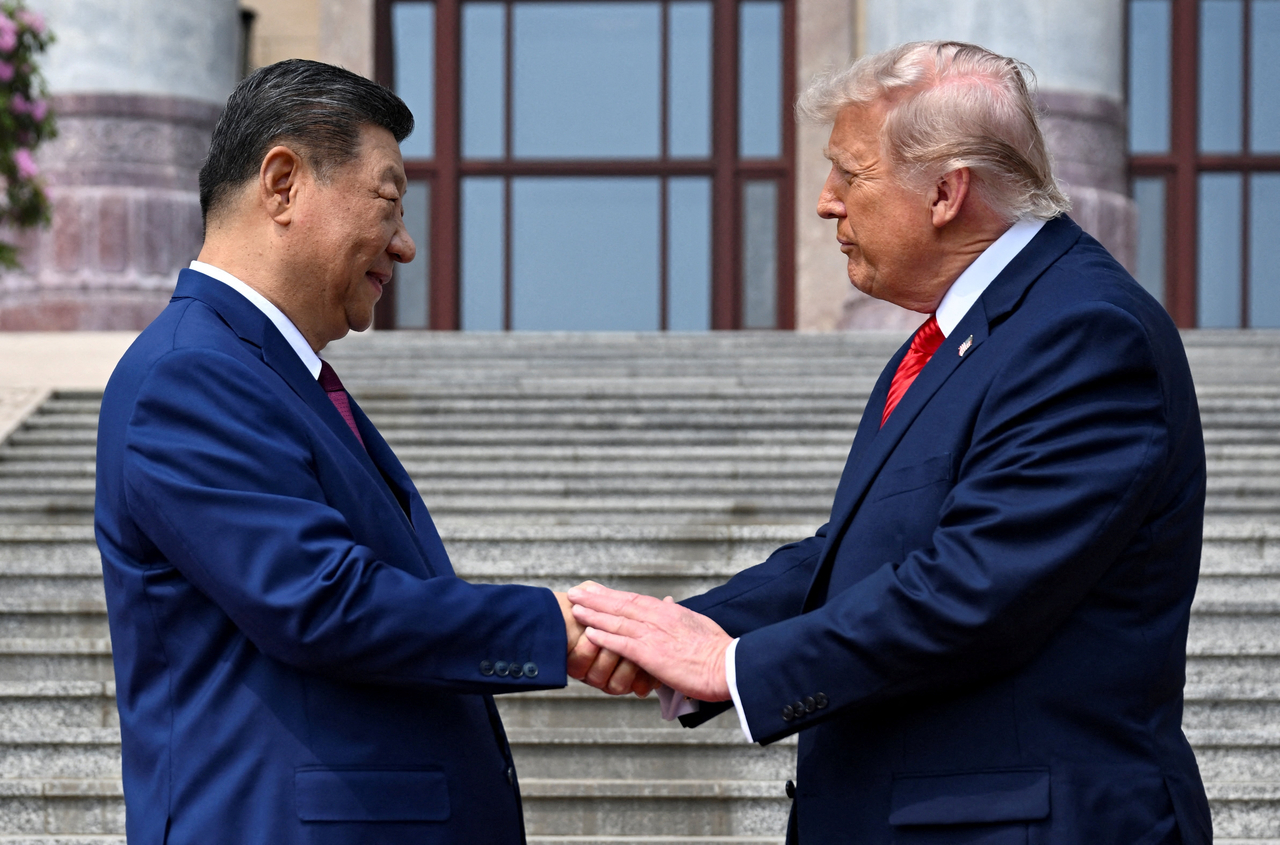
The Trump Xi rivalry is no longer a personality clash dressed up as geopolitics. It is fast becoming the operating system for a more unstable international order: one where trade pressure, military signaling, technology controls, and domestic political theater all feed the same confrontation. For governments, businesses, and voters, that means higher stakes and less room for miscalculation. The danger is not just a headline-grabbing summit gone wrong. It is the slow normalization of permanent friction between the United States and China, driven by two leaders who each see strength, prestige, and historical legacy as central to their political project. That is what makes this rivalry different. It is strategic, deeply personal, and increasingly hard to contain within traditional diplomatic guardrails.
- The Trump Xi rivalry is shaping policy far beyond Washington and Beijing, affecting trade, security, and global alliances.
- Personal leadership styles matter here: both sides frame toughness as political necessity, making compromise harder.
- Businesses should expect prolonged uncertainty around tariffs, supply chains, and cross-border investment rules.
- Allies and partners are being pushed to adapt to a world where U.S.-China tension is a baseline, not an exception.
Why the Trump Xi rivalry matters more than a diplomatic feud
Great-power competition is often discussed in abstract language: spheres of influence, deterrence, strategic ambiguity. But the reality of the Trump Xi rivalry is more visceral. It compresses structural tensions into a leader-to-leader contest that rewards spectacle as much as substance. That makes every tariff threat, speech, military exercise, and diplomatic freeze feel more immediate.
Trump has long favored pressure tactics, public confrontation, and transactional dealmaking. Xi, by contrast, projects discipline, continuity, and national resolve. On paper, those styles might seem capable of balancing each other. In practice, they tend to harden the conflict. Trump sees escalation as leverage. Xi sees concession under pressure as weakness. That dynamic produces a familiar but dangerous loop: each side interprets restraint not as prudence, but as vulnerability.
Key insight: When strategic competition becomes inseparable from political image, de-escalation starts to look politically expensive on both sides.
This is why the rivalry has outgrown the narrow frame of bilateral tensions. It now affects everything from semiconductor restrictions to maritime security, from election messaging to global capital flows. Investors care because policy risk is no longer episodic. Diplomats care because symbolic slights can now trigger material consequences. Citizens should care because the costs of this rivalry are increasingly domestic: higher prices, market volatility, and a more militarized foreign policy environment.
How personal rivalry turns policy into a pressure campaign
One of the most underestimated aspects of U.S.-China competition is the role of leadership psychology. Institutions matter, but leaders still define tempo and tone. The Trump Xi rivalry is especially combustible because both men operate within political systems that reward demonstrations of strength, albeit in very different ways.
Trump’s approach favors visible confrontation
Trump’s political brand is built on public leverage. He often treats negotiations as contests of dominance, where unpredictability is not a bug but a feature. In a rivalry with China, that means tariffs, executive threats, rhetorical escalation, and a willingness to fold national strategy into domestic political messaging.
The upside of that approach is speed. Trump can set the agenda quickly and force counterparts to respond. The downside is that short-term shock tactics often create long-term uncertainty. Allies get nervous. Markets reprice risk. Opponents dig in.
Xi’s approach prizes control and endurance
Xi operates from a different template. His system values patience, narrative control, and the presentation of national inevitability. Under pressure, Beijing is unlikely to reward public coercion with visible concessions. Instead, Xi tends to absorb shocks, retaliate selectively, and reframe the conflict as proof that China must become more self-reliant.
That matters because it changes the timeline. A Trump-style escalation seeks rapid outcomes. A Xi-style response stretches the contest, betting that endurance will outlast political cycles in Washington.
The result is a mismatch with global consequences
When one leader seeks quick wins and the other prepares for a long campaign, the rivalry becomes structurally unstable. Temporary truces are possible, but durable trust is harder to build. Every pause starts to look tactical rather than transformational.
Pro tip for business leaders: Treat policy stabilization as temporary unless backed by institutional mechanisms such as formal review processes, enforceable trade rules, or clearly defined military communication channels.
Trade, technology, and the new rules of confrontation
The most visible front in the Trump Xi rivalry is usually trade, but the deeper contest is over strategic control of the future economy. Tariffs are headline material. Technology restrictions are the real architecture of competition.
For years, policymakers could pretend that economics and national security were adjacent issues. That illusion is gone. Today, advanced chips, AI infrastructure, cloud services, telecom networks, and rare earth supply chains all sit inside a blended field of commercial and strategic conflict.
This is where the rivalry becomes especially disruptive. Measures once framed as industrial policy are now treated as defensive necessities. Export controls become geopolitical tools. Investment screening becomes a national resilience mechanism. Corporate exposure to China becomes a board-level risk, not just a growth strategy question.
- Trade friction: Tariffs and retaliatory duties can quickly spill into consumer prices and manufacturing costs.
- Tech decoupling: Restrictions on
semiconductors,AI, and critical infrastructure raise compliance burdens and slow collaboration. - Supply chain redesign: Companies are pushed toward diversification, redundancy, and friend-shoring.
- Capital caution: Investors face shifting rules around listings, outbound investment, and strategic acquisitions.
The broader message is blunt: globalization is no longer optimized for efficiency alone. It is being rewritten around resilience, sovereignty, and strategic mistrust.
Why this matters: The next phase of U.S.-China competition will be measured less by speeches and more by who controls the chokepoints of advanced industry.
Security flashpoints keep raising the temperature
Trade fights are expensive. Security miscalculations are far worse. The Trump Xi rivalry unfolds against a backdrop of military signaling in Asia, contested sea lanes, alliance stress tests, and constant debates over deterrence. Even when neither side wants direct conflict, both benefit politically from appearing unyielding.
That creates danger in places where ambiguity already runs high. A naval incident, an air intercept, or a symbolic visit can suddenly become a test of resolve. Once that happens, domestic politics narrows diplomatic flexibility. No leader wants to be seen backing down under pressure, especially when the rivalry itself has become a story about strength.
This is one reason allies are recalibrating. Partners in Europe and Asia increasingly view U.S.-China relations not as a manageable disagreement but as the defining instability of the decade. Their response is mixed: deepen security ties where necessary, preserve economic links where possible, and avoid being forced into binary choices too early.
Why allies cannot stay passive
Countries that rely on U.S. security guarantees but depend on Chinese trade face a brutal balancing act. The Trump Xi rivalry turns that tension into a recurring policy crisis. Every new tariff package, sanctions regime, naval maneuver, or diplomatic standoff forces painful tradeoffs.
For many of these governments, the strategic goal is not choosing a side once and for all. It is preserving room to maneuver in a system that offers less and less of it.
What this rivalry means for markets, voters, and policy
It is easy to treat high-level rivalry as something that happens far above ordinary life. That is increasingly outdated. The Trump Xi rivalry now reaches into household economics, electoral messaging, and the assumptions that guide long-term investment.
For voters, China policy is no longer a niche foreign affairs issue. It has become shorthand for views on manufacturing, borderless capital, national strength, and economic fairness. Politicians know this, which is why hawkish positioning often travels well domestically even when it complicates diplomacy.
For markets, the key lesson is persistence. Volatility tied to U.S.-China relations is no longer a temporary shock that can be ignored until the next summit photo. It is a structural feature of the policy environment. Companies should build that assumption into planning.
For policymakers, the challenge is avoiding a rivalry that becomes self-executing. If every move is interpreted through the lens of inevitable confrontation, then institutions lose their ability to absorb tension. Crisis management matters more than ever, but so does strategic clarity. Ambiguity can deter in some contexts. In others, it simply multiplies the chance of misreading intent.
The strategic guide to reading the next phase
The smartest way to understand where the Trump Xi rivalry is heading is to watch systems, not just statements. Political rhetoric matters, but durable shifts usually show up first in policy mechanics.
- Watch export controls: Changes in rules around
chips,AI models, and high-end manufacturing equipment reveal where competition is intensifying. - Watch military communications: Functional hotlines and defense dialogue can signal that both sides still want guardrails.
- Watch alliance behavior: If partners begin aligning more explicitly on China risk, the rivalry is entering a broader coalition phase.
- Watch corporate disclosures: Supply chain warnings and regional revenue revisions often detect geopolitical strain before political narratives catch up.
There is also a simple analytical framework that executives and readers alike can use:
Risk = political signaling + policy enforcement + market exposure
If all three are rising at the same time, the rivalry is moving from symbolic confrontation to material disruption.
The bottom line on the Trump Xi rivalry
The Trump Xi rivalry is not just another chapter in U.S.-China tension. It is a sharper, more personalized, and more consequential phase of great-power competition. That makes it harder to predict and harder to stabilize. The personal factor amplifies the structural one. Political image reinforces strategic mistrust. And every arena of competition – trade, technology, security, diplomacy – now feeds the same larger contest.
The real story is not whether the two sides can produce moments of tactical calm. They probably can. The real story is whether either system still has the incentive to rebuild durable trust. Right now, the evidence points the other way. The rivalry rewards toughness, punishes compromise, and pushes the rest of the world to adapt to permanent strain.
That is why this matters now: when the most important bilateral relationship on earth starts running on grievance, prestige, and escalating pressure, everyone else ends up living with the consequences.
The information provided in this article is for general informational purposes only. While we strive for accuracy, we make no guarantees about the completeness or reliability of the content. Always verify important information through official or multiple sources before making decisions.